
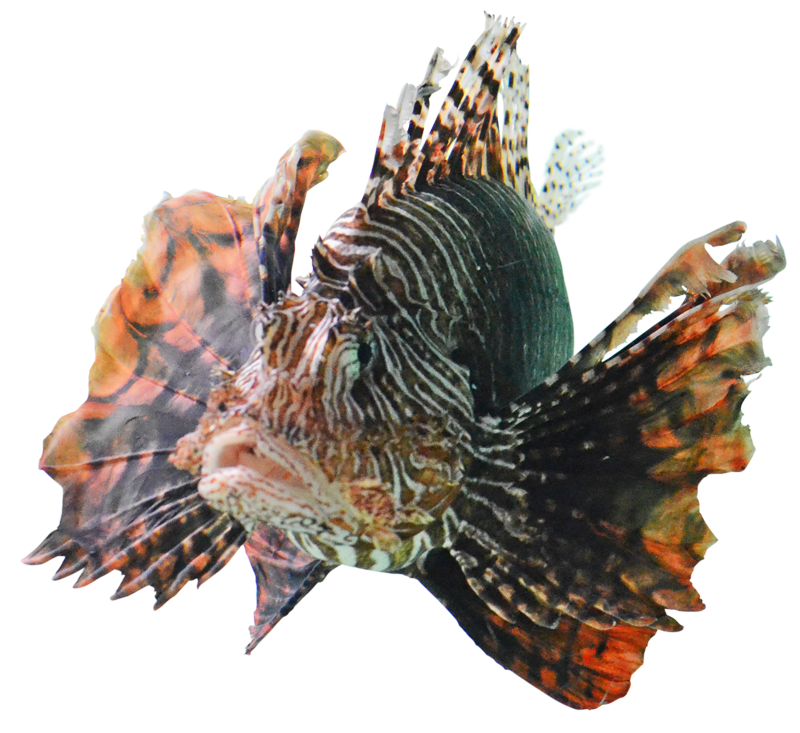
Pterois volitans (Linnaeus, 1758)
外来種として大西洋で増加するミノカサゴ
Lionfish Spreading Across the Atlantic as an Invasive Species
体長30cm。東インド洋から西太平洋にかけて、サンゴ礁や岩礁域に生息します。日本では千葉県外房以南の太平洋岸に生息しており、赤褐色、赤、白、黒色の縞模様と長く伸びる胸鰭が特徴的です。近縁のミノカサゴと良く似ていますが、ハナミノカサゴは尾鰭に斑紋があることで区別がつきます。目を引く警告色は毒を持っている証拠です。毒棘に刺されると強い痛みが伴い、腫れて吐き気や呼吸困難などを起こすことがあります。
ハナミノカサゴは大西洋で侵略的外来種として従来の生態系を脅かす存在となっています。1980年代中頃にフロリダ州沿岸で初めて目撃されて以来、北はアメリカ東海岸のロードアイランド州からカリブ海、そして南はブラジルのサンパウロまで個体群が広がっています。食欲旺盛かつ無差別的な捕食者であり、在来種の稚魚が餌食となっています。その稚魚の多くは藻類食性であり、それらの魚の数が減ることで藻類の大発生が起こり、藻類はサンゴを覆い尽くしてしまうことでサンゴ礁の生育に大きな影響を与えます。
異常に繁殖したハナミノカサゴを完全に撲滅するのは不可能で、有効なのは個体数を在来種が生存可能な限界値以下に抑えておくことだそうです。そのための取り組みとして、シンプルに「食べる」ということが挙げられます。ベリーズでは漁師たちにインセンティブを与えることで、漁獲したミノカサゴは食用として市場に供給され、家庭やレストランなどで消費されます。また通常捨てられる鰭の棘はアクセサリーとしての利用価値が見出されており、漁村の女性たちは加工したミノカサゴジュエリーを販売して収入を得ています。このようにベリーズでは地域経済にプラスになる活動でミノカサゴの個体数を減少させています。
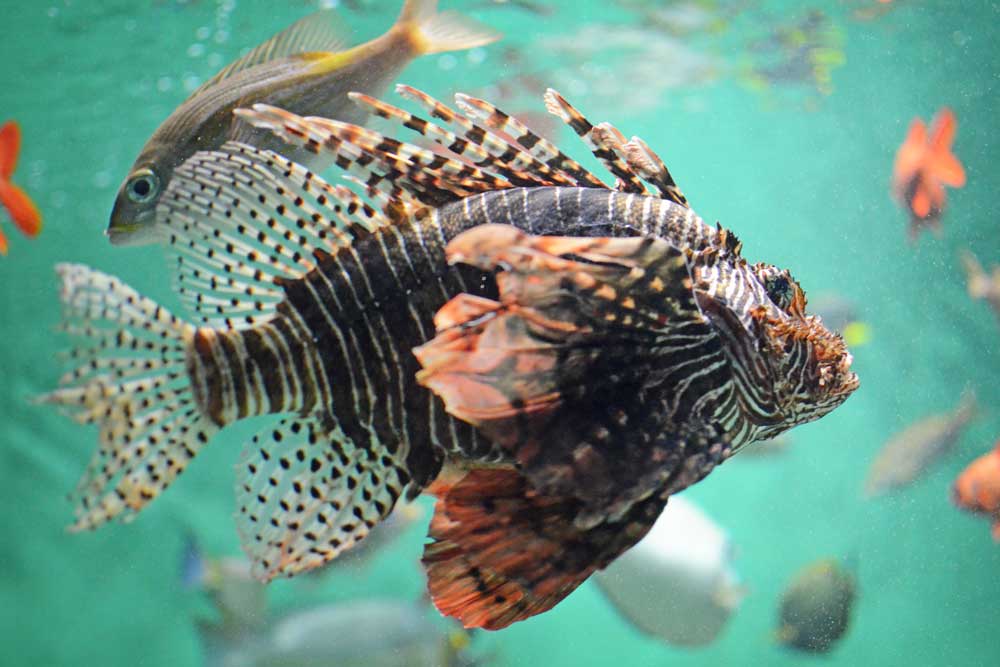
Reaching about 30 cm in length, the red lionfish inhabits coral reefs and rocky coastal areas from the eastern Indian Ocean to the western Pacific. In Japan, it is found along the Pacific coast from the Bōsō Peninsula in Chiba Prefecture southward. It is easily recognized by its striking red, reddish-brown, white, and black stripes and its long, fan-like pectoral fins. Although it closely resembles the devil firefish (Pterois lunulata), the red lionfish can be distinguished by the dark spots on its caudal fin. Its vivid coloration serves as a warning that it is venomous. A sting from its venomous fin spines causes intense pain and may lead to swelling, nausea, and even difficulty breathing.
The red lionfish has become one of the most notorious invasive species in the Atlantic Ocean, posing a serious threat to native marine ecosystems. Since it was first recorded off the coast of Florida in the mid-1980s, its range has expanded dramatically, from Rhode Island along the eastern coast of the United States through the Caribbean and as far south as São Paulo, Brazil. An opportunistic predator with a voracious appetite, it consumes a wide variety of native juvenile fishes. Many of these young fishes normally graze on algae, so their decline allows algae to proliferate unchecked. Excessive algal growth can smother corals, severely affecting the health and resilience of coral reef ecosystems.
Completely eradicating the overabundant lionfish is considered impossible. Instead, the most effective strategy is to keep their population below the level at which native species can continue to survive. One surprisingly simple solution is to eat them. In Belize, fishermen are offered incentives to harvest lionfish, which are then sold for food and served in homes and restaurants. Even the venomous fin spines, which would normally be discarded, have found new value as jewelry. Women in fishing communities craft and sell lionfish accessories, creating an additional source of income. In this way, Belize has successfully linked lionfish control with local economic development, reducing their numbers while benefiting coastal communities.
参考文献
マリンダイビングWeb | 海のいきものそっくりさんの見分け方 | 第3回ミノカサゴ編 2025年2月24日閲覧
World Bank Group | 特集 ミノカサゴ:新たなカリブの海賊 | (2017年1月4日) 2025年2月24日閲覧
サカナト | 大西洋のサンゴがピンチ? 優雅なサカナ<ハナミノカサゴ>にも原因あり | (2024年6月25日) 2025年2月24日閲覧
oceana | ミノカサゴが爆発的に増えている海、その原因と駆除の方法とは? | (2013年8月13日) 2025年2月24日閲覧
“Lionfish Jewelry” Belize Lionfish Project. 2025年2月24日閲覧