
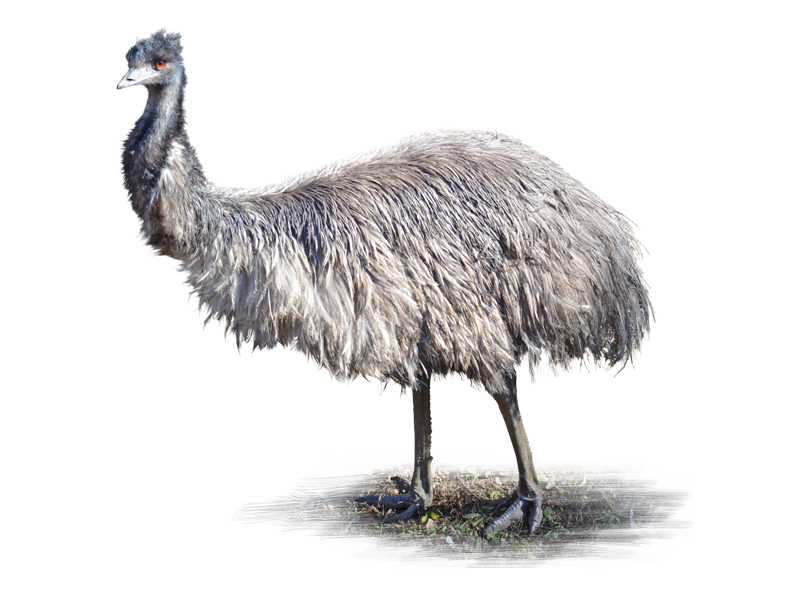
Dromaius novaehollandiae (Latham, 1790)
翼に爪がある飛べない鳥
The Flightless Bird with Claws on Its Wings
エミューは、体高約1.8mに達するオーストラリア固有の飛べない大型鳥類です。現生鳥類ではダチョウに次ぐ大きさを誇り、同じく走鳥類に属するヒクイドリと並び称されます。体は灰褐色の柔らかな羽毛に覆われ、強靭な長い脚で時速50km近い速さで走ることができます。乾燥地から草原、疎林まで幅広い環境に適応し、種子や果実、昆虫、小動物などを食べる雑食性です。繁殖期には雌が大型の暗緑色の卵を産み、雄が抱卵と育雛を担うという特徴的な習性も知られています。
ヒクイドリと比較すると、体高はエミューの方が高い一方、体重は森林性でがっしりした体つきのヒクイドリが勝ります。両者は系統的に近縁ですが、性質には違いがあり、縄張り意識が強く攻撃的とされるヒクイドリに対し、エミューは広範囲を移動する放浪的な傾向が強く、比較的臆病です。どちらも翼は小さく退化しており、エミューの翼は脚の付け根前方に12〜20cmほど残存しています。ヒクイドリでは羽毛が退化し、羽軸のみが目立つ構造です。さらに両種とも翼に爪を持つ点が共通しています。
鳥類の翼は前肢が変化したもので、骨格をみると三本の指に由来する構造が確認できます。翼の山形の頂点である翼角は人の手首に相当し、そこから第1指(親指)、第2指(人差し指)、第3指(中指)に対応する骨が並びます。エミューやヒクイドリの爪は第2指に位置し、四肢を備えた恐竜の祖先形質を思わせます。多くの現生鳥類では前肢の爪は失われていますが、近年の研究により、飛べない鳥も祖先は飛翔能力を備えていたことが示されています。飛行を放棄した進化の過程で翼は縮小しましたが、なぜ爪が残ったのかについては、いまだ明確な結論は得られていません。
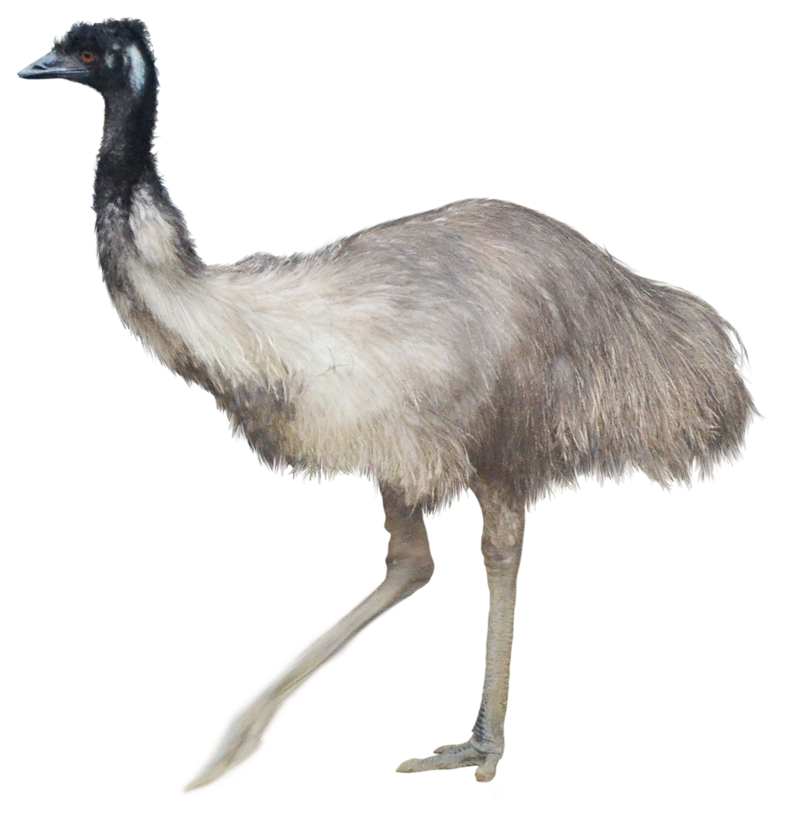
Emu (Dromaius novaehollandiae) is a large, flightless bird endemic to Australia, reaching about 1.8 meters in height. It is the second-largest living bird after the ostrich and is often mentioned alongside the cassowary, a fellow ratite. Its body is covered with soft grayish-brown feathers, and its powerful long legs enable it to run at speeds of nearly 50 km/h. The emu inhabits a wide range of environments, from arid regions to grasslands and open woodlands. It is omnivorous, feeding on seeds, fruits, insects, and small animals. During the breeding season, the female lays large dark green eggs, and the male undertakes incubation and chick-rearing, a distinctive trait of the species.
Compared with the cassowary, the emu is generally taller, while the more robust, forest-dwelling cassowary is heavier. Although the two are closely related, their temperaments differ: cassowaries are known for their strong territoriality and aggressive behavior, whereas emus tend to be more nomadic and relatively timid. In both species, the wings are greatly reduced. The emu retains small wings about 12–20 cm long at the front of the thigh, while in cassowaries the flight feathers are reduced, leaving mainly the quill shafts. Both species also retain claws on their wings.
Bird wings are modified forelimbs, and skeletal examination reveals structures derived from three digits. The apex of the wing’s arc, called the wrist joint (carpal joint), corresponds to the human wrist, followed by bones equivalent to the first (thumb), second (index), and third (middle) fingers. In emus and cassowaries, the claw is located on the second digit, recalling their dinosaurian ancestors that possessed four limbs. While most modern birds have lost the claws on their forelimbs, recent research indicates that flightless birds descended from ancestors capable of flight. During the evolutionary process in which flight was abandoned, the wings became reduced, yet the reason why the claws have been retained remains unclear.
参考文献
東山動植物園 | オフィシャルブログ | オーストラリアに生息する動物たちの豆知識(その3) | (2020年5月8日) 2024年11月23日閲覧
「第66回企画展 鳥の骨展-空飛ぶ鳥の骨組み-」(2013年7月13 日~12月1日) 鳥の博物館企画展ガイド(展示パネル集). 我孫子市鳥の博物館 2024年11月23日閲覧
笠岡市立カブトガニ博物館 | 野鳥の季節。鳥の手の指って何本? | (2019年12月16日) 2024年11月23日閲覧
「トリと恐竜をつなぐ指のつくられかた 手足の形づくりに見る普遍と多様」 | 田村宏治 (2011) | 季刊「生命誌」71号 | JT生命誌研究館 2024年11月23日閲覧
田村 宏治、野村 直生 (2011年2月2日)「恐竜の前足の指と鳥類の翼の指は同じもの」東北大学 大学院 生命科学研究科 2024年11月23日閲覧
ナショナルジオグラフィック | ニュース | 飛べない鳥、進化の謎を解明か | (2014年5月14日) 2024年11月23日閲覧