
Antilope oryx (Pallas, 1766)
ヘラジカの名を持つウシの仲間
A Bovid Bearing the Name of the Moose
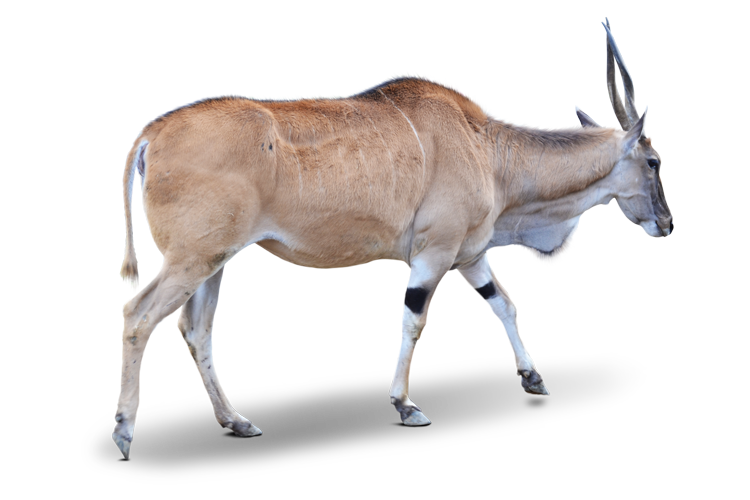
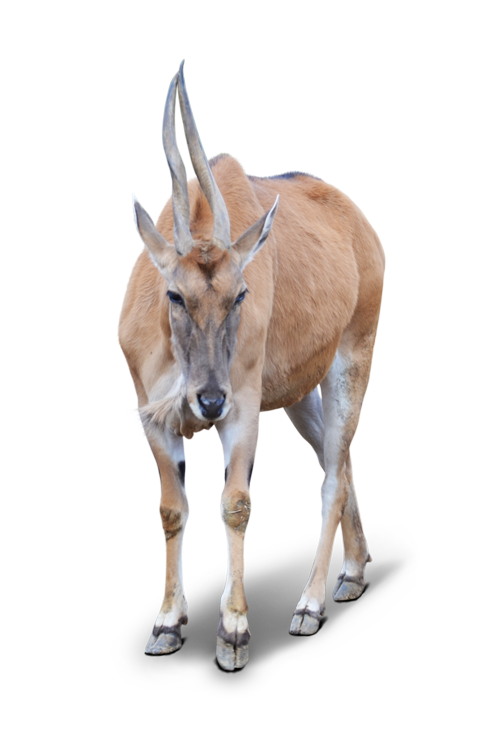
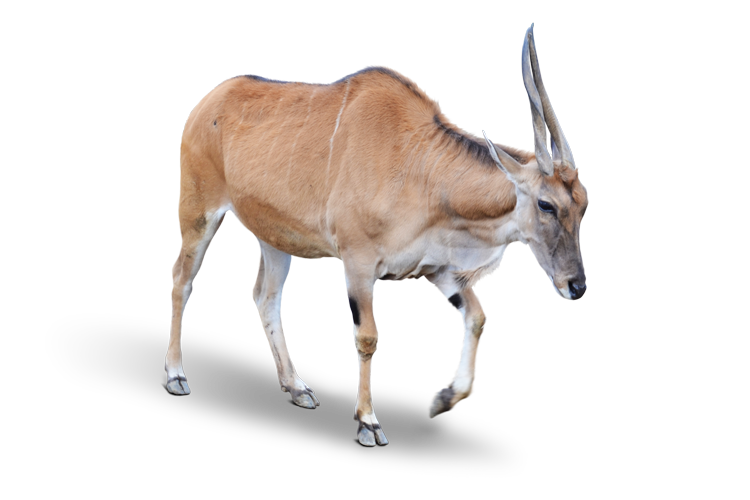
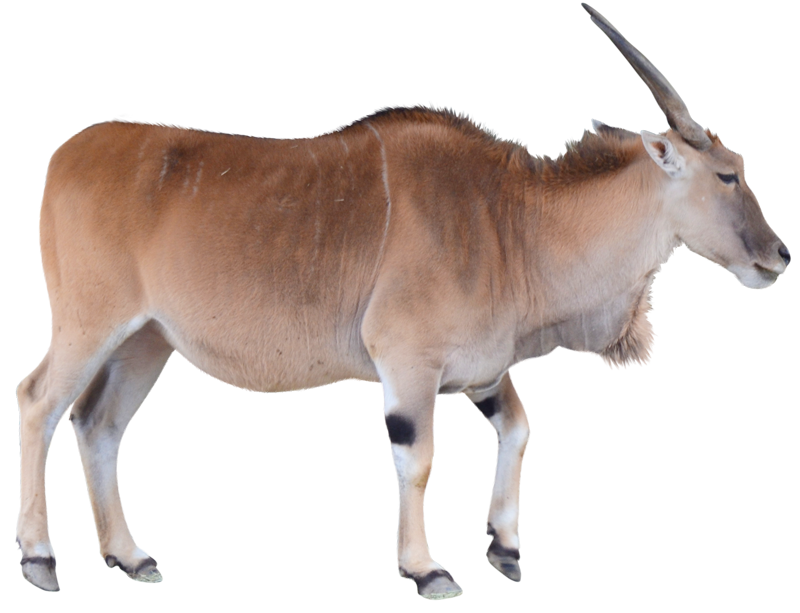
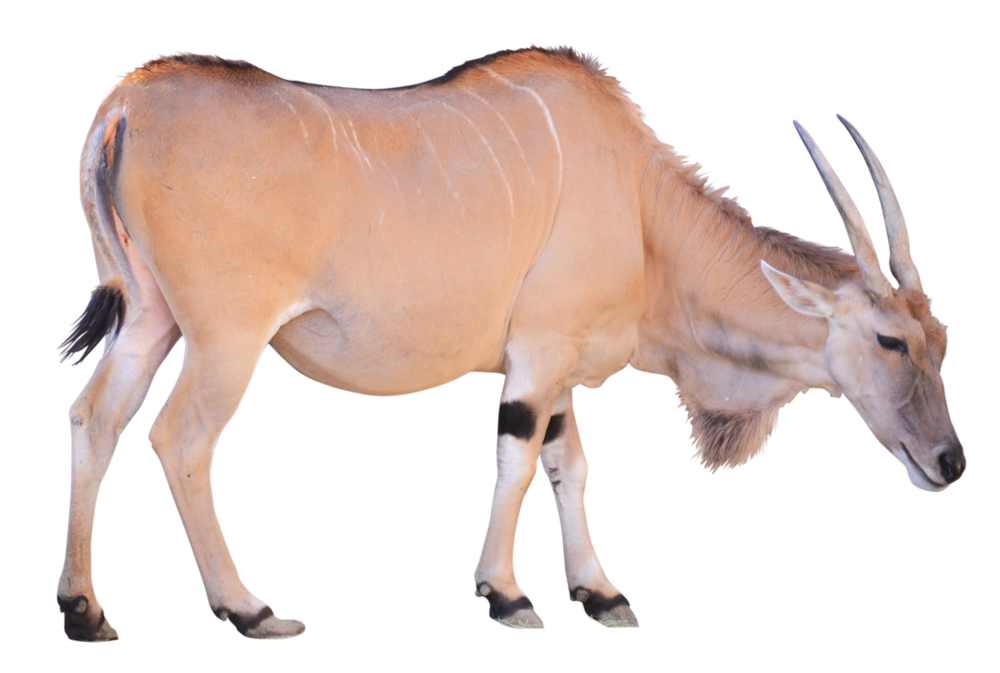
エランドはアフリカ南部のサバンナや疎林に分布する大型レイヨウです。頭胴長はオス240〜345cm、メスでも125cm以上の肩高をもち、体重はオスで最大900kgを超えることもあります。レイヨウ類(Antelope)の中ではジャイアントエランドに次ぐ大きさを誇り、現生のウシ科動物の中でも屈指の体格です。
雌雄ともに1回から1回半ほど緩やかにねじれた直線的な角を持ち、長さは最大約65cmに達します。体色は黄褐色で、若い個体や雌では胴に白い細い縦縞が目立ちますが、成長した雄では縞が薄れる傾向があります。雄は加齢とともに喉元に垂れ下がる肉垂や黒みを帯びた体色が顕著になり、威厳ある姿となります。
生理的な適応も特筆されます。エランドは体温を最大で約7℃変動させることができ、昼間は体温を上げて発汗を抑え、夜間に放熱することで水分の損失を最小限に抑えます。この優れた体温調節能力により、乾燥した環境でも長時間水を飲まずに行動することが可能です。主に草や木の葉を食べ、乾季には高木の葉や果実も利用します。
本種は、より大型のジャイアントエランドと区別して「コモンエランド」と呼ばれることがあります。かつては同種の亜種と考えられていましたが、形態や生態の差異、分子系統解析の結果から、約160万年前に分岐した別種とされています。なお「エランド」という名はオランダ語でヘラジカを意味する語に由来し、巨大な体格への印象的な比喩といえるでしょう。
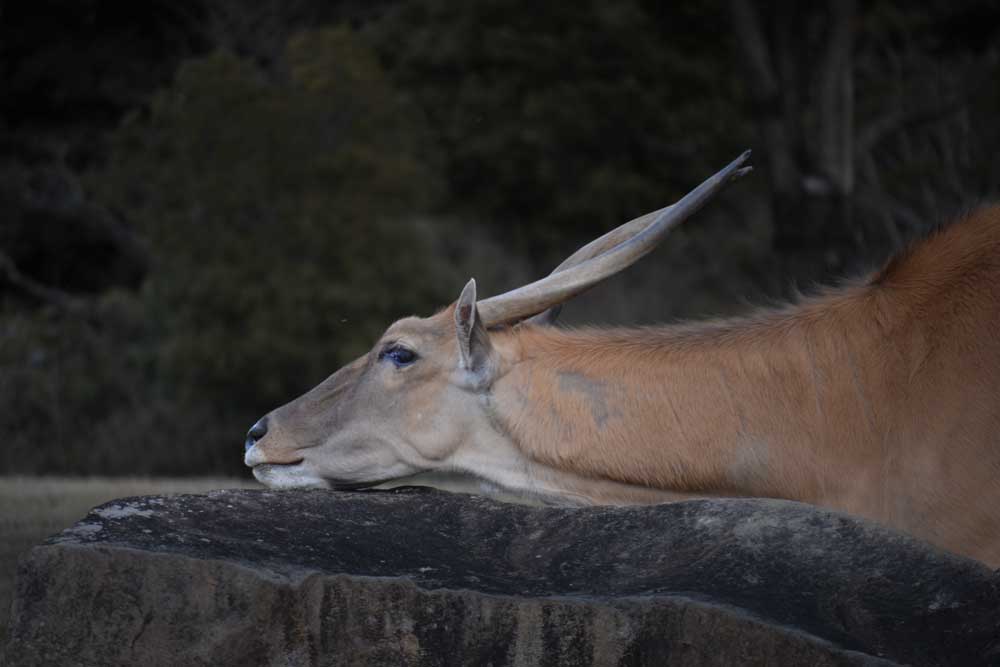
The Common eland is a large antelope distributed across the savannas and open woodlands of southern Africa. Males measure 240–345 cm in head–body length, stand up to 183 cm at the shoulder, and may exceed 900 kg in weight. Among antelopes, it is second in size only to the Giant eland, making it one of the largest living members of the family Bovidae.
Both sexes possess two straight horns with one to one and a half gentle twists, reaching up to about 65 cm in length. The coat is yellowish-brown; females and younger individuals show thin white vertical stripes along the flanks, which tend to fade in mature males. With age, males become darker in color and develop a prominent dewlap hanging from the throat, giving them an imposing appearance.
A notable physiological adaptation is their remarkable ability to regulate body temperature. Elands can allow their body temperature to fluctuate by as much as 7°C. By permitting it to rise during the heat of the day, they reduce the need for sweating and thus minimize water loss, releasing excess heat at night. This adaptation enables them to survive long periods without drinking. They feed on grasses, leaves, and fruits, adjusting their diet according to seasonal availability.
To distinguish it from the larger Giant eland, this species is sometimes referred to as the “Common” eland. Although once regarded as a subspecies, morphological, ecological, and molecular evidence now supports their separation as distinct species that diverged approximately 1.6 million years ago. The name “eland” derives from the Dutch word for “moose.” While the eland belongs to the cattle family and the moose to the deer family, both are renowned for their immense and imposing size.
参考文献
よこはま動物園ズーラシア | ブログ | 「エランド 」って、どんな動物? | (2014年11月10日) 2024年9月16日閲覧
ガジェット通信 | サバンナに住む巨体の「エランド」は牛の仲間。大きな体ながら意外な身体能力が! | (2020年9月17日) 2024年9月16日閲覧
“eland” Cambridge Dictionary. 2025年5月25日閲覧
“The African Antelope That’s the Size of a Moose: Unveiling the Eland” Working with WILDLIFE. 2025年5月25日閲覧