
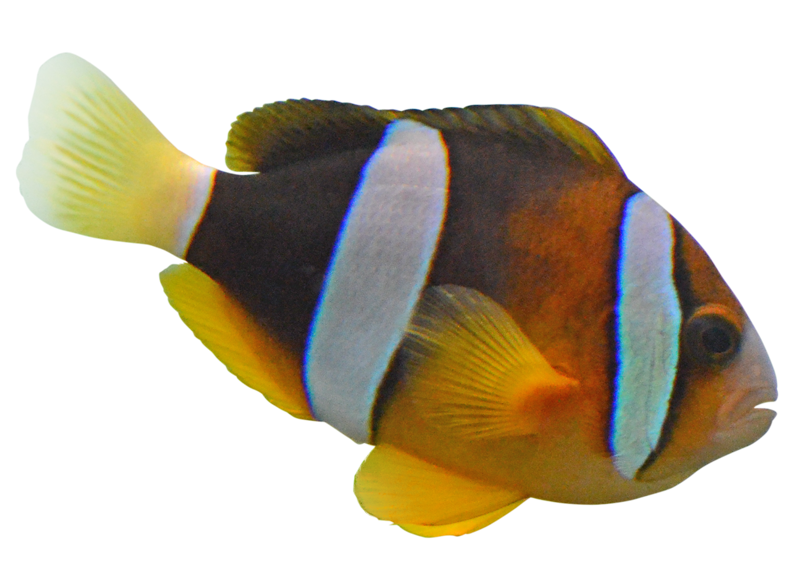
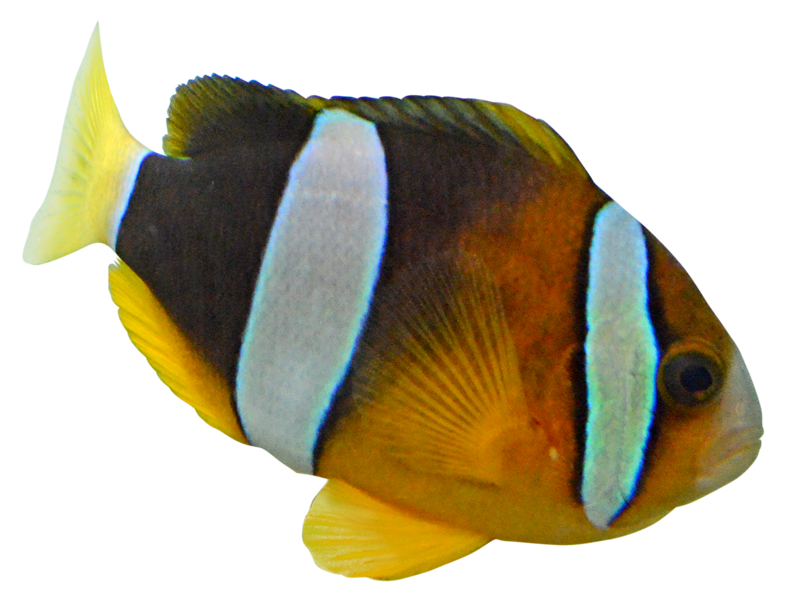
Amphiprion clarkii (Bennett, 1830)
クマノミの不思議な社会構造
The Unique Social Structure of Clownfish
体長は雄で最大約10cm、雌で約15cmほどになります。インド洋から西太平洋の熱帯海域に広く分布し、ラグーンやサンゴ礁外縁の傾斜面などに生息しています。英名や種小名にある「Clark」は、イギリスの魚類学者J.W.ベネットが新種として報告した際、図版を制作した銅版彫師ジョン・クラークに献名したことに由来します。
クマノミは、生まれたときには雌雄の区別がなく、卵子と精子の両方をつくることができる未分化の生殖腺をもっています。その後、同じイソギンチャクにすむ仲間の中で体の大きさによる順位ができ、いちばん大きい個体がメス、次に大きい個体がオスになります。群れの中ではこの1組だけが繁殖し、ほかの個体は成長しながら順番を待ちます。
もしメスが死んでしまうと、2番目に大きかったオスがメスへと変わり、さらにその下の個体がオスになります。このようにして、常に新しいペアができるしくみになっています。クマノミは泳ぐ力があまり強くなく、ほかのイソギンチャクへ移ることが難しいため、同じ場所で暮らしながら繁殖のチャンスを待つという生活をしています。このような特徴は、限られた環境の中で確実に子孫を残すための工夫だと考えられています。
Males grow to about 10 cm in length, while females reach up to around 15 cm. This species is widely distributed in tropical waters from the Indian Ocean to the western Pacific, inhabiting lagoons and the outer slopes of coral reefs. The name “Clark,” found in its English and scientific names, honors John Clark, a copperplate engraver who prepared the illustrations when the British ichthyologist J. W. Bennett first described the species.
Clownfish are born without a fixed sex and possess undifferentiated gonads capable of producing both eggs and sperm. As they grow, a size-based hierarchy forms among individuals living within the same sea anemone: the largest becomes female, and the second largest becomes male. Only this dominant pair reproduces, while the others remain non-breeding individuals and wait their turn.
If the female dies, the largest male changes sex and becomes female, and the next individual in rank becomes male. In this way, a new breeding pair is always formed. Because clownfish are not strong swimmers and have difficulty moving between sea anemones, subordinate individuals stay within the same group and wait for an opportunity to reproduce. This system is thought to be an adaptation that ensures successful reproduction in a limited environment.
参考文献
“Amphiprion clarkii (Bennett, 1830) Yellowtail clownfish” FishBase. 2025年2月1日閲覧
Rhelixa | エピゲノムによる魚類の性転換制御 ~生殖にかかわるエピジェネティクス~ | (2020年7月3日) 2025年2月1日閲覧
サンシャイン水族館 | いきふぉめ〜しょん | 性転換をするって本当!?クマノミってどんな生き物? | (2021年4月23日) 2025年2月1日閲覧
岩田 惠理 「性転換する海洋生物─性という戦略」オーシャンニューズレター第567号 (2024年3月20日発行), 笹川平和財団 2025年2月1日閲覧
中村庸夫 (2006)『魚の名前』東京書籍 pp.96. 2025年2月1日閲覧