
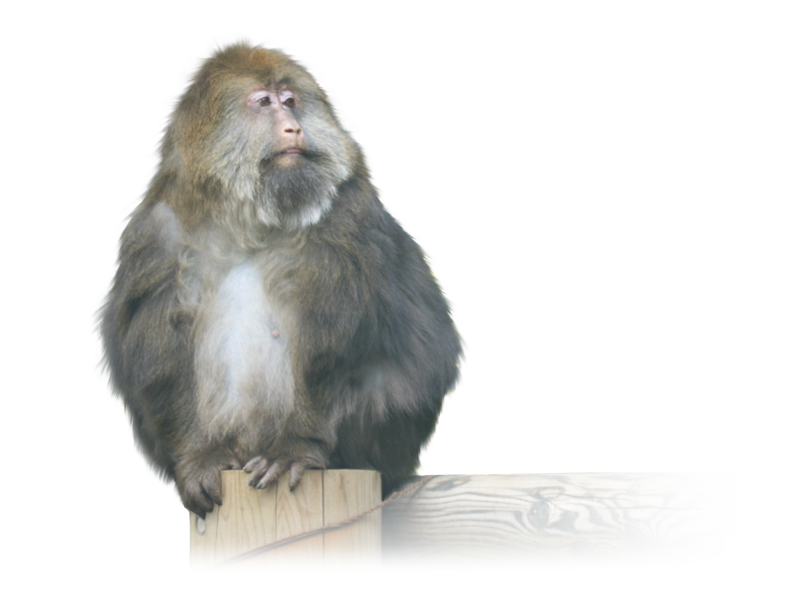
Macaca thibetana (Milne-Edwards, 1870)
子どもを介したコミュニケーション術
Communication Through Infants
雄は体長約60cm、体重約15kg、雌は体長約50cm、体重約10kgになる大型のマカク属のサルです。全身は厚い灰褐色の体毛に覆われ、顔の周囲には明るい淡色の毛が密生し、落ち着いた印象を与えます。雑食性で、木の葉や果実、種子、草、根、タケノコ、昆虫など幅広い食物を利用し、山地の季節変化に応じて食性を柔軟に変化させます。分布はチベットから中国南部にかけての山岳地帯に広がり、地域差によって4亜種が認められています。中国広西チワン族自治区では北部山地の標高400〜500m以上に生息しますが、低地に広く分布するアカゲザルとの種間競争の影響で高地へ移行した可能性があり、現在の分布は進化的過程を反映しているとも考えられています。
マカク属は約600万〜700万年前(後期中新世)にアフリカのヒヒ類の祖先から分岐し、バーバリーマカクの系統、シシオザル類の系統、チベットモンキーを含む系統、そしてアカゲザルやニホンザルを含む系統へと順次分化しました。ユーラシア大陸を西から東へ放散する過程で寒冷地への適応を進め、食性の柔軟さを発達させたと考えられます。
本種は社会行動でも特徴的です。オス同士の挨拶や接近の場面では、子どもを抱き上げたり相手に示したりする三者的相互作用が観察され、社会的緊張を緩和する役割を果たすとされています。この行動はブリッジングとも呼ばれ、複雑な群れ社会を安定させるために進化したコミュニケーションの一形態と考えられています。
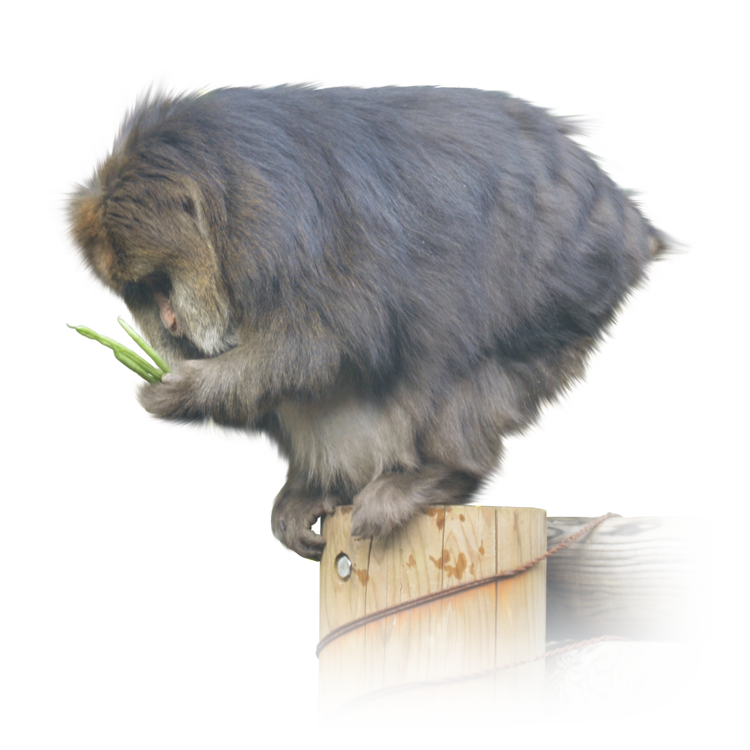
The Tibetan macaque is a large member of the genus Macaca. Males reach about 60 cm in body length and weigh around 15 kg, while females measure about 50 cm and weigh approximately 10 kg. The body is covered with thick grayish-brown fur, and pale hairs densely surround the face, giving it a calm appearance. It is omnivorous, feeding on leaves, fruits, seeds, grasses, roots, bamboo shoots, and insects, and adjusts its diet flexibly in response to seasonal changes in its montane habitat. The species is distributed from Tibet to southern China, inhabiting mountainous regions, and four subspecies are recognized based on regional variation. In Guangxi Zhuang Autonomous Region, it occurs mainly in northern mountains above 400–500 meters in elevation. It has been suggested that interspecific competition with the rhesus macaque, which widely occupies lowland areas, may have pushed this species into higher elevations, and its present distribution may reflect aspects of its evolutionary history.
The genus Macaca diverged from the ancestral lineage of African papionins approximately 6–7 million years ago (Late Miocene). Subsequent diversification produced, in sequence, the lineage of the Barbary macaque, the silenus group, the lineage including the Tibetan macaque, and finally the group containing the rhesus and Japanese macaques. As macaques dispersed west to east across Eurasia, they adapted to colder climates and developed increasingly flexible feeding strategies.
The Tibetan macaque is also notable for its distinctive social behavior. During greetings or tense encounters between males, individuals may hold up or present an infant to another male, forming a triadic interaction known as social triangulation. This behavior, also referred to as “bridging,” is thought to function in reducing social tension and represents an evolved form of communication that helps maintain stability within complex social groups.
参考文献
“Tibetan Macaque” New England Primate Conservancy. 2026年3月8日閲覧
エレファントーク | おもしろ哺乳動物大百科 | No.093 バーバリーマカク – おもしろ哺乳動物大百科 43 霊長目 オナガザル科 マカク属 | (2010年11月4日) 2026年3月8日閲覧