
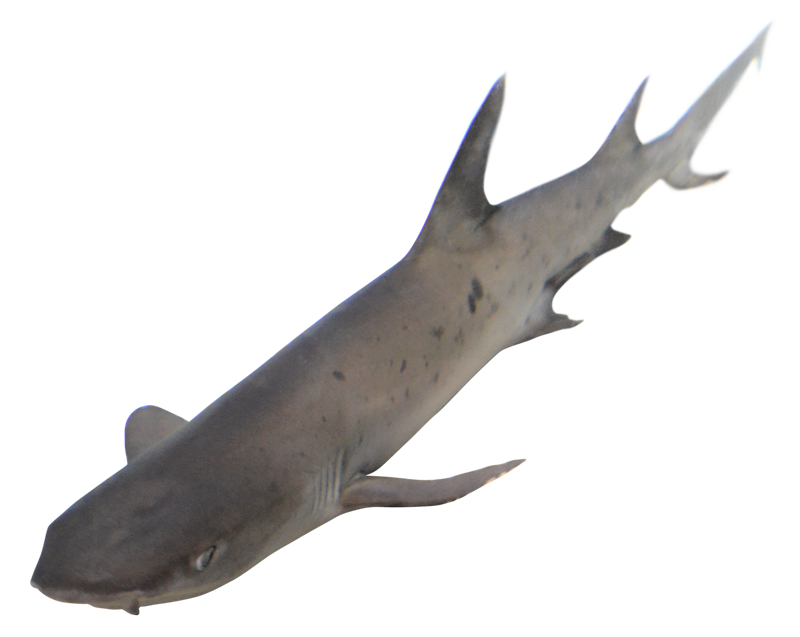
Chiloscyllium punctatum (Müller & Henle, 1838)
名前が哺乳類に由来するサメたち
Sharks Named After Mammals
最大で体長約140cm。東インド洋から西太平洋にかけての熱帯〜温帯域に広く分布し、沿岸の岩礁域や砂泥底に生息します。夜行性で、昼間は岩陰や海底のくぼみに身を潜め、夜になると活動を始めます。口元にあるひげ状の触角(バーベル)を使って海底を探り、カニやエビ、多毛類(ゴカイ類)などの小型無脊椎動物を見つけて捕食します。細長い体をくねらせながら底を這うように移動する姿が特徴的です。
混同されがちなネコザメとの違いは明確です。ネコザメはネコザメ目ネコザメ科に属し、目の上の瘤がネコの耳のように見えることからその名が付けられました。一方、イヌザメはテンジクザメ目に属する別系統のサメです。両種とも幼体では横縞模様を持つ点で似ていますが、イヌザメは成長とともに縞が次第に薄れ、成魚ではほとんど消失します。対してネコザメは、成長後も斑紋や模様が比較的はっきり残る点が異なります。
イヌザメの和名の由来には諸説ありますが、海底を徘徊しながら餌を探す様子が、地面を嗅ぎ回りながら歩く犬を連想させることにちなむという説が有力です。ネズミザメやトラザメ、イタチザメなど、サメには哺乳類に由来する名称が多く見られます。中でもイタチザメは体長3mを超える大型種で、人に危害を及ぼすこともあることで知られています。こうした命名には、サメという異質な存在を身近な動物にたとえて理解しようとする、日本語ならではの感覚が表れているのかもしれません。
Reaching a maximum length of about 140 cm, this species is widely distributed from the eastern Indian Ocean to the western Pacific, inhabiting tropical to temperate coastal waters. It is typically found in rocky reefs and on sandy or muddy bottoms. Nocturnal in habit, it hides in crevices or depressions on the seafloor during the day and becomes active at night. Using the whisker-like barbels near its mouth, it probes the substrate to locate prey such as crabs, shrimps, and polychaete worms. Its slender body moves in a sinuous, creeping manner along the bottom, giving it a distinctive appearance.
It is often confused with the horn shark, but the differences are clear. The horn shark belongs to the order Heterodontiformes (family Heterodontidae), and its name derives from the horn-like ridges above its eyes, which resemble a cat’s ears. In contrast, the dogfish belongs to the order Orectolobiformes, representing a separate lineage. While both species display transverse banding as juveniles, the bands of the dogfish gradually fade with growth and are almost completely lost in adults. In the horn shark, however, the markings remain relatively distinct even after maturity.
The origin of the Japanese name “Inuzame” (dog shark) is not fully settled, but one widely accepted explanation is that its behavior—wandering along the seafloor in search of food—resembles a dog sniffing the ground as it walks. Other sharks with mammal-derived names include the mouse shark, tiger shark, and weasel shark. Among them, the tiger shark grows to over 3 meters in length and is known to pose a potential danger to humans. Such naming conventions may reflect a uniquely Japanese sensibility: interpreting unfamiliar creatures like sharks by likening them to more familiar animals.
参考文献
海遊館 | ブログ | イヌザメの成長 | (2023年3月16日) 2025年3月16日閲覧
中村 庸夫 『魚の名前』東京書籍 pp.39, 144
“Brownbanded Bambooshark” Florida Museum. 2025年3月16日閲覧