
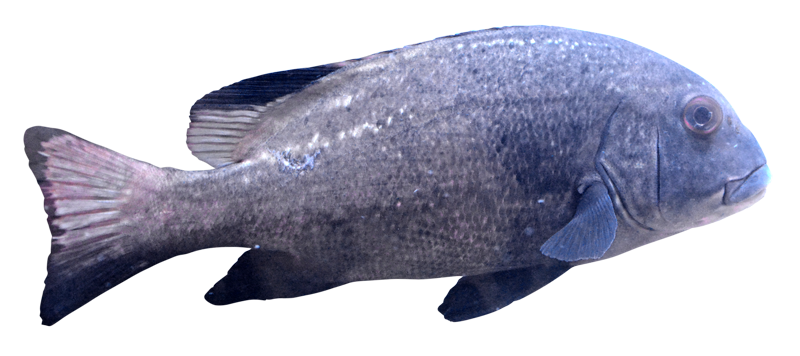
Plectorhinchus albovittatus (Rüppell, 1838)
成長とともに姿を変えるコショウダイ
A Sweetlips Transformed by Growth
体長60cmほどで、最大100cmに達する大型のコショウダイです。インド洋から西太平洋の熱帯・亜熱帯域に分布し、日本では和歌山県以南に見られます。成魚は海に面したサンゴ礁や透明度の高いラグーンで暮らしますが、幼魚は河口近くの汽水域や浅く濁った沿岸域に生息し、成長に伴って生活環境を変えていきます。
本種の最大の特徴は、成長によって姿が大きく変化することです。和名の「ダイダイ」は、幼魚が鮮やかな橙色を帯びることに由来します。また、英名の「Two-striped sweetlips(2本縞のコショウダイ)」も、幼魚の体側に見られる2本の黒い縦帯にちなんで名付けられました。幼魚は体をくねらせながら泳ぐ独特の行動を見せ、枯れ葉や有毒生物に擬態して捕食者の目を欺いている可能性があると考えられています。
一方、成魚になると橙色や縦縞は次第に消え、全身は灰色を基調とした落ち着いた体色へと変化します。その代わり、背びれと尾びれには白と黒のツートンカラーが現れ、幼魚とはまったく異なる印象になります。属名の「コショウダイ」は、体表に散らばる小さな黒い斑点が胡椒の実を思わせることに由来し、本種でもその特徴を確認できます。幼魚と成魚で姿や生息環境が大きく変わるダイダイコショウダイは、魚類の成長に伴う変態の面白さを教えてくれる代表的な一種です。
Reaching about 60 cm in length and up to 100 cm at maximum, the Two-striped Sweetlips is one of the larger members of the sweetlips family. It is distributed throughout the tropical and subtropical Indo–West Pacific. In Japan, it occurs from Wakayama Prefecture southward. Adults inhabit clear lagoons and seaward coral reefs, whereas juveniles live in estuaries, brackish waters, and shallow, turbid coastal habitats, shifting their environment as they mature.
The most remarkable feature of this species is its dramatic transformation during growth. Its Japanese name, Daidai-koshodai, is derived from the bright orange coloration of the juvenile. Likewise, the English name “Two-striped Sweetlips” refers to the two bold black vertical bands found on the sides of young fish. Juveniles also display a distinctive wriggling swimming motion and are thought to mimic dead leaves or venomous organisms, helping them avoid predators.
As they mature, the orange coloration and vertical stripes gradually disappear, giving way to a subdued gray body. In contrast, the dorsal and caudal fins develop a striking black-and-white two-tone pattern, making adults look entirely different from juveniles. The Japanese name for the genus, Koshodai (“pepper seabream”), refers to the numerous small black spots scattered across the body, which resemble black peppercorns—a characteristic also seen in this species. With its striking changes in appearance and habitat throughout its life, the Two-striped Sweetlips is an excellent example of the remarkable transformations that many fishes undergo as they grow.
参考文献
“Two-striped sweetlips” TagMyFish 2024年12月12日閲覧
牛深水産株式会社 | 牛深便り | コショウダイは味も良し! コスパも良し! …だけど、寄生虫(無害)に注意! | (2021年8月15日) 2024年12月12日閲覧
McGrouther, Mark (2021, March 19) “Giant Sweetlips, Plectorhinchus albovittatus (Rüppell, 1838)” AUSTRALIAN MUSEUM 2024年12月12日閲覧