
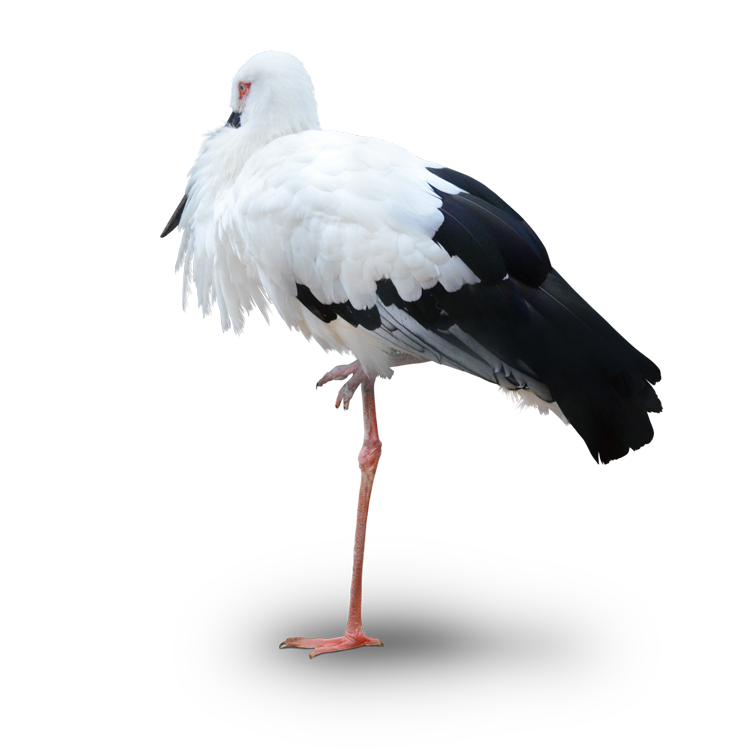
Ciconia boyciana (Swinhoe, 1873)
日本の空を再び舞う、幸せを運ぶ鳥
The Bird of Happiness Flies Over Japan Once More
全長110〜130cm、翼開長200〜220cm、体重4.5〜5.5kgになる大型の鳥です。東アジアからロシア南東部にかけて分布し、日本ではかつて本州・四国・九州の湿地や水田、河川周辺に広く生息していました。冬季には中国の鄱陽湖(ポーヤン湖)が重要な越冬地として知られています。白い体に黒い風切羽、長い赤い脚と嘴が特徴で、ツルやサギに似た姿をしていますが、分類上はそれぞれ異なる系統の鳥です。
魚類、カエル、昆虫、小型哺乳類などを捕食し、水辺や田畑をゆっくり歩きながら餌を探します。コウノトリは鳴管を動かす筋肉が発達していないため、大きな鳴き声を出すことができません。その代わりに、上下の嘴を打ち鳴らす「クラッタリング」によって仲間とコミュニケーションをとります。求愛や威嚇の際にも行われるこの行動は、ペリカン目に属するハシビロコウにも見られます。
かつて日本では身近な鳥でしたが、明治時代以降の乱獲や湿地開発、高度経済成長期の農薬使用、餌生物の減少などによって急激に個体数を減らしました。そして1971年、野生のコウノトリは日本から姿を消しました。しかし最後の生息地であった兵庫県豊岡市では、ロシアから譲り受けた個体をもとに人工繁殖が続けられ、その後の放鳥事業によって、現在では再び日本各地で野生個体が見られるようになっています。
コウノトリは古くから「幸せを運ぶ鳥」や「赤ちゃんを運んでくる鳥」として親しまれ、日本各地で神聖な霊鳥として扱われてきました。この「赤ちゃんを運ぶ」という伝承はヨーロッパにも広く存在し、中世ドイツや北欧の民間伝承をもとに、アンデルセンの童話『沼の王の娘』などを通じて世界的に知られるようになりました。なお、ヨーロッパで親しまれている種は、本種とは別種のシュバシコウ(Ciconia ciconia)です。
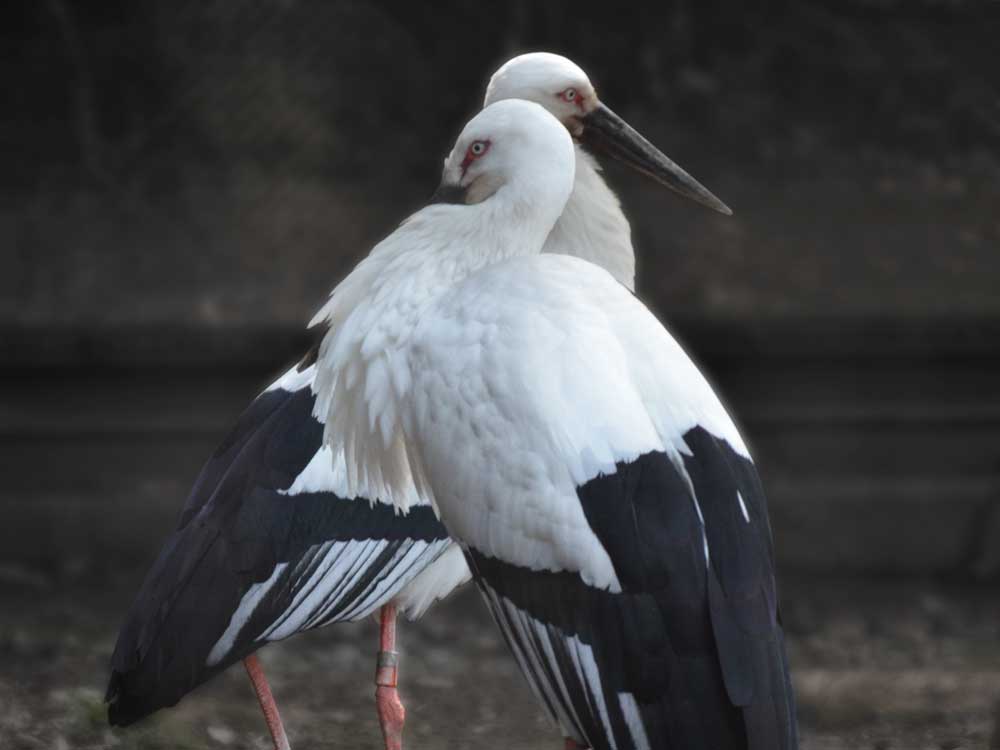
The Oriental Stork is a large bird measuring 110–130 cm in length, with a wingspan of 200–220 cm and a weight of 4.5–5.5 kg. It is distributed across East Asia and southeastern Russia. In Japan, it once inhabited wetlands, rice paddies, and river basins throughout Honshu, Shikoku, and Kyushu. China’s Poyang Lake is well known as one of its major wintering grounds. Its white body, black flight feathers, and long red legs and bill give it an appearance similar to cranes or herons, although it is not closely related to either group taxonomically.
The species feeds on fish, frogs, insects, and small mammals, slowly walking through wetlands and fields in search of prey. Unlike many birds, storks cannot produce loud vocal calls because the muscles controlling their syrinx are poorly developed. Instead, they communicate through “clattering,” rapidly striking the upper and lower mandibles together. This behavior is also seen in the Shoebill, a member of the order Pelecaniformes, and is used during courtship and territorial displays.
Once a familiar sight in Japan, the Oriental Stork suffered severe population declines due to overhunting after the Meiji era, wetland destruction, the use of powerful agricultural pesticides during the postwar economic boom, and the decline of prey species. In 1971, the species became extinct in the wild in Japan. However, conservationists in Toyooka City, Hyogo Prefecture—the bird’s last Japanese stronghold—continued captive breeding efforts using individuals gifted from Russia. Through long-term reintroduction programs, wild storks can now once again be seen flying across the skies of Japan.
The stork has long been regarded as a sacred bird associated with happiness and the delivery of babies, both in Japan and in many parts of Europe. The well-known legend of storks bringing babies is believed to have originated in medieval Germany and Northern Europe before spreading worldwide through works such as Hans Christian Andersen’s fairy tale The Marsh King’s Daughter. The species commonly associated with this legend in Europe is the White Stork (Ciconia ciconia), which is distinct from the Oriental Stork.
参考文献
コウノトリと共に生きる豊岡 | コウノトリについて 2024年11月24日閲覧
コウノトリの個体群管理に関する機関・施設間パネル | 生態と歴史 2024年11月24日閲覧
兵庫県立コウノトリの郷公園 | コウノトリを勉強しよう | どうして絶滅した? 2024年11月24日閲覧
サントリーの愛鳥活動 | 絶滅から復活へ 日本中の空を舞いはじめたコウノトリ@兵庫県・豊岡盆地 2024年11月24日閲覧
いきもの通信 | コウノトリとツル、どこが違う? | (2005年10月2日) 2024年11月24日閲覧
『「こうのとり伝説」とふるさと鴻巣』(2016年1月) 広報こうのす No.770, 鴻巣市 2024年11月24日閲覧
Gigazine | 「コウノトリが赤ちゃんを運んでくる」というイメージはどこから来たのか? | (2018年6月15日) 2024年11月24日閲覧