
Rudarius ercodes (D. S. Jordan&Fowler,1902)
小さなカワハギの扇の舞
The Fan Dance of a Tiny Filefish
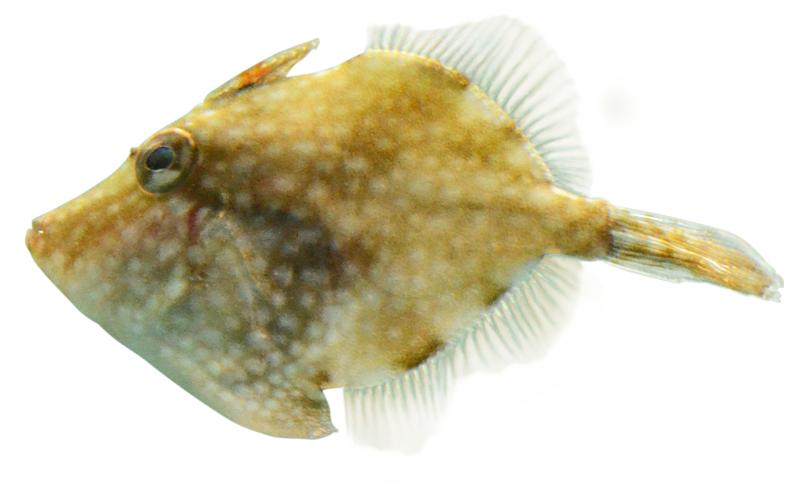
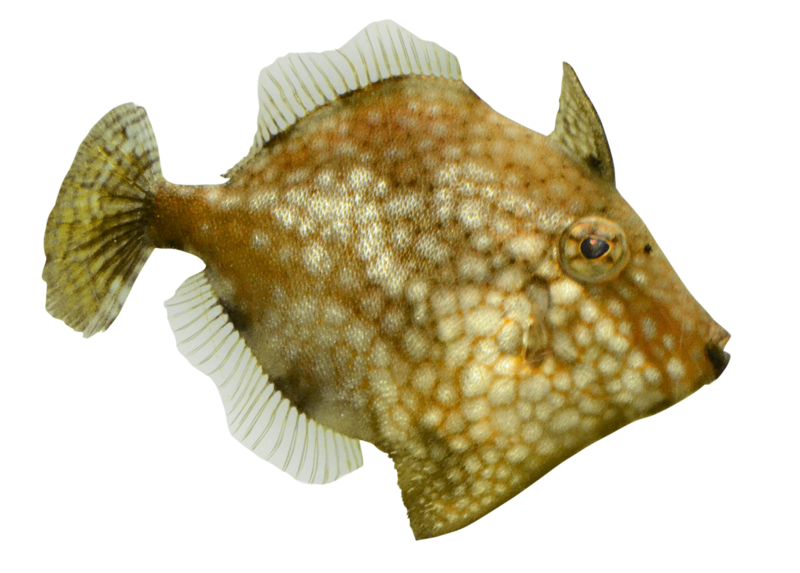
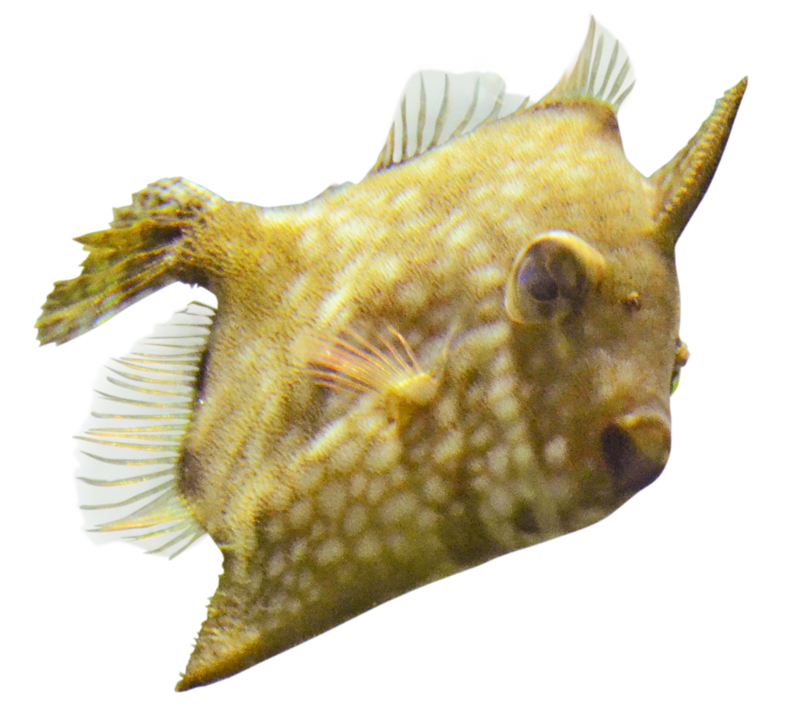
体長約6cmの小型魚で、円盤状に近い側扁した体形と、わずかに突き出た口、大きな眼が特徴です。体表はざらついた皮膚に覆われ、網目状の模様が和名の由来となっています。カワハギ科の魚は英名でfilefishと呼ばれ、革のように硬く粗い皮膚がヤスリ(file)を連想させることにちなみます。同科の代表種であるStephanolepis cirrhiferが30cm前後に達するのに対し、本種は著しく小型で、食用として利用されることはほとんどありません。
日本では房総半島以南に分布し、浅い岩礁域や砂泥底に海藻が繁茂する穏やかな沿岸、特にアマモ場に生息します。遊泳力は強くなく、胸びれを使って細かく移動しながら生活します。夜になると海藻に口でつかまり、体を固定して休むという独特の習性を持ちます。
繁殖期になると、雄は体の縁や各ひれを黒ずませる婚姻色を示します。その際に見られる求愛行動が、本種の大きな見どころです。雄は尾びれを左右に小刻みに振り、その動きはまるで扇をあおぐようにも見えます。この「扇の舞」ともいえるしぐさで雌にアピールし、やがて産卵へと導きます。小さな体で繰り広げられる繊細な動きは、海藻の揺らぎと調和し、静かな海中に美しいリズムを生み出しています。
The thread-sail filefish is a small species reaching about 6 cm in length. It is characterized by a laterally compressed, almost disc-shaped body, a slightly protruding mouth, and relatively large eyes. Its body surface is covered with rough, sandpaper-like skin, and the reticulated pattern gives rise to its Japanese name. Members of the filefish family are called “filefish” in English, a name derived from their tough, coarse skin resembling a file. Compared to the closely related Stephanolepis cirrhifer, which grows to around 30 cm, this species is much smaller and is rarely used for food.
In Japan, it occurs south of the Bōsō Peninsula, inhabiting shallow coastal environments such as rocky reefs and sandy-muddy bottoms where seaweeds and seagrasses grow, especially in calm areas like seagrass beds. It is not a strong swimmer and moves with fine, precise motions using its pectoral fins. At night, it exhibits a unique behavior: it grasps seaweed or seagrass with its mouth to anchor itself and avoid being swept away while resting.
During the breeding season, males develop nuptial coloration, with the edges of the body and fins darkening. Their courtship behavior is a notable feature of this species. Males rapidly vibrate their tails from side to side, and the motion appears much like fanning with a hand fan. Through this “fan dance,” they appeal to females and eventually lead them to spawning. The delicate movements performed by such a small fish harmonize with the swaying seaweeds, creating a quiet and graceful rhythm in the underwater world.
参考文献
ぼうずコンニャクの市場魚貝類図鑑 | アミメハギ 2025年1月11日閲覧
アクアマリンふくしま | 生き物紹介 | アミメハギ 2025年1月11日閲覧
東京ズーネット | ニュース | オスに注目! アミメハギの求愛行動 | (2021年7月9日) 2025年1月11日閲覧