
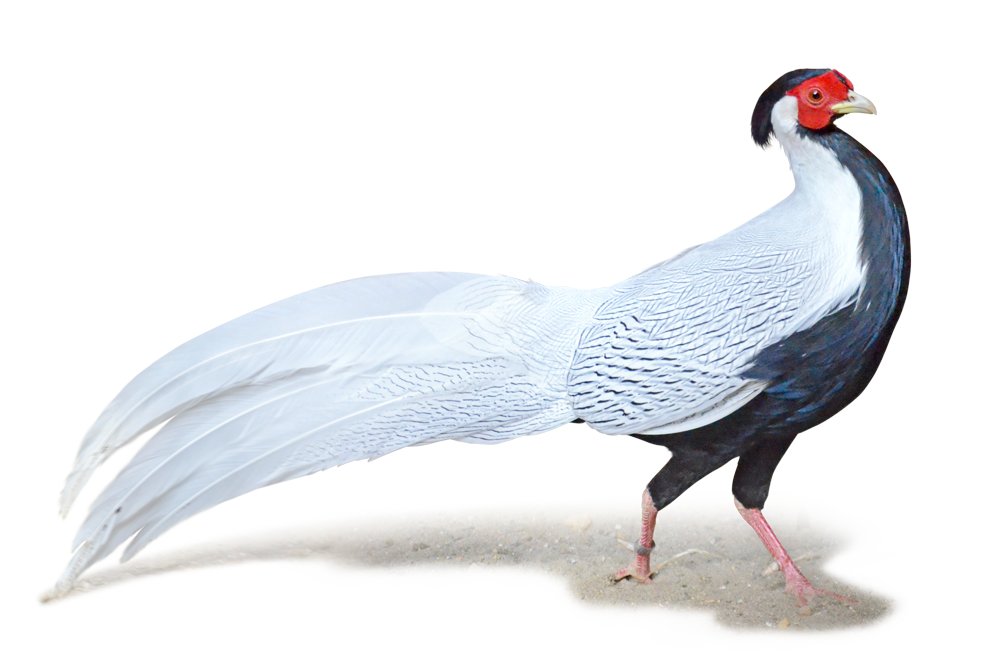
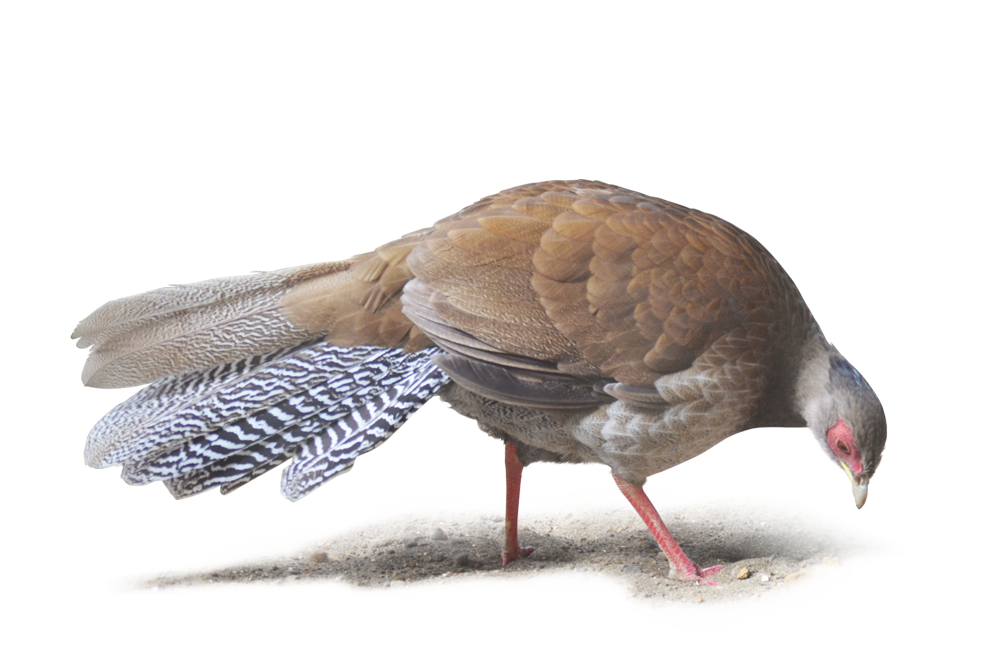
Lophura nycthemera (Linnaeus, 1758)
絵師を魅了した優雅なキジ
The Elegant Pheasant that Captivated Painters
ハッカンはキジ科の大型鳥類で、雄の全長は約90〜130cm、雌は約50〜70cmになります。分布域は中国南東部からミャンマー北部にかけてで、森林や林縁部に生息しています。雄は後頭部から尾にかけての背面が白色、腹面が黒色という強いコントラストの体色をもち、雌は全身が褐色で地味な色合いです。雌雄ともに顔の裸出部と脚が鮮やかな赤色をしています。
多くのキジ類の顔に見られる赤い肉質部は、カロテノイド色素によるものと考えられています。カロテノイドはニンジンなどに含まれる橙赤色の色素群で、体内で合成されるのではなく、餌から取り込まれます。抗酸化作用をもち、鮮やかな色彩は「健康で免疫力が高い個体」であることを示すシグナルとなり、配偶者選択に関わると考えられています。このような例は鳥類では広く知られ、フラミンゴの赤色などが代表的です。
ハッカンは漢字で「白鷴」と書きます。「鷴」は中国でキジ類を指す語です。本種は日本でも古くから知られ、大名や貴族などの間で観賞用として飼育されてきました。1454年(享徳3年)に成立した辞書『撮壌集(さつじょうしゅう)』にはすでに「白鷴」の語が見られ、当時すでに日本へ渡来していたことがうかがえます。白と黒の鮮やかな対比に赤い顔が映える姿は美しく、日本画の題材としても好まれ、江戸時代以降の絵師たちを魅了してきました。
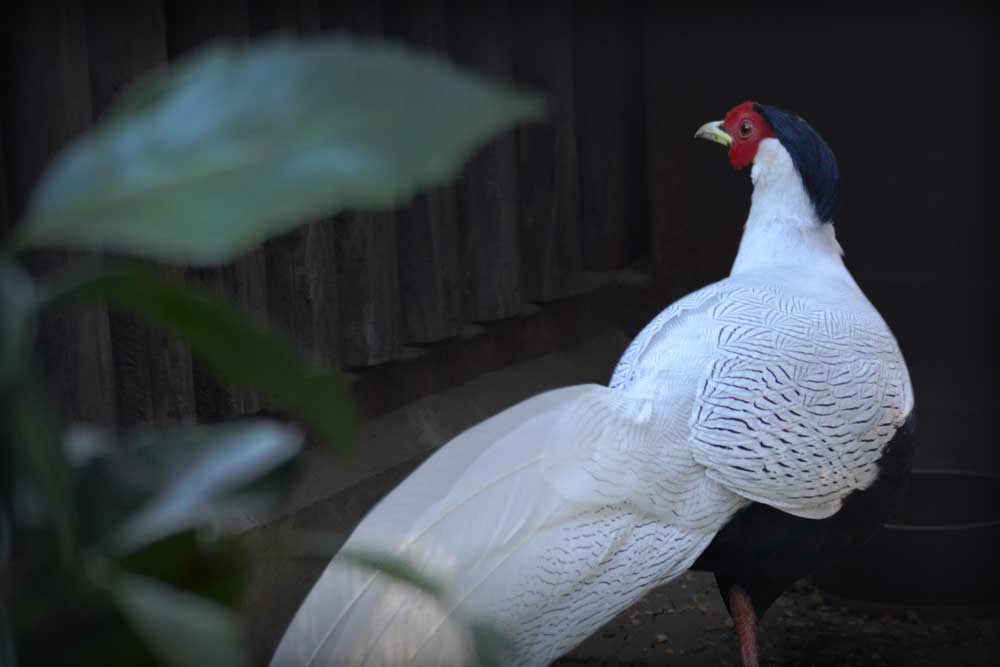
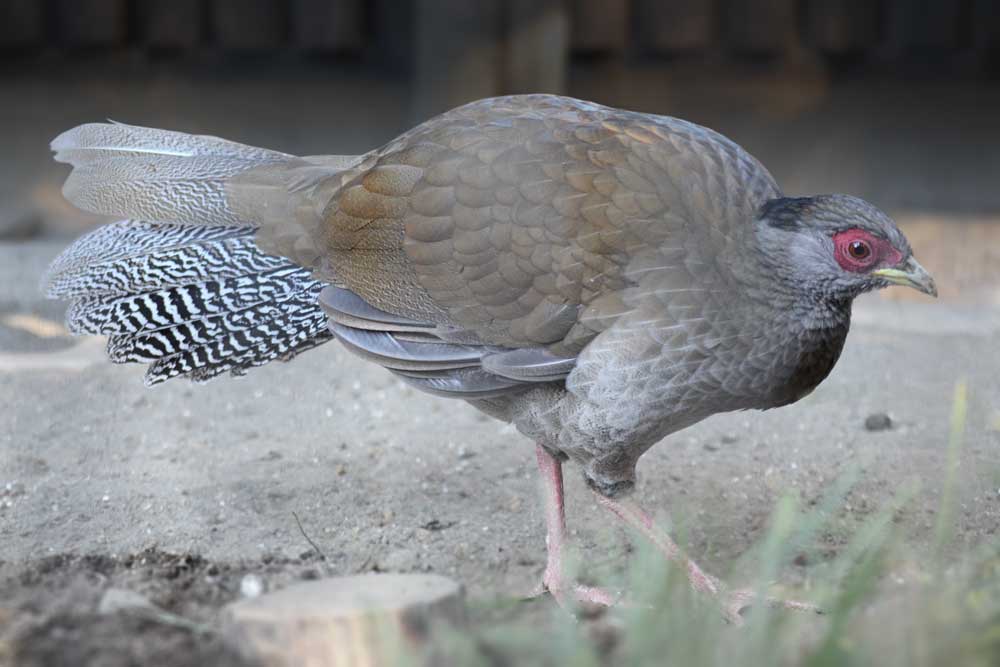
The Silver Pheasant is a large member of the pheasant family. Males reach a total length of about 90–130 cm, while females measure about 50–70 cm. The species is distributed from southeastern China to northern Myanmar, inhabiting forests and forest edges. Males have a striking plumage pattern in which the upperparts, from the back of the head to the tail, are white, while the underparts are black, creating a strong contrast. Females, in contrast, are mostly brown and much more subdued in coloration. Both sexes share bright red facial skin and red legs.
In many pheasants, the red bare skin on the face is thought to be produced by carotenoid pigments. Carotenoids are orange-red pigments found in foods such as carrots. These pigments are not synthesized by the birds themselves but are obtained through their diet. Because carotenoids have strong antioxidant properties, bright coloration is considered to signal that an individual is healthy and has a strong immune system. Such coloration can therefore play an important role in mate choice. Similar examples are widely known among birds, with the red coloration of flamingos being a well-known case.
The Japanese name “Hakkan” is written with the characters 白鷴. The character 鷴 is a Chinese term referring broadly to pheasants. This species has long been known in Japan and was historically kept as an ornamental bird among feudal lords, aristocrats, and wealthy people. The word “白鷴” already appears in the dictionary “ Satsujoushuu ”, compiled in 1454 (Kyōtoku 3), suggesting that the species had been introduced to Japan by that time. Its beautiful contrast of black and white plumage accented with red facial skin has also made it a popular subject in Japanese painting, captivating artists since the Edo period.
参考文献
“Silver pheasant” Thai National Parks. 2026年4月4日閲覧
静岡県立美術館 | デジタルアーカイブ | 白鷴図 2026年4月4日閲覧
山下善也「狩野探幽の写生-新収蔵《白鷴図》から」アマリリス 2005夏 No.78, 静岡県立美術館 2026年4月4日閲覧
“鷴” 百度教育, 百度Baidu. 2026年4月4日閲覧
文化庁 | 文化遺産オンライン | 芭蕉太湖石白鷴図 2026年4月4日閲覧