
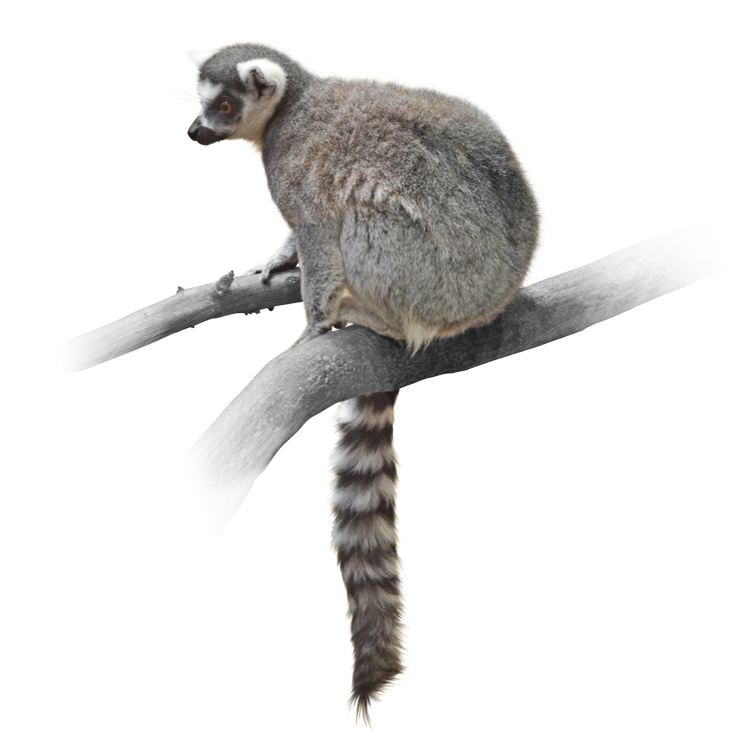
Lemur catta (Linnaeus, 1758)
匂いという複雑で精緻な言語
The Sophisticated Language of Scent
頭胴長約45cm、尾長約55cm、体重2.5~3.0kg。マダガスカル南部の乾燥林や低木地に生息するキツネザルの仲間で、白と黒の縞模様が入った長い尾を持つことで知られています。キツネザル類の中でも特に知名度が高く、その特徴的な姿はマダガスカルを象徴する動物の一つとなっています。
ワオキツネザルは樹上生活への適応が進んだ他のキツネザル類とは異なり、活動時間の約4割を地上で過ごします。群れは通常10~20頭ほどですが、多い場合には25頭近くに達することもあります。また、霊長類としては珍しくメスがオスよりも優位な「メス優位社会」を形成します。メスは餌への優先権を持ち、繁殖相手を選択する立場にあり、群れの行動にも大きな影響を与えています。このような社会構造はキツネザル類に広く見られる特徴ですが、ワオキツネザルでは特に顕著です。
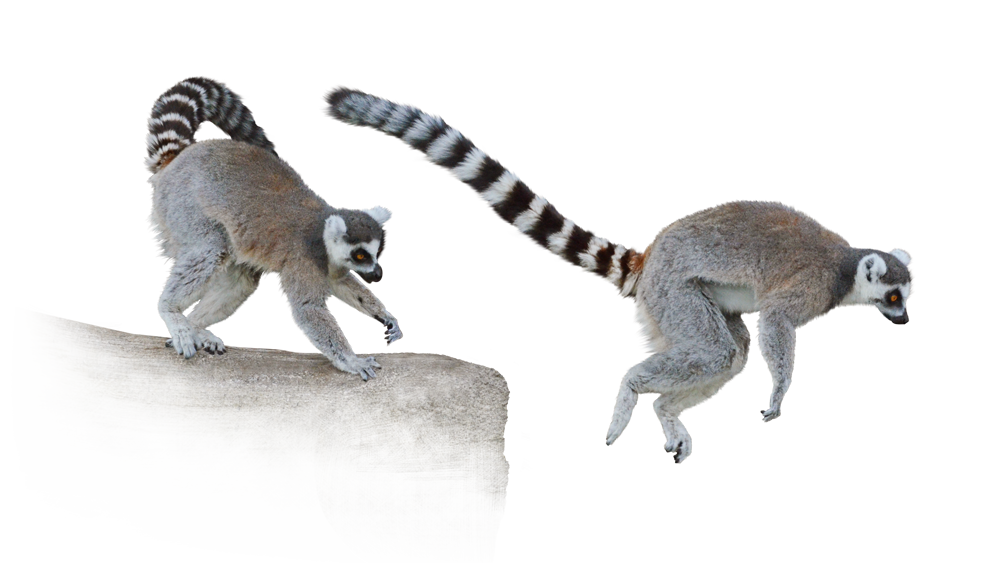
群れで移動する際には、長い尾を真っ直ぐ上に掲げて歩きます。遠くからでも目立つ縞模様は、低木林や草地の中で仲間同士の位置を確認するための目印として機能していると考えられています。こうした視覚的なコミュニケーションに加え、本種は霊長類の中でも特に発達した嗅覚コミュニケーションを維持していることでも知られています。
オスには手首、肩、生殖器周辺にそれぞれ臭腺があり、異なる匂いを分泌します。これらの分泌物には個体の年齢や健康状態、繁殖能力などの情報が含まれていると考えられています。オスは臭腺の分泌物を尾に擦りつけ、それを振り回して匂いを相手に浴びせる「スティンクファイト(臭い戦い)」を行います。これは他のオスへの威嚇や順位争いに利用されるほか、メスへのアピールとしても重要な役割を果たしています。特に繁殖期には、手首と肩の臭腺からの分泌物を組み合わせることで、より複雑な化学的シグナルを発していることが明らかになっています。
私たちヒトを含む多くの霊長類は、進化の過程で視覚への依存を強める一方、嗅覚コミュニケーションの重要性を低下させてきました。しかしワオキツネザルは、視覚と嗅覚の両方を巧みに利用しながら社会生活を営んでいます。その姿は、霊長類の祖先がどのように仲間と情報をやり取りしていたのかを考える上で、貴重な手がかりを与えてくれる存在といえるでしょう。
Head-body length approximately 45 cm, tail length about 55 cm, and weight 2.5–3.0 kg. The ring-tailed lemur is endemic to Madagascar, inhabiting the dry forests and scrublands of the island’s southern regions. Its long tail marked with distinctive black-and-white rings makes it one of the most recognizable of all lemurs and a symbolic species of Madagascar.
Unlike many other lemurs that spend most of their lives in the trees, ring-tailed lemurs are highly terrestrial, spending roughly 40 percent of their time on the ground. They typically live in groups of 10 to 20 individuals, although troops of up to 25 animals have been recorded. Their social system is unusual among primates because females dominate males. Females enjoy priority access to food resources, choose their mating partners, and play a central role in determining the activities of the group. While female dominance occurs in many lemur species, it is particularly pronounced in the ring-tailed lemur.
When traveling, ring-tailed lemurs hold their tails upright like flags. The bold black-and-white pattern helps group members keep track of one another as they move through dense vegetation and open scrubland. In addition to these visual signals, the species is renowned for maintaining an exceptionally sophisticated system of olfactory communication.
Males possess scent glands on their wrists, shoulders, and around the genital region, each producing distinct odors. These secretions are thought to convey information about an individual’s age, health, social status, and reproductive condition. Males often rub the secretions onto their tails and wave them toward rivals in displays known as “stink fights.” These contests are used to intimidate competing males and may also serve as advertisements to females. During the breeding season, males combine secretions from different glands to create more complex chemical signals. Recent research by Japanese scientists has shown that several compounds found in the scent gland secretions of breeding males strongly attract females, providing rare insight into chemical communication in primates.
Humans and many other primates have become increasingly dependent on vision during the course of evolution, while the importance of smell has generally declined. Ring-tailed lemurs, however, continue to rely heavily on both visual and olfactory signals in their social lives. As a result, they offer valuable clues to understanding how the ancestors of modern primates may have communicated long before vision became the dominant sense.
参考文献
東京大学大学院農学生命科学研究科·農学部 | ワオキツネザルのメスを惹き付けるオスの匂い ―霊長類のフェロモン様物質の同定に初めて成功― | 白須未香/伊藤聡美/糸井川壮大/早川卓志/木下こづえ/宗近功/今井啓雄/東原和成 | (2020年6月) 2024年6月23日閲覧
“Ring-Tailed Lemur Scent-Marking — and Breeding Season!” Duke Lemur Center. 2026年7月25日閲覧
David Haring (2008, June 23) “Primate’s Scent Speaks Volumes” Duke Today, Duke University. 2026年7月25日閲覧
Wyatt TPheromones: Stink Fights in LemursCurrent Biology, 30, R1373-R1375. 2026年7月25日閲覧