
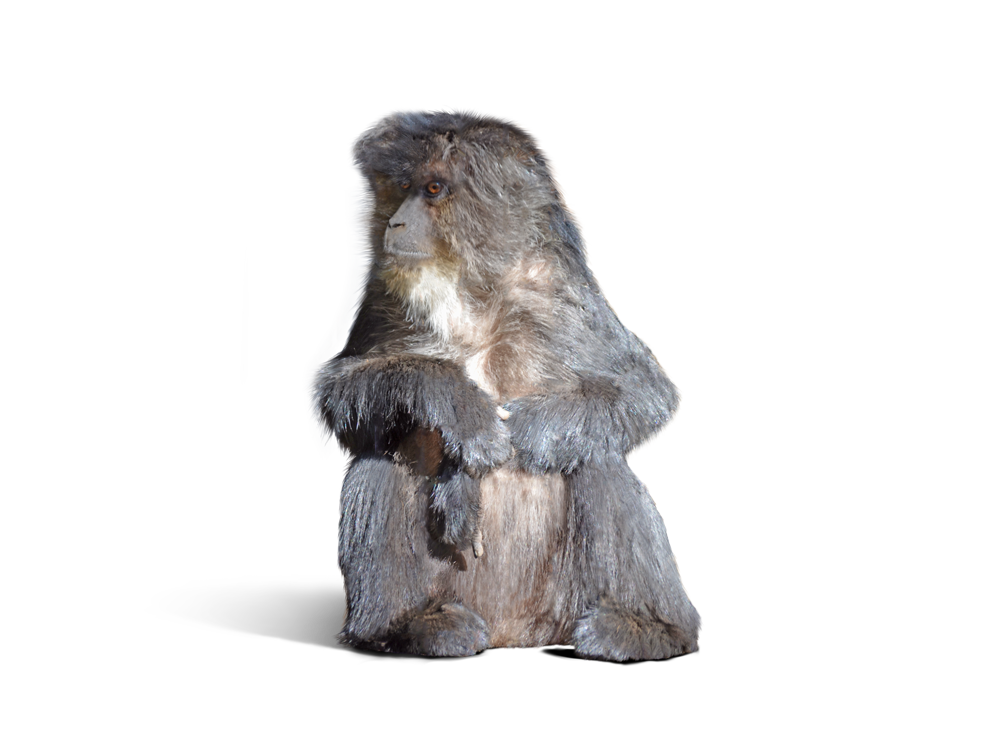
Macaca silenus (Linnaeus, 1758)
ライオンの名を持つ森のマカク
The Forest Macaque Bearing the Name of a Lion
シシオザルはニホンザルやアカゲザルと同じマカク属のサルで、体長は雄が51~61cm、雌が42~46cmになります。インド南西部の西ガーツ山脈のみに生息しており、標高300〜1700mの広葉樹林に10〜40頭ほどの群れで暮らしています。
全身は黒い体毛に覆われ、顔の周囲には灰色のたてがみ、尾の先端には房状の毛があり、ライオンを思わせる外見が名前の由来です。たてがみは雌雄ともに見られ、生後約2か月頃から伸び始めます。霊長類の社会では顔の認識が個体識別や社会関係の形成に重要とされており、シシオザルのたてがみは個体の存在感を強調し、威嚇時に体を大きく見せるほか、群れ内での社会的地位や成熟度を示す役割があると考えられています。
また、他のマカク属の仲間と同様に、頬の内側に伸縮性のある袋状の器官「頬袋」を持ち、採取した食物を一時的にため込むことができます。これは捕食者の危険が少ない場所へ移動してから落ち着いて食べるための適応です。敵に遭遇した際には歯をむき出して威嚇しますが、性質は慎重で臆病とされ、生息地から離れて行動することは少なく、熱帯雨林の内部を中心に移動します。
シシオザルは西ガーツ山脈の森林において、約211万年前に地形的障壁によって北部群と南部群に分化したと考えられています。近年は森林伐採や開発による生息地の分断が進み、特に北部群では遺伝的多様性の低下が確認されています。こうした生息地の孤立は種の存続に大きな影響を与えるため、個体群をつなぐ生息環境の保全が重要な課題となっています。マカク属21種の中で唯一の絶滅危惧種であるシシオザルの野生個体数は、現在わずか約4,000頭と推定されています。
The lion-tailed macaque is a member of the genus Macaca, the same group as the Japanese macaque and rhesus macaque. Males measure 51–61 cm in body length, while females measure 42–46 cm. The species is found only in the Western Ghats of southwestern India, where it inhabits broadleaf forests at elevations of 300–1,700 meters and lives in groups of about 10 to 40 individuals.
Its body is covered in black fur, with a gray mane surrounding the face and a tuft of hair at the tip of the tail, giving it a lion-like appearance that inspired its common name. The mane is present in both sexes and begins to grow at around two months of age. In primate societies, facial recognition plays an important role in individual identification and social relationship formation. The mane of the lion-tailed macaque is thought to enhance facial visibility, making individuals appear larger during threat displays and signaling maturity and social status within the group.
Like other macaques, it possesses expandable cheek pouches that allow it to temporarily store food. This adaptation enables the animal to move to a safer location before consuming its food. Although it bares its teeth to threaten predators, the species is actually cautious and shy, rarely leaving its forest habitat and primarily moving within the rainforest canopy.
The lion-tailed macaque is believed to have diverged into northern and southern populations approximately 2.11 million years ago due to geographical barriers within the Western Ghats. In recent years, habitat fragmentation caused by logging and development has intensified, and genetic diversity has declined particularly in the northern population. Because such isolation threatens the species’ survival, conserving habitat corridors that connect populations has become a major conservation priority. The lion-tailed macaque is the only endangered species among the 21 macaque species, and its wild population is currently estimated at only about 4,000 individuals.
参考文献
よこはま動物園ズーラシア | 動物紹介 | シシオザル 2026年2月23日閲覧
“Lion-tailed Macaque” New England Primate Conservancy. 2026年2月23日閲覧
“Lion-tailed-Macaque”Animalia. 2026年2月23日閲覧