
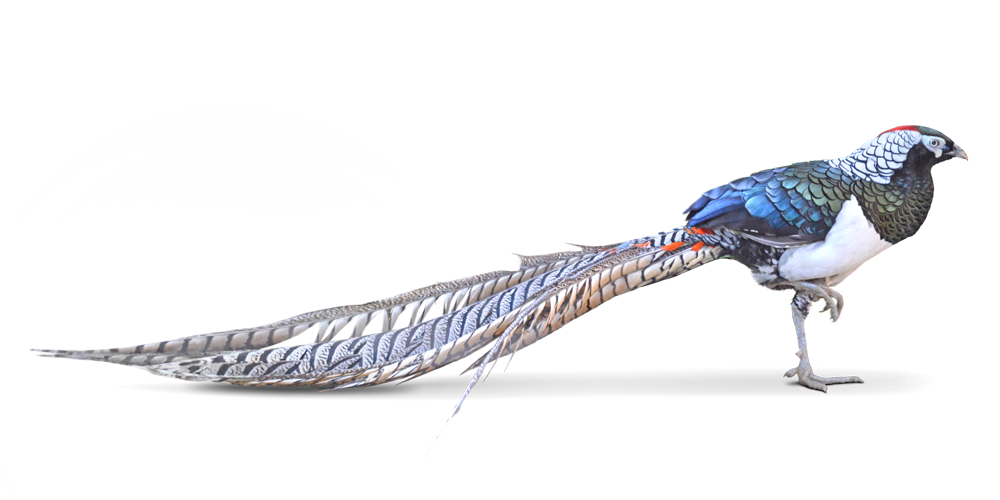
Chrysolophus amherstiae (Leadbeater, 1829)
リスクを背負う艶やかな冠羽
Glossy Crests That Carry Survival Risks
全長は雄で120~150cm、雌は50~70cmです。尾羽が非常に長く、雄では全長の半分以上を占めています。雌は茶色を基調とした保護色の体色ですが、雄は白、緑、青、黄、赤が入り混じる華やかな色彩を持ちます。特に頭部から背部にかけて見られる、白地に黒い縁取りが入った鱗状の羽模様が大きな特徴です。森林内の薄暗い環境でもよく目立つため、雌への視覚的アピールに役立っていると考えられています。
同属には、ギンケイ(銀鶏)よりひとまわり小さく、赤褐色、金色、青色の艶やかな羽色を持つキンケイ(金鶏)もいます。ギンケイは赤い冠羽、キンケイは金色の冠羽を持ち、いずれも求愛行動の際に広げたり揺らしたりして雌に存在を示します。しかし、これらの飾り羽は視界を遮る物理的な障害にもなっており、キンケイとギンケイの雄は雌に比べて垂直方向の両眼視野が30~40度ほど狭く、特に前上方や後方の視野が制限されると考えられています。そのため捕食リスクは高まりますが、繁殖成功を優先した進化的特徴といえます。
ギンケイとキンケイはいずれも中国原産で、中国南西部からチベット、ミャンマー北部にかけての標高の高い山岳森林や竹林などに生息しています。主に植物の種子、果実、若葉のほか、昆虫類なども食べる雑食性です。中国では両種とも国家重点保護野生動物に指定されており、重要な保護対象となっています。中国語ではギンケイを「白腹錦鶏」、キンケイを「赤腹錦鶏」と表記します。四川省では観察ツアーが組まれるほど人気が高く、美しい姿から文化的にも親しまれている鳥です。
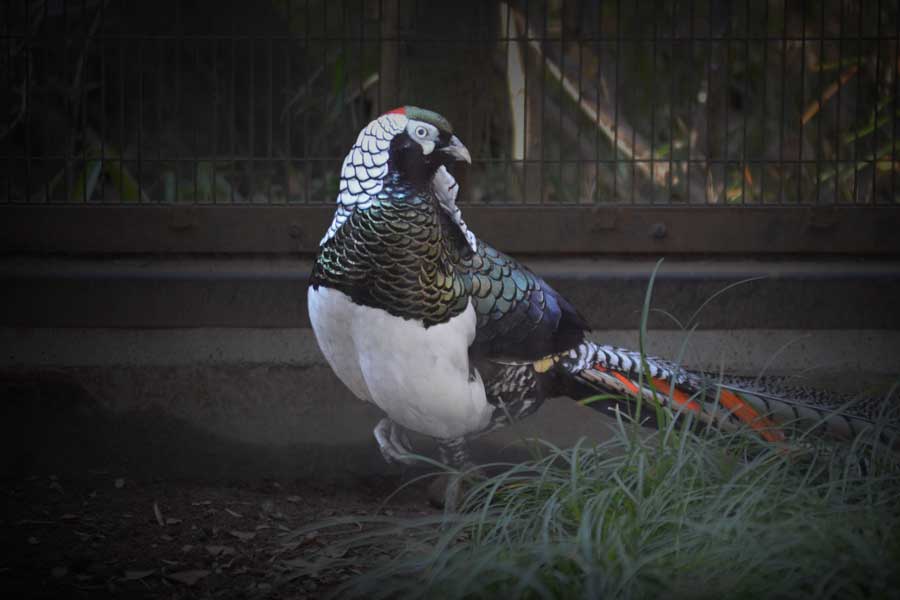
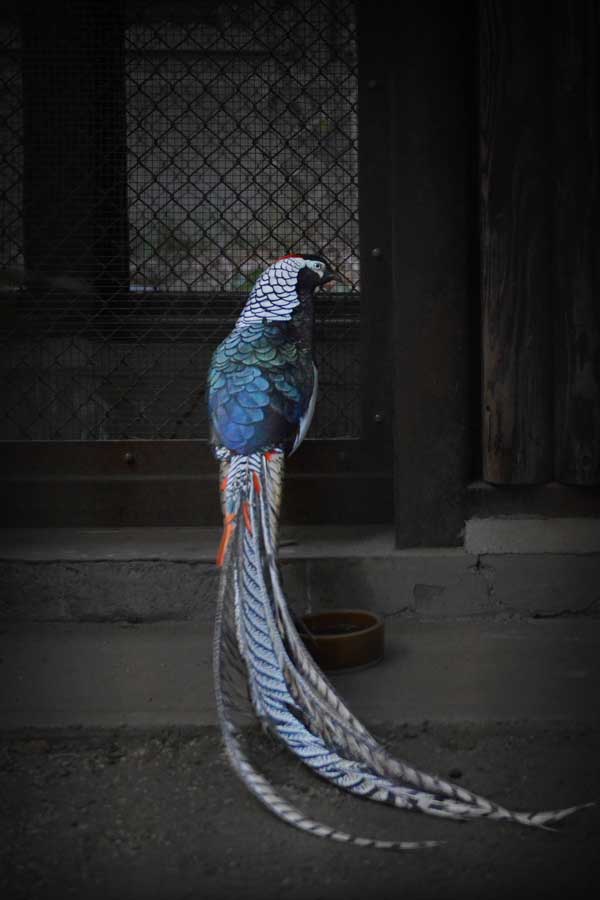
The male Silver Pheasant measures 120–150 cm in total length, while females measure 50–70 cm. Males possess extremely long tail feathers that account for more than half of their total body length. Females have a cryptic brown plumage that provides camouflage, whereas males display striking coloration combining white, green, blue, yellow, and red. A particularly distinctive feature is the scale-like feather pattern extending from the head to the back, consisting of white feathers edged in black. This bold pattern is thought to function as a visual signal to attract females, even in the dim light of forest environments.
Within the same genus, the Golden Pheasant (Chrysolophus pictus) is slightly smaller than the Silver Pheasant and exhibits glossy plumage in reddish-brown, gold, and blue. Male Silver Pheasants have red crests, while Golden Pheasants possess golden crests. These ornamental feathers are displayed and vibrated during courtship to attract females. However, such elaborate ornaments can also obstruct vision. Studies suggest that males of both species have a vertical binocular field that is approximately 30–40 degrees narrower than that of females, particularly reducing visibility above and behind them. Although this increases the risk of predation, it represents an evolutionary trade-off favoring reproductive success.
Both Silver and Golden Pheasants are native to China and are distributed across mountainous forests and bamboo thickets from southwestern China to Tibet and northern Myanmar. They are omnivorous, feeding primarily on seeds, fruits, and young leaves, as well as insects. In China, both species are designated as nationally protected wildlife and are considered important conservation targets. In Chinese, the Silver Pheasant is called “White-bellied Golden Pheasant,” while the Golden Pheasant is known as “Red-bellied Golden Pheasant.” In Sichuan Province, birdwatching tours centered on these species are popular, and their beautiful appearance has made them culturally significant birds.
参考文献
「どっちが美しいキンケイ、ギンケイ」Poppoポッポ No.86 (2017年2月), 久留米市鳥類センター 2026年2月22日閲覧
「キジ類(クジャク・キンケイ・ギンケイ)」坂井 利夫, 学校飼育動物の診療ハンドブック, 公益社団法人日本獣医師会 2026年2月22日閲覧
ナゾロジー | 金鶏と銀鶏の雄は派手な冠羽のせいで「周りがよく見えていない」| (2025年11月28日) 2026年2月22日閲覧
“Number of Lady Amherst’s pheasants on the rise in SW China’s Yunnan” (2024, May 10), People’s Daily Online. 2026年2月22日閲覧
“那不是鸡毛掸子成精,那是正在找媳妇的白腹锦鸡” (2020, September 13), 上海东方报业有限公司 2026年2月22日閲覧
「陽春三月、四川省の観鳥活動は、新たなハイライト。」(2025年4月15日), 四川省及びチベット旅行ガイド 2026年2月22日閲覧