
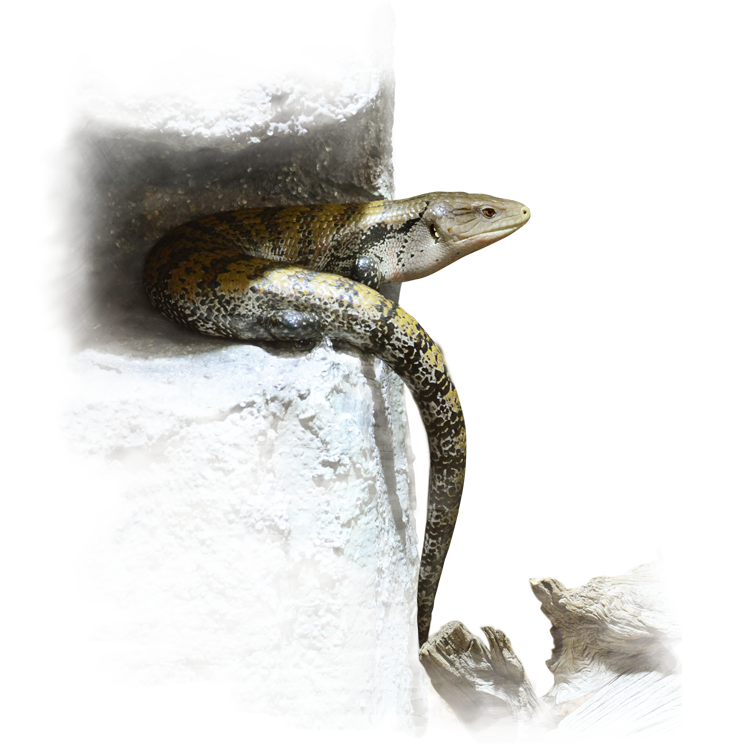
Tiliqua gigas evanescens (Shea, 2000)
危機を回避する青い舌
The Blue Tongue That Avoids Danger
アオジタトカゲ属は8種と10の亜種からなり、インドネシア、オーストラリア、パプアニューギニアに分布しています。太い胴を持つずんぐりとした体型で四肢が短く、青白い舌を持つことが特徴です。
アオジタトカゲの舌が青いのは、鳥やキツネなどの捕食者を驚かせて威嚇するための警告行動の一部であり、紫外線を含む強く目立つ青色がその役割を担っていると考えられています。彼らにとって青い舌を見せる行動は最終手段で、早すぎても遅すぎても効果がなく、相手を怯ませて攻撃を思いとどまらせる絶妙なタイミングで行われます。こうした視覚的な威嚇は Deimatic display(ダイマティック・ディスプレイ)と呼ばれ、アカメアマガエルが突然見せる赤い目や、クジャクヤママユなど蛾の翅にある目玉模様と同じ原理です。アオジタトカゲは足が遅いために青い舌の威嚇が発達したと推測されます。
メラウケアオジタトカゲはオオアオジタトカゲ(Tiliqua gigas)の亜種で、ニューギニアのメラウケ周辺の熱帯林に生息しています。アオジタトカゲ属の中では最大の体長を誇り、全長は70cmに達します。ただし、体重は太い胴を持つオーストラリア原産のキタアオジタトカゲ(Tiliqua scincoides intermedia)のほうが重くなります。本亜種は特に尾が長く、淡褐色の体色に黒い横縞が入ります。雑食性で、昆虫、カタツムリ、ワーム、果物、植物など幅広い餌を食べます。性格は穏やかで人に慣れやすく、ペットとしても流通しています。
The genus Tiliqua consists of eight species and ten subspecies distributed across Indonesia, Australia, and Papua New Guinea. They are characterized by a stout, cylindrical body, short limbs, and a distinctive pale blue tongue.
The blue tongue of these skinks functions as part of a defensive warning display used to startle and intimidate predators such as birds and foxes. The vivid blue coloration, which reflects ultraviolet light, is thought to enhance this effect. For blue-tongued skinks, exposing the tongue is a last-resort behavior; displaying it too early or too late reduces its effectiveness. They perform the display at just the right moment to startle the attacker and prevent an actual strike. This type of visual intimidation is known as a deimatic display, the same principle seen in animals like red-eyed tree frogs suddenly revealing their red eyes, or the eye-spots on the wings of moths such as the peacock moth. It has been suggested that their relatively slow movement has favored the development of this tongue-based threat display.
The Merauke blue-tongued skink is a subspecies of the giant blue-tongued skink (Tiliqua gigas) and inhabits the tropical forests around Merauke in New Guinea. It is the longest member of the genus, reaching a total length of up to 70 cm. However, the northern blue-tongued skink (Tiliqua scincoides intermedia), which has a more robust body, is heavier. This subspecies is distinguished by its particularly long tail and light brown body striped with black bands. It is omnivorous, feeding on insects, snails, worms, fruits, and plant material. Known for its gentle temperament and ease of taming, it is also commonly kept as a pet.
参考文献
“Blue Tongue Skink Species” Reptile Mountain. 2025年12月21日閲覧
Zachos, Elaina (2018, June 9) “This Lizard Has a Blue, Ultraviolet Tongue—Here’s Why” National Geographic. 2025年12月21日閲覧
Springer. (2018, June 7). Australian lizard scares away predators with ultra-violet tongue. ScienceDaily. 2025年12月21日閲覧