
Ateles geoffroyi (Kuhl, 1820)
自己認識の謎に迫るクモザル
A Spider Monkey and the Mystery of Self-Awareness
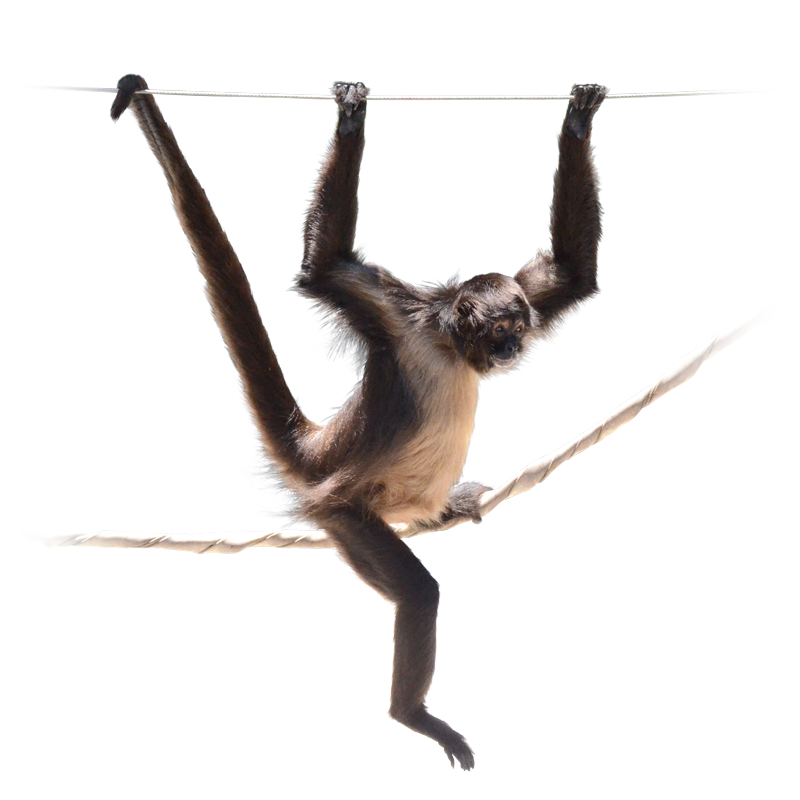
体長30~65cm、尾長63~85cm、体重6~9kg。中央アメリカの熱帯林に生息するクモザルの仲間です。クモザル類は腕が脚よりも長く、さらに尾は手足に匹敵するほど発達しています。尾の先端には毛のないパッドがあり、指紋のような細かなシワが刻まれています。この部分は高い感覚能力を持ち、枝をしっかりつかむ滑り止めの役割も果たします。尾だけで枝にぶら下がることもでき、その姿が糸にぶら下がるクモを連想させることから「スパイダーモンキー(クモザル)」の名が付けられました。また、よく見ると手の指は4本しかありません。親指が著しく退化しており、これは樹上で素早く移動するための適応と考えられています。
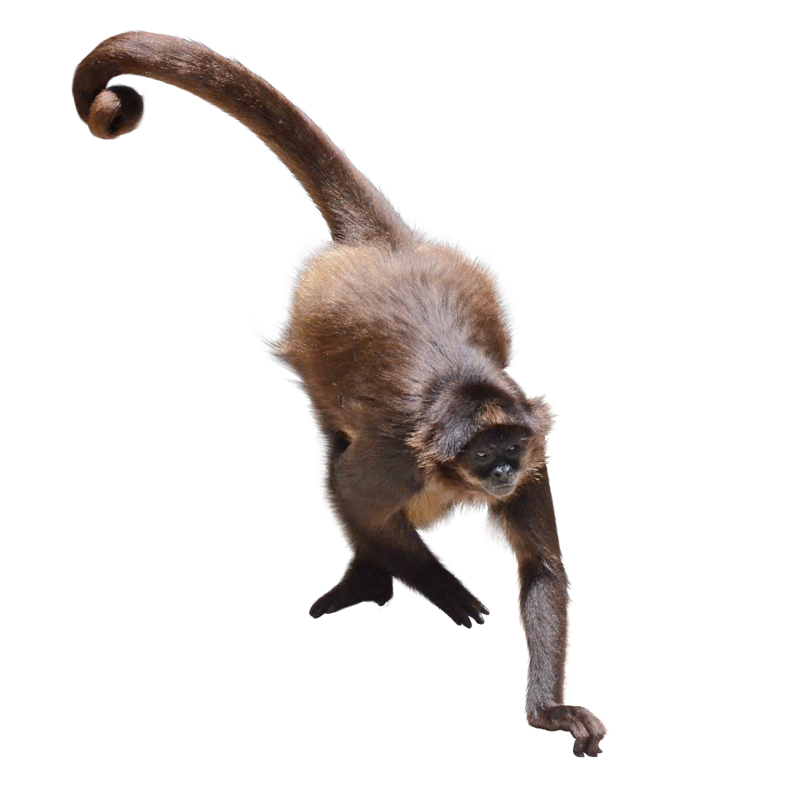
ジェフロイクモザルは全体的に黒褐色で、腹部はやや淡色の毛に覆われ、顔の周囲には裸出した皮膚が見られます。新世界ザルの中では最大級の種であり、大きな脳と高い認知能力を持つことでも知られています。樹冠部を広く移動しながら果実を中心に食べ、数十頭規模の群れをつくりますが、採食時には小さなグループに分かれて行動する離合集散型の社会を形成します。このような複雑な社会生活が、高い認知能力の進化と関係している可能性も指摘されています。
動物の認知能力を調べる方法の一つに、鏡に映った姿をどのように認識するかを観察する研究があります。ジェフロイクモザルは鏡像を単なる他個体として扱わず、鏡の裏側を確かめたり、鏡面を詳しく調べたりする行動を示すことが報告されています。しかし、チンパンジーやオランウータンのように明確な自己認識が確認されたわけではなく、現在も研究が続けられています。それでも彼らは自己認識能力の進化を探る上で有力な候補と考えられており、霊長類の知性を理解するための重要な研究対象となっています。
ジェフロイクモザルは、発達した把握尾と高い認知能力をあわせ持つ、非常に興味深い霊長類です。現在もさまざまな研究が続けられており、「動物はどこまで自分自身を理解しているのか」という興味深い問いを私たちに投げかけています。
Head-body length: 30–65 cm; tail length: 63–85 cm; weight: 6–9 kg. Geoffroy’s Spider Monkey is a species of spider monkey native to the tropical forests of Central America. Spider monkeys are characterized by arms that are longer than their legs and by an exceptionally developed tail that functions almost like a fifth limb. The tip of the tail bears a hairless pad covered with fine ridges resembling fingerprints. This sensitive surface helps the animal grip branches securely and prevents slipping. Spider monkeys can even hang from branches using only their tails. Their common name comes from the way they dangle beneath branches, resembling a spider suspended from a thread. A closer look reveals another unusual feature: they have only four fingers on each hand. Their thumbs are greatly reduced, an adaptation believed to facilitate rapid movement through the forest canopy.
Geoffroy’s Spider Monkey is generally dark brown to black, with a paler underside and areas of bare skin around the face. It is among the largest of the New World monkeys and is known for its relatively large brain and advanced cognitive abilities. Feeding mainly on fruit, it travels widely through the forest canopy. Although groups may consist of dozens of individuals, they often split into smaller foraging parties, forming a fission–fusion social system. Such complex social behavior may have played a role in the evolution of their cognitive abilities.
One way scientists study animal cognition is by observing how animals respond to their reflections in mirrors. Geoffroy’s Spider Monkeys have been reported to treat mirrors differently from how they would treat another individual, often inspecting the back of the mirror or examining its surface closely. However, unlike chimpanzees and orangutans, they have not been conclusively shown to possess self-recognition, and research on the subject is ongoing. Even so, they are considered promising subjects for investigating the evolution of self-awareness and remain important animals for understanding the origins of primate intelligence.
With their highly developed prehensile tails and remarkable cognitive abilities, Geoffroy’s Spider Monkeys are among the most fascinating of all primates. Research on them continues today, and they invite us to consider an intriguing question: how much can animals truly understand about themselves?

There are only four fingers on the hand

They have a thoughtful look
参考文献
千葉市動物公園 | 動物紹介 | ジェフロイクモザル 2025年7月13日閲覧
北海道新聞旭川支社 | 旭川動物園わくわく日記 | クモザルって不思議*しっぽや指 面白い特徴 | (2022年11月22日) 2025年7月13日閲覧
科学バー | 僕たちの祖先をめぐる15億年の旅 | 第4話 マーモセットとヒトの共通祖先 | 長谷川政美 2025年7月13日閲覧
“Geoffroy’s spider monkeys” New England Primate Conservancy. 2025年7月13日閲覧
サイエンスポータル | ニュース | 「鏡に映る自分」が分かる魚を初めて確認 魚類も「鏡像自己認知」あるのでは、と大阪市立大グループ | (2019年2月12日) 2025年7月13日閲覧