
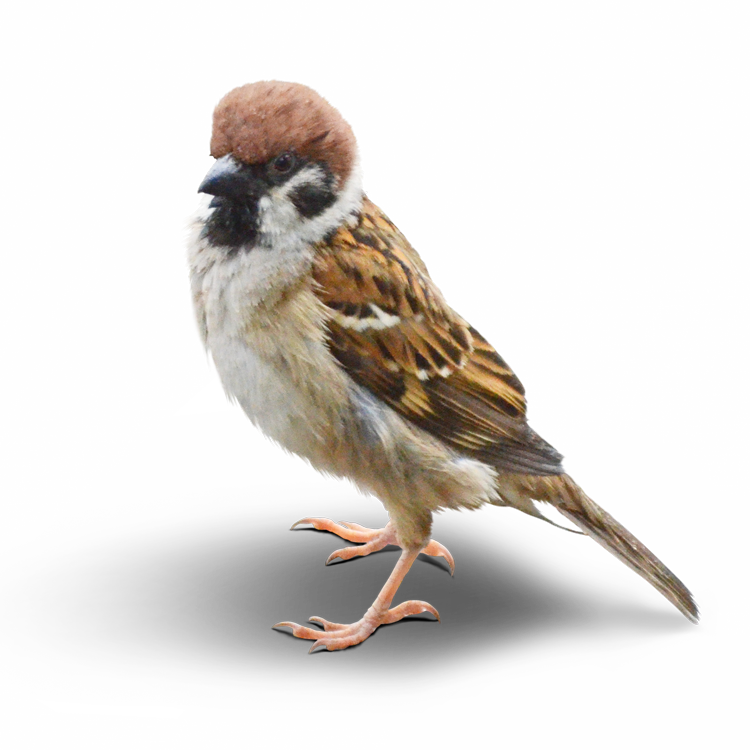
Passer montanus (Linnaeus, 1758)
日本人に愛されてきたスズメ
The Sparrow Beloved in Japan
全長約14〜15cm、体重20〜30g。ユーラシア大陸の広い範囲に分布し、日本では北海道から沖縄まで見られる最も身近な野鳥の一つです。頭頂部は赤褐色で、白い頬にある黒い斑紋が特徴です。雌雄はよく似ていますが、雄は喉の黒斑がやや大きい傾向があります。草地や農耕地、人里周辺の環境を好み、人家や農地、公園、市街地など人間の生活圏に広く進出しています。
主な餌はイネや雑草の種子ですが、繁殖期には昆虫やクモ類も盛んに捕食し、成長中のヒナに与えます。このような柔軟な食性は、本種が多様な環境に適応し、人間の活動とともに繁栄してきた要因の一つと考えられています。農地や集落は豊富な食料と営巣場所を提供し、スズメにとって格好の生息環境となりました。その結果、本種は人間の生活圏に適応することで広く繁栄してきました。
繁殖期は主に春から夏にかけてで、建物の隙間や換気口、樹洞などに枯れ草を集めて巣を作ります。1回に4〜6個ほどの卵を産み、条件が良ければ年に複数回繁殖します。群れで生活することが多く、ねぐらには数十羽から時に数百羽が集まります。群れを形成することで捕食者への警戒効率を高めていると考えられています。
スズメは水浴びや砂浴びを頻繁に行うことでも知られています。水浴びは羽毛の汚れを洗い流し、羽毛の柔軟性や防水性を保つ役割があります。一方、砂浴びは余分な皮脂や汚れを取り除き、ダニなどの外部寄生虫を減らす効果があると考えられています。どちらも飛行や保温に欠かせない羽毛を良好な状態に維持するための重要な行動です。
日本では古くから和歌や民話、絵画などの題材として親しまれてきました。特に群れで行動する姿は、人々の暮らしや社会の営みに重ねて表現されることも少なくありません。しかし近年は全国的な減少傾向が報告されています。農村環境の変化や昆虫の減少、住宅構造の変化による営巣場所の減少などが主な要因と考えられています。かつてはどこにでも見られる鳥の代表でしたが、その減少は身近な自然環境の変化を映し出す指標としても注目されています。
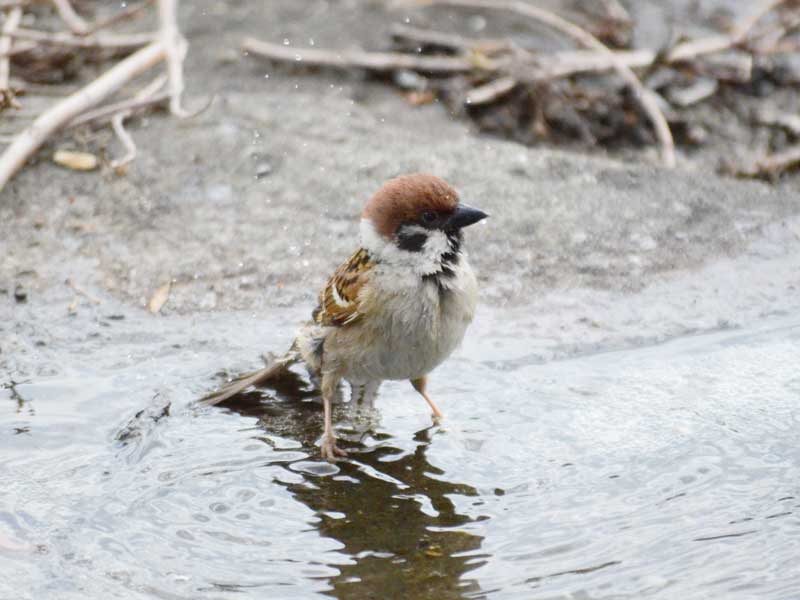
A Eurasian Tree Sparrow at Shinobazu Pond in Ueno Onshi Park, Tokyo.
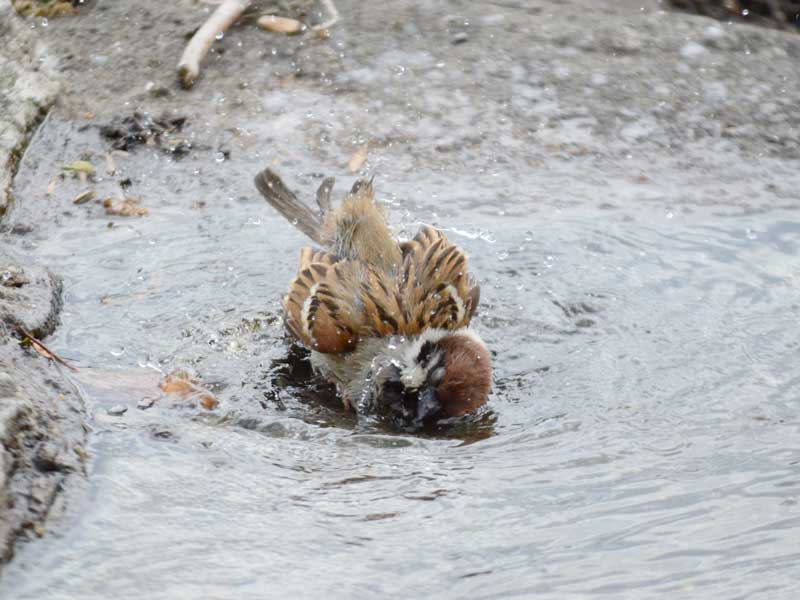
Bathing is a common sight among sparrows gathering around the pond.
The Eurasian Tree Sparrow is a small passerine bird measuring 14–15 cm in length and weighing 20–30 g. It is widely distributed across Eurasia and is one of the most familiar wild birds in Japan, occurring from Hokkaido to Okinawa. It is recognized by its chestnut-brown crown and distinctive black cheek spot on a white face. Males and females are very similar in appearance, although males tend to have a slightly larger black throat patch. The species favors grasslands, farmland, and areas around human settlements, and is commonly found in residential neighborhoods, parks, agricultural areas, and cities.
Its diet consists mainly of rice grains and the seeds of various grasses and weeds. During the breeding season, however, it actively hunts insects and spiders to feed its growing chicks. This flexible feeding strategy has enabled the species to adapt to a wide range of environments and thrive alongside human activity. Farmland and settlements provide abundant food resources as well as nesting opportunities, making them ideal habitats for the species.
The breeding season generally extends from spring through summer. Nests are built from dried grasses and placed in tree cavities, ventilation openings, and crevices in buildings. A clutch usually contains four to six eggs, and pairs may raise multiple broods in a single year when conditions are favorable. Eurasian Tree Sparrows are highly social birds and often gather in flocks. At communal roosts, dozens or even hundreds of individuals may assemble. Flocking behavior is thought to improve vigilance against predators and increase survival.
The species is also known for its frequent bathing behavior. Water baths help remove dirt and maintain the flexibility and water resistance of the feathers, while dust baths remove excess oils and may reduce external parasites such as mites. Both behaviors play an important role in keeping the plumage in good condition, which is essential for flight and insulation.
In Japan, the Eurasian Tree Sparrow has long been a familiar subject in poetry, folktales, and paintings. Its flocking behavior has often been portrayed as a reflection of human communities and social life. In recent decades, however, populations have shown a nationwide decline. Changes in rural landscapes, reductions in insect abundance, and the loss of nesting sites caused by modern building designs are considered major contributing factors. Once regarded as a bird found almost everywhere, the sparrow is now attracting attention as an indicator of environmental change in the landscapes that people encounter every day.
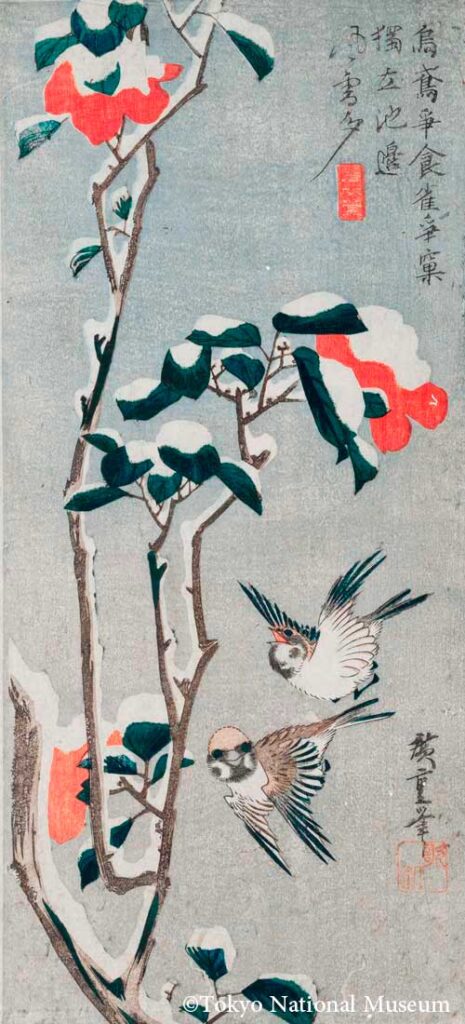
Utagawa Hiroshige “Sparrows on Camellia in Snow”(1831-33)
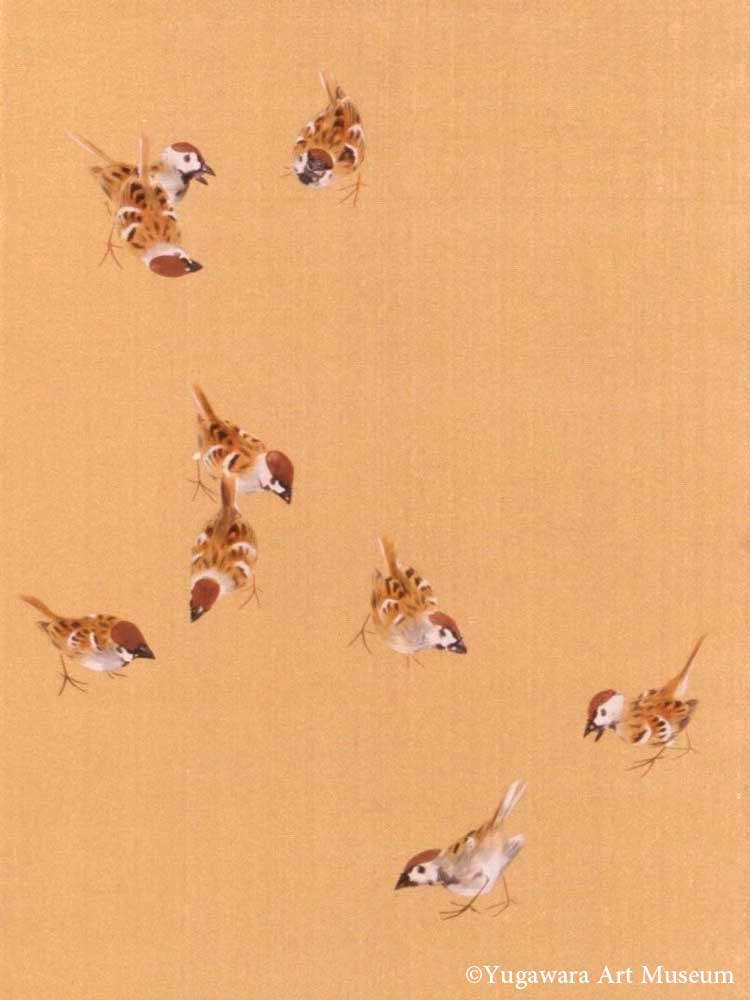
Takeuchi Seiho “Joyful Sparrows”(1940)
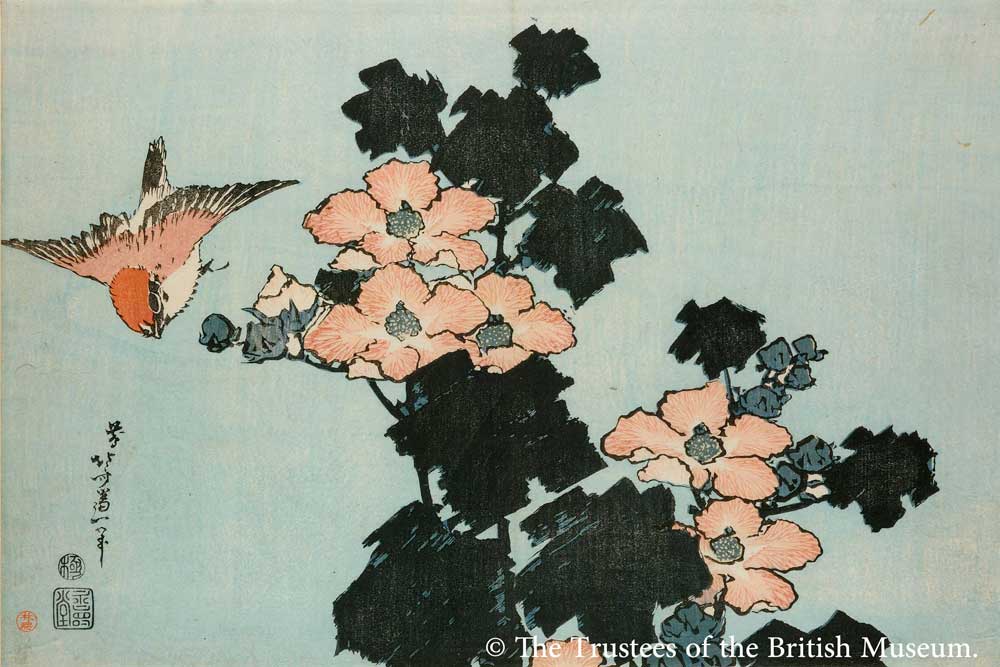
Katsushika Hokusai “Hibiscus and Sparrow”(1831-32)
「スズメ」Bird Research News Vol.2 No.44. (2005年4月13日) 2026年6月27日閲覧
参考文献
“Eurasian Tree Sparrow” All About Birds, Cornell University. 2026年6月27日閲覧
朝日新聞 | スズメなど7種の鳥が「絶滅危惧種」並みに減少 気温上昇など影響か | (2025年7月27日) 2026年6月27日閲覧
日本野鳥の会京都支部 | 野鳥図鑑 | スズメ 2026年6月27日閲覧
トリまめ | 2025バードメイト杯!頂点はやっぱりスズメ! | (2025年8月12日) 2026年6月27日閲覧
“Cotton rose (Hibiscus mutabilis) and sparrow” The Trustees of British Museum. 2026年6月27日閲覧
湯河原町 | 町立湯河原美術館 | 展示室3・4・5 | (2025年6月1日) 2026年6月27日閲覧
「冬椿に雀」ColBase: 国立文化財機構所蔵品統合検索システム 2026年6月27日閲覧
“Iris, Peonies, Sparrows, and Dragonfly” Honolulu Museum of Art. 2026年6月27日閲覧