
Cyprinus carpio (Linnaeus, 1758)
コイは滝登りをする?
Do Carp Climb Waterfalls?
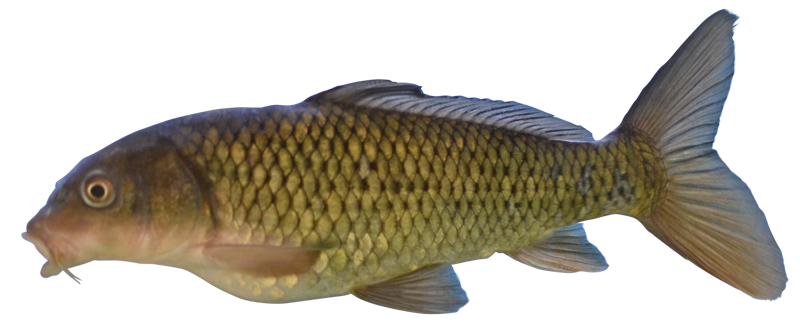
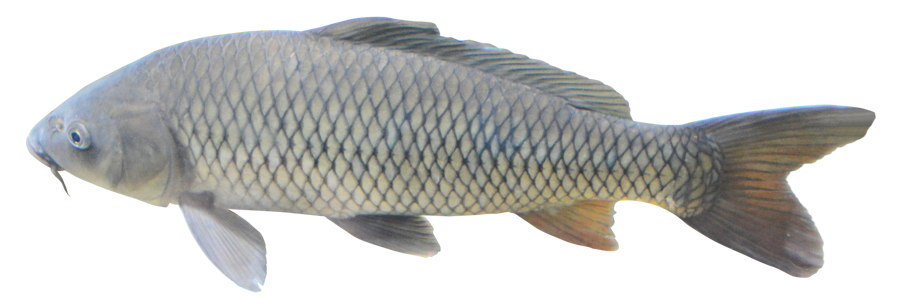
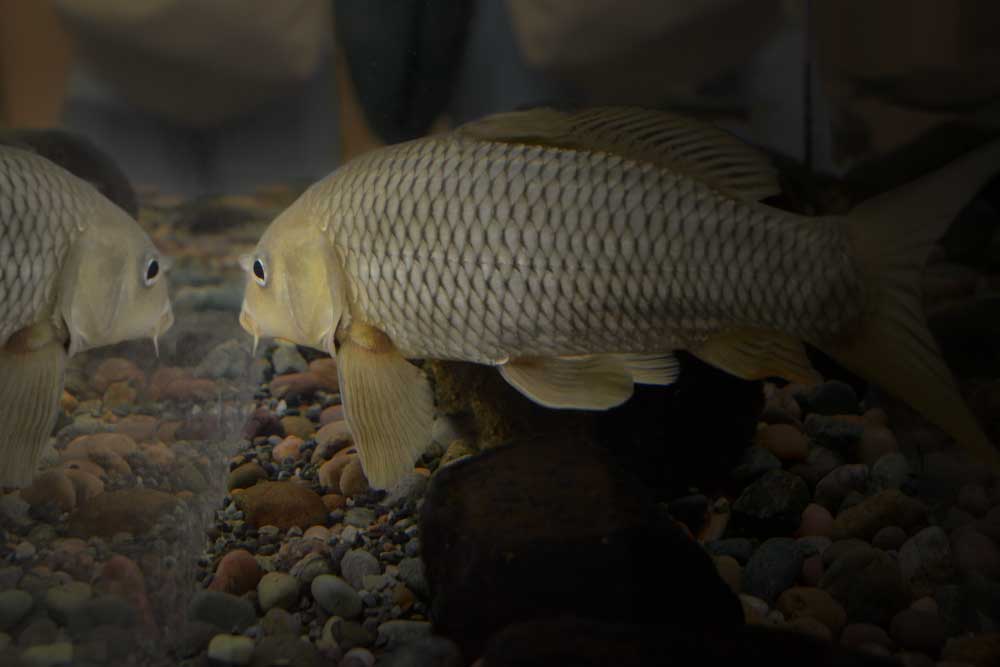
コイ(マゴイ)は体長約60cmに達する大型の淡水魚で、流れの緩やかな河川や湖沼に広く生息します。口の両端にある2対の口ヒゲは、泥底を探りながら餌を見つけるための感覚器官で、視界の悪い環境でも採餌を可能にしています。雑食性で、水生植物や底生動物、小型甲殻類などを幅広く食べる適応力の高い魚です。
原産地は中央アジアとされ、日本には中国から移入された外来種と長く考えられてきました。しかし、福井県・岐阜県・滋賀県・長崎県の第3紀層(約1600万年前)からコイの化石が発見されており、日本列島に古くから生息していた可能性も示唆されています。現在の日本のコイは外来系統との交雑が進んでいますが、ミトコンドリアDNA解析により、琵琶湖に生息する個体群のみが外来種と明確に異なる在来系統であることが示されています。この在来型はマゴイ(ノゴイ)と呼ばれ、体高が低く細長い体型が特徴です。
一方、繁殖力と環境適応力の高さから、コイは世界各地で侵略的外来種として問題視されています。産卵数が多く、水温や水質の変化にも強いため、導入先では急速に個体数を増やしやすい性質を持ちます。底泥を掘り返して採餌する行動は水の濁りを引き起こし、水草の減少や在来魚の産卵環境の悪化につながることもあります。北米のミシシッピ川水系では生態系への影響が深刻化し、個体数抑制のために電気ショックを用いた大規模な駆除が行われています。
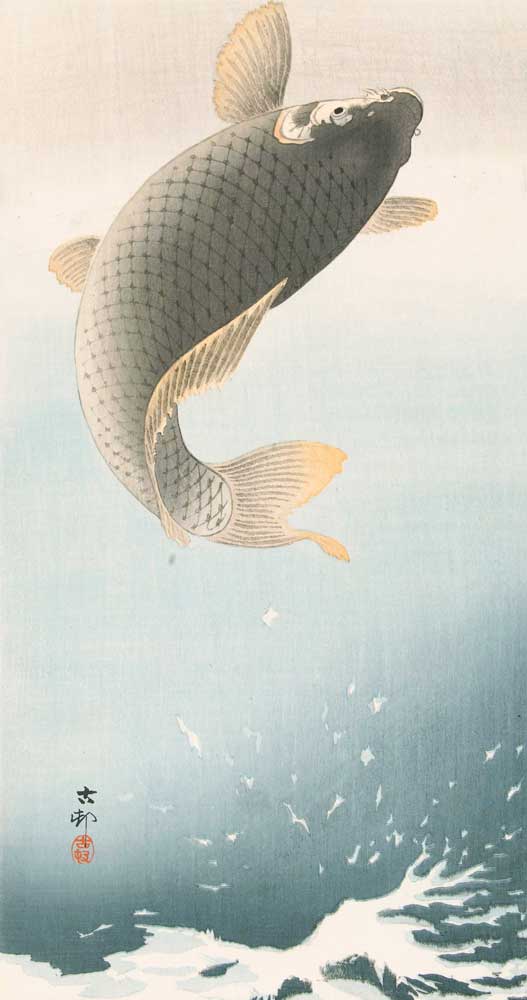
日本では古くから人々の生活や文化と深く結びつき、絵画の題材や食文化として親しまれてきました。改良品種であるニシキゴイは観賞魚として世界的に知られ、鯉のぼりや「鯉の滝登り」に象徴されるように、立身出世や吉兆の象徴ともされています。実際に滝を登ることはありませんが、川面を跳ねる行動は寄生虫を振り払うためと考えられており、その姿は今も人々に強い印象を与えています。
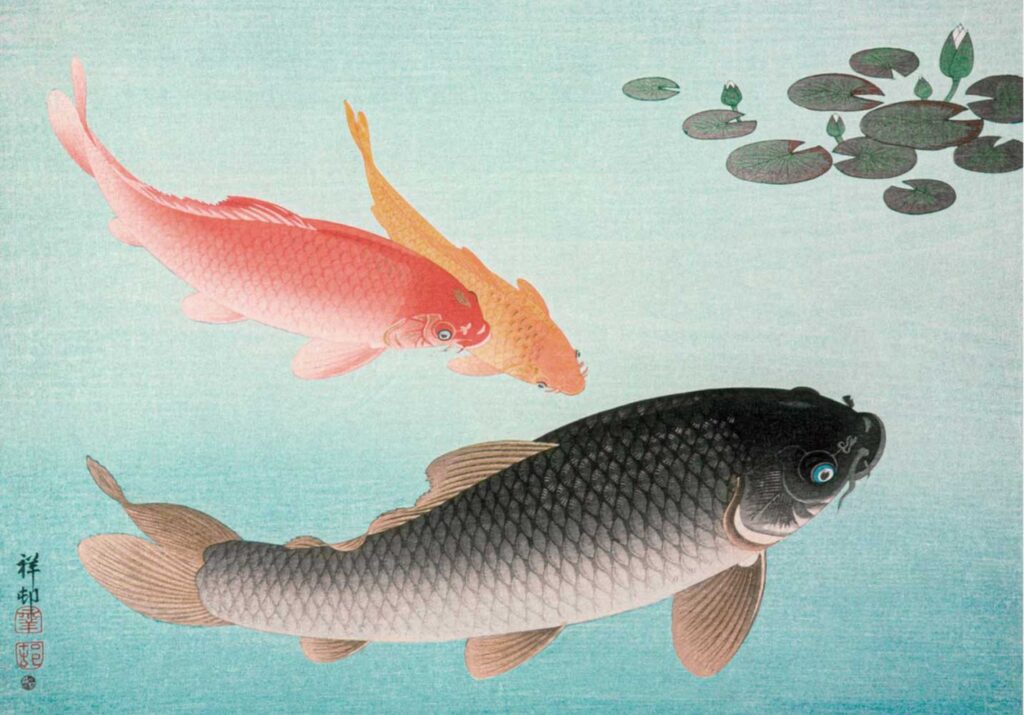
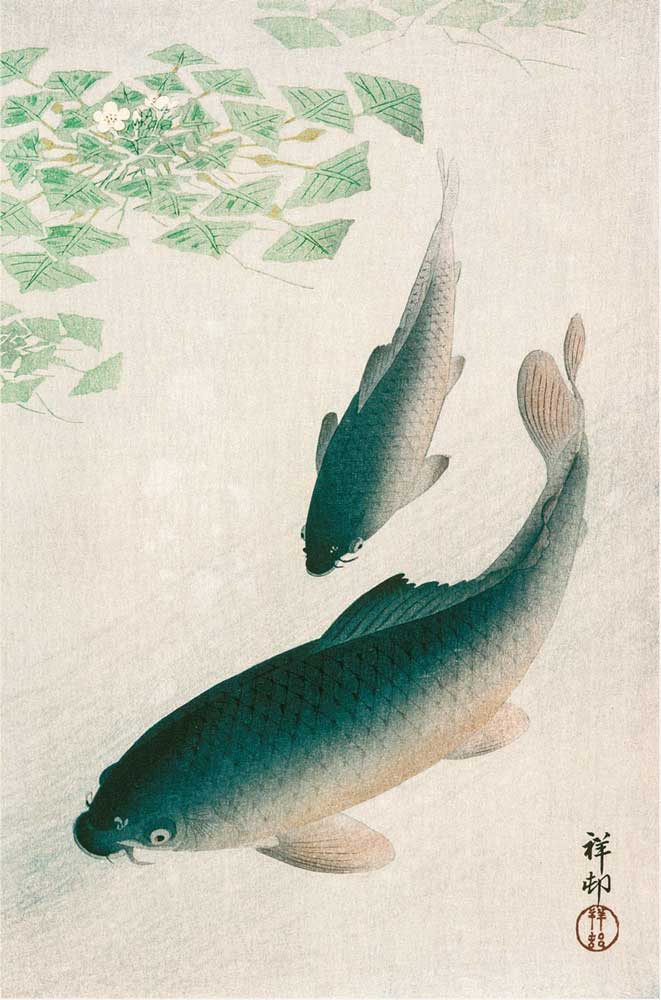
The carp by Ohara Koson (1877–1945).
Renowned for his bird-and-flower woodblock prints, Koson’s works are characterized by their clarity and subtle use of color, capturing the vitality and dynamic presence of animals through meticulous detail.
The Eurasian carp (Cyprinus carpio) is a large freshwater fish that can reach approximately 60 cm in total length and is widely distributed in slow-flowing rivers and lakes. Two pairs of barbels located at the corners of the mouth function as sensory organs, enabling the fish to detect food while probing muddy substrates and to forage effectively even in turbid waters. The species is omnivorous, feeding on aquatic plants, benthic invertebrates, and small crustaceans, which contributes to its high adaptability.
The species is thought to have originated in Central Asia and was long regarded as an introduced fish in Japan, having been brought from China. However, carp fossils dating to the Tertiary period (approximately 16 million years ago) have been discovered in Fukui, Gifu, Shiga, and Nagasaki prefectures, suggesting that carp may have inhabited the Japanese archipelago since ancient times. Although hybridization with introduced lineages is widespread among modern Japanese carp, mitochondrial DNA analyses indicate that only populations inhabiting Lake Biwa are clearly distinct from non-native strains and are considered truly native. This native form is known as the magoi (also called nogoi) and is characterized by a relatively slender body with a lower body depth.
Owing to its high reproductive capacity and environmental tolerance, the carp has been recognized as an invasive species in many regions of the world. It produces large numbers of eggs and can withstand broad ranges of water temperature and quality, allowing populations to increase rapidly in introduced habitats. Its foraging behavior, which involves disturbing bottom sediments, can increase water turbidity and lead to the decline of aquatic vegetation, thereby degrading spawning habitats for native fishes. In the Mississippi River basin of North America, these impacts have become so severe that large-scale population control using electrical barriers has been implemented.
In Japan, carp have long been closely associated with human life and culture, appearing frequently in paintings and traditional cuisine. Selectively bred varieties, known as koi or nishikigoi, are highly valued worldwide as ornamental fish. Carp are also symbolic figures in Japanese culture, as seen in carp streamers and the legend of the “carp climbing the waterfall,” which represents success and social advancement. Although carp do not actually ascend waterfalls, their occasional leaping behavior—thought to help dislodge parasites—continues to leave a strong impression on observers.
参考文献
国立環境研究所 | 侵入生物データベース | コイ 2024年10月6日閲覧
みやさかや | 鯉ってどんな魚?〜生態について〜 2024年10月6日閲覧
CNN.co.jp | Odd News | 増えすぎた外来魚、電気ショックで一網打尽 米ケンタッキー州で深刻な問題に | (2019年8月1日) 2024年10月6日閲覧
松田養鯉場 | 錦鯉の病気と対策 2024年10月6日閲覧