
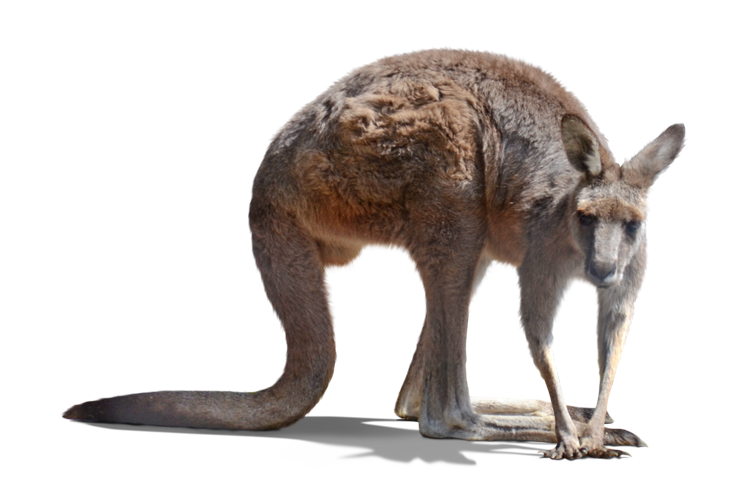
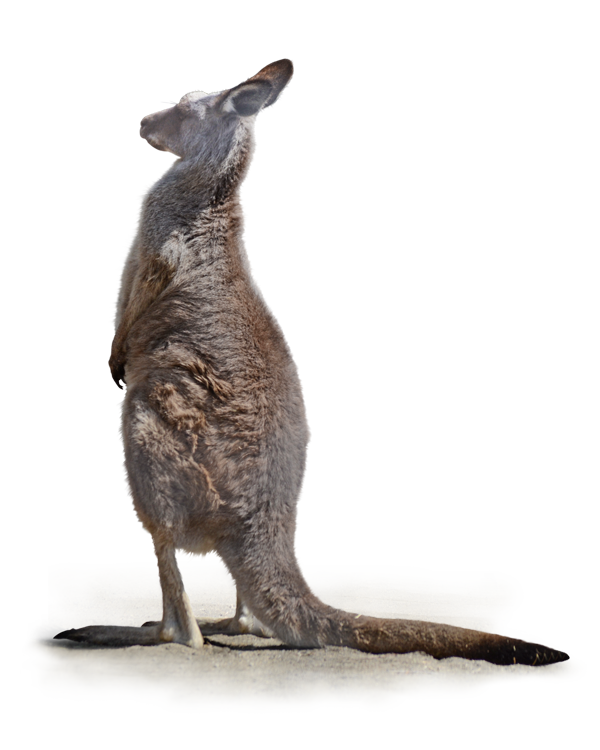
Macropus giganteus (Shaw, 1790)
是非が問われるカンガルー駆除
Is Kangaroo Culling Justified?
体長約1~1.4m、尾長0.8~1m、体高は約1.5mに達する、オーストラリア東部に生息する大型のカンガルーです。体色は灰色で、かつてはハイイロカンガルーとも呼ばれていました。体格はカンガルー類の中でも大きく、アカカンガルーに次ぐ大きさを誇ります。
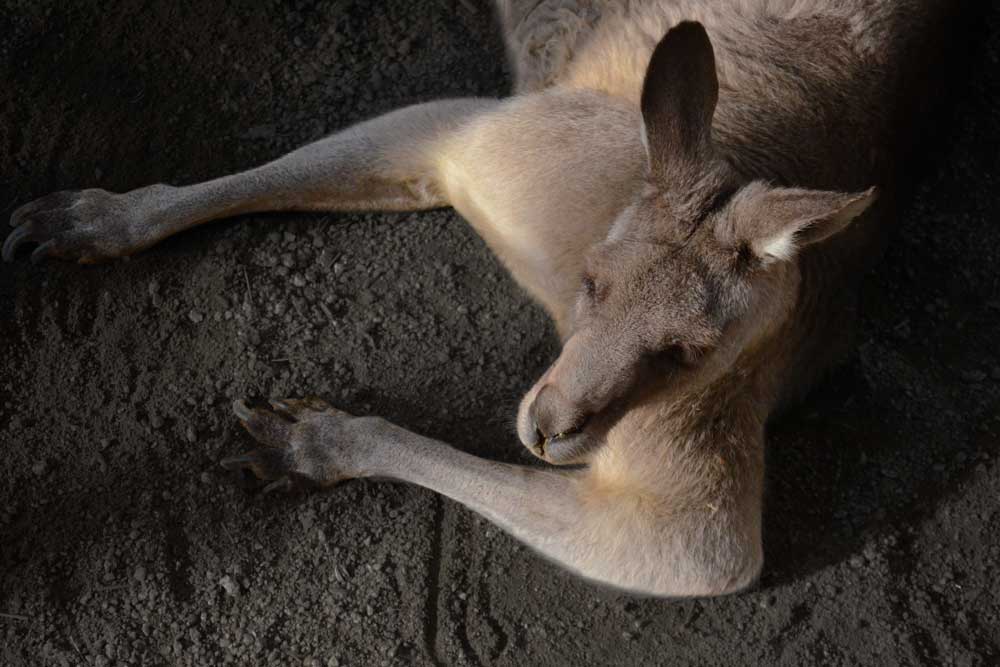
動物園では横になって休んでいる姿を目にすることが多いものの、野生下では主に夜行性です。夕方から明け方にかけて活動が活発になり、草などの植物を採食します。これは高温になる日中を避けるための行動と考えられています。
カンガルーの生息数は、オーストラリアの人口の2倍を超える約5,000万頭に達すると推定されています。そのため、農作物に被害を与える害獣として扱われる側面もあります。また、年間約2万件発生する動物との交通事故のうち、約8割がカンガルーとの衝突とされており、重要な観光資源である一方、住民にとっては深刻な問題ともなっています。こうした背景から、オーストラリア政府は単なる駆除にとどまらず、食肉や皮革として有効活用することで、個体数管理と地方経済の振興を両立させる方策を進めています。
カンガルー肉は高タンパクで低脂肪、クセが少なく、さまざまな香辛料や調味料と相性が良いとされています。皮革は軽量でありながら非常に強靭なため、スポーツシューズなどに利用されてきました。また意外な用途として、カンガルー革は三味線の胴皮に用いられることもあります。三味線の胴皮には伝統的に犬や猫の皮が使われてきましたが、動物愛護の観点から入手が困難となり、代替素材が模索されてきました。その中で、カンガルー革は実用に耐える素材として評価されています。
近年では、カンガルーの駆除をめぐって保護の立場からの意見も強まっています。アメリカの一部の州ではカンガルー肉や関連製品の輸入を禁止する法案が可決され、スポーツ用品メーカーの中にはカンガルー革の使用を取りやめる動きも見られます。
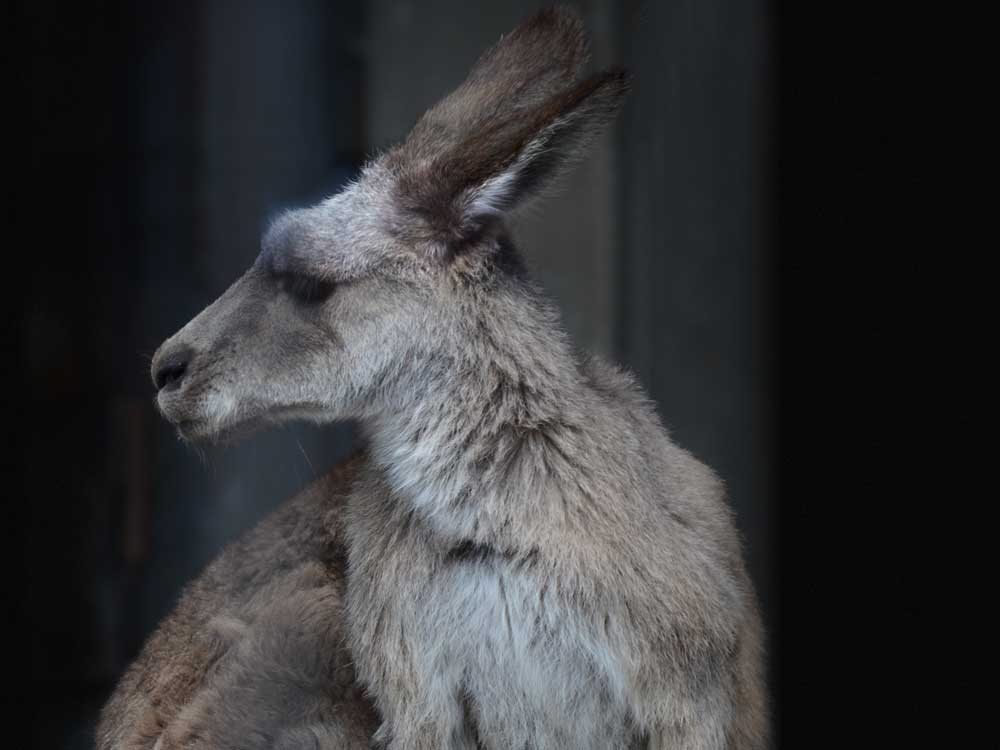
The Eastern Grey Kangaroo is a large kangaroo species native to eastern Australia. It has a body length of approximately 1.0–1.4 meters, a tail length of 0.8–1.0 meters, and can reach a standing height of about 1.5 meters. Its coat is gray in color, and it was formerly known as the Grey Kangaroo. In terms of body size, it is the second largest kangaroo species, surpassed only by the Red Kangaroo.
Although kangaroos are often seen resting in zoos, they are primarily nocturnal in the wild. Their activity increases from dusk to dawn, when they feed mainly on grasses and other vegetation. This behavior is thought to be an adaptation to avoid the intense heat of the daytime.
The total kangaroo population in Australia is estimated to exceed 50 million individuals—more than twice the country’s human population. As a result, kangaroos are sometimes regarded as agricultural pests due to the damage they cause to crops. In addition, of the approximately 20,000 wildlife-related traffic accidents reported annually, about 80 percent involve kangaroos. Thus, while kangaroos are an important tourist attraction, they also pose serious challenges for local residents. In response, the Australian government has promoted not only population control through culling but also the utilization of kangaroos for meat and leather, aiming to balance wildlife management with regional economic development.
Kangaroo meat is high in protein, low in fat, and has a mild flavor, making it well suited to a wide range of spices and seasonings. Kangaroo leather is lightweight yet extremely durable and has been widely used in sports shoes. An unexpected application is its use as the drum skin of the traditional Japanese shamisen. Traditionally, shamisen skins were made from dog or cat hides, but due to animal welfare concerns, these materials have become difficult to obtain. Various alternative materials have been tested, and kangaroo leather has proven to be a practical substitute.
In recent years, opposition to kangaroo culling has grown, particularly from conservation and animal welfare perspectives. In some states of the United States, legislation has been passed to ban the import of kangaroo meat and related products, and several sportswear manufacturers have begun phasing out the use of kangaroo leather.
参考文献
東京ズーネット | どうぶつ図鑑 | オオカンガルー 2024年10月13日閲覧
海の中道海浜公園 | ブログ | カンガルーのヒミツ | (2023年4月6日) 2024年10月13日閲覧
日本皮革産業連合会 | 皮革用語辞典 | カンガルーレザー 2024年10月13日閲覧
長崎バイオパーク | 動物図鑑 | オオカンガルー 2024年10月13日閲覧
ozdacho.com | オージー・カンガルー肉 2024年10月13日閲覧
和ものびと | 三味線界のNew Wave!「第三の皮」| 小川 政己 2024年10月13日閲覧
クーリエ・ジャポン | カンガルー猟は「野生動物の殺戮」か、「過疎の街を救う産業」か | (2021年6月5日) 2024年10月13日閲覧
ナショナルジオグラフィック | ニュース | 年間140万頭、豪のカンガルー猟は是か非か | (2017年11月26日) 2024年10月13日閲覧