
Tragelaphus spekii (Sclater, 1863)
湿原に適応した長い蹄
Long Hooves Adapted to Life in the Marshes
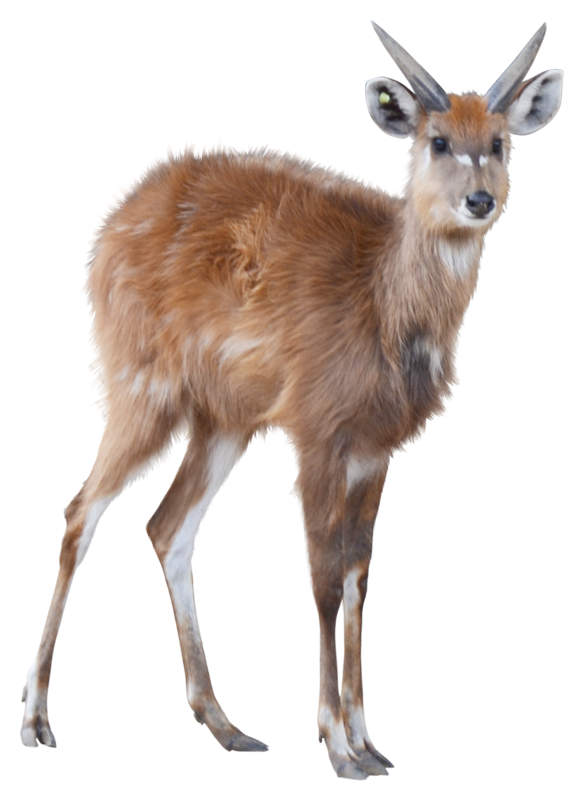
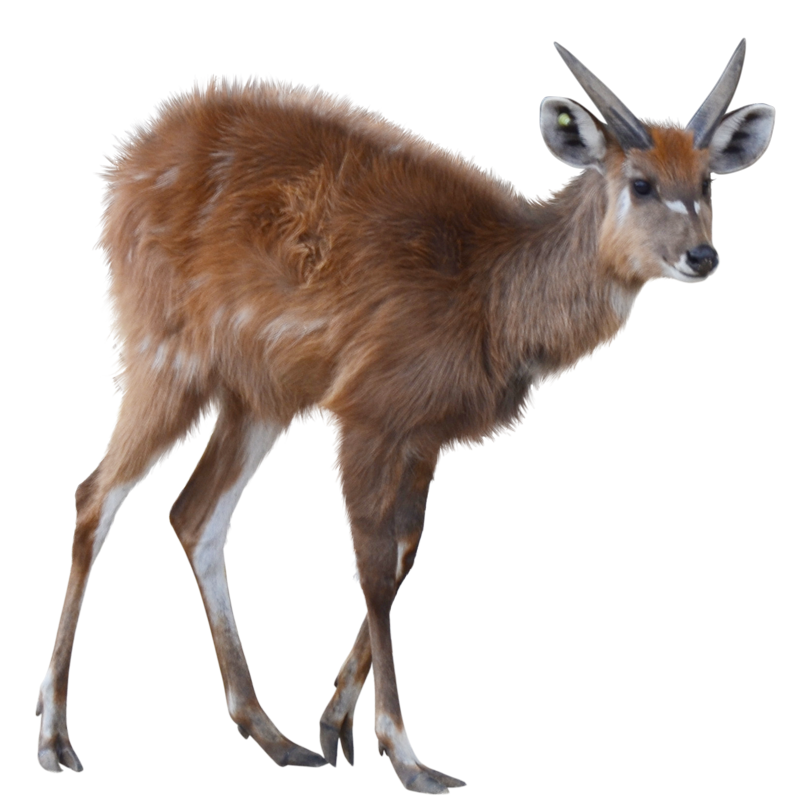
シタツンガ Sitatunga は、アフリカ中部から東部にかけての沼地や湿地、河川沿いの草原に生息するレイヨウの仲間です。体長はオスで150〜170cm、メスで135〜155cmほどになり、体重はオス80〜125kg、メス50〜60kgに達します。夜行性が強く、日中は水辺の茂みに身を潜め、夕方から夜間にかけて活動します。単独、あるいは数頭の小規模な群れで生活することが多く、湿地環境に高度に適応した動物として知られています。
オスの体色は暗い茶褐色、メスはやや明るい褐色で、体には白い縞模様や斑点が入ります。これらの模様は、水辺のヨシや草陰に溶け込む保護色として役立っています。角はオスにのみ生え、長さ45〜90cmほどになり、ゆるやかにねじれながら後方へ伸びるのが特徴です。大きく発達した耳は聴覚に優れ、周囲のわずかな物音からライオンやヒョウなどの接近を察知します。
シタツンガの最大の特徴は、湿地での生活に適応した長く広がったひづめです。柔らかい泥地でも体が沈みにくく、水辺の草の上を比較的安定して移動できます。一方で硬い地面では歩きにくく、湿地から離れることはあまりありません。危険が迫ると水中へ逃げ込み、目と鼻先だけを水面に出して身を隠す習性があります。場合によっては水草の間に完全に伏せた状態で長時間じっとしており、こうした行動によって捕食者から身を守っています。湿原という特殊な環境に適応した姿は、アフリカの大型哺乳類の中でも特にユニークな存在です。
The sitatunga is an antelope inhabiting swamps, marshes, and riverside grasslands across central and eastern Africa. Males reach 150–170 cm in body length, while females measure 135–155 cm. Adult males weigh 80–125 kg, whereas females weigh 50–60 kg. Primarily nocturnal, they spend the daytime concealed among dense vegetation near water and become active from dusk into the night. They usually live alone or in small groups and are regarded as one of Africa’s most specialized antelopes for wetland habitats.
Males are dark brown in color, while females are lighter reddish-brown. Both sexes display white stripes and spots that serve as camouflage among reeds and marsh vegetation. Only males possess horns, which grow 45–90 cm long and twist gently backward. Their large ears provide excellent hearing, allowing them to detect predators such as lions and leopards approaching through the wetlands.
One of the sitatunga’s most distinctive features is its elongated, splayed hooves adapted for moving through muddy terrain. These hooves help distribute body weight, enabling the animal to walk across soft marshy ground without sinking deeply. In contrast, they are less suited for hard, dry land, and the animals rarely venture far from wetlands. When threatened, sitatungas often escape into the water, leaving only their eyes and nostrils above the surface. They may also remain motionless among aquatic plants for long periods until danger has passed. Such remarkable adaptations make the sitatunga one of the most unique large mammals inhabiting Africa’s wetlands.
参考文献
東武動物公園 | 動物図鑑 | シタツンガ 2024年8月18日閲覧
Sitatunga. Wildlife Conservation. African Wildlife Foundation 2024年8月18日閲覧
Sitatunga. Wildlife. Expert Africa 2024年8月18日閲覧