
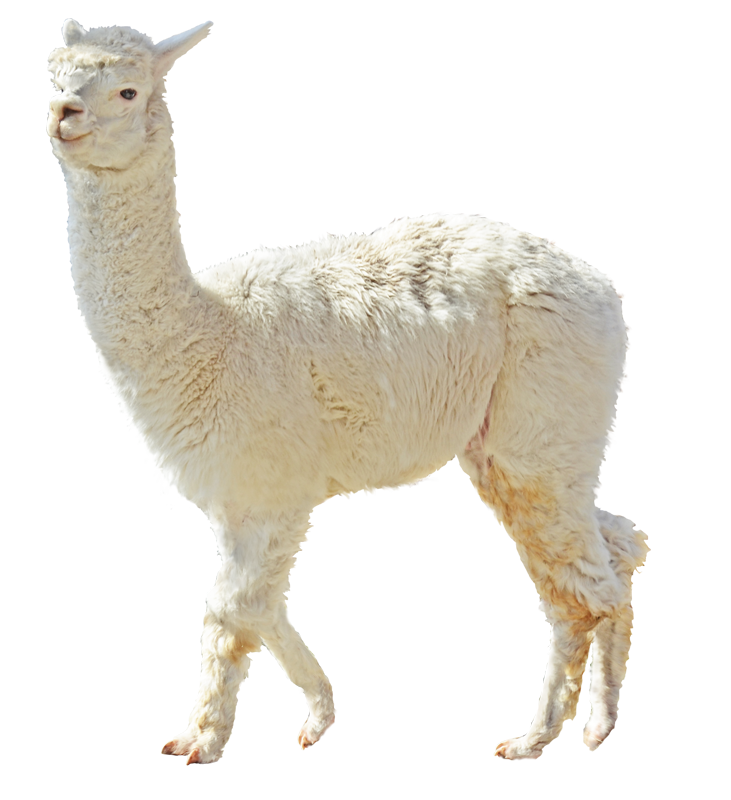
Vicugna pacos (Linnaeus, 1758)
良質な毛を持つ南米のラクダ
The Fine-Fleeced Camelid of South America
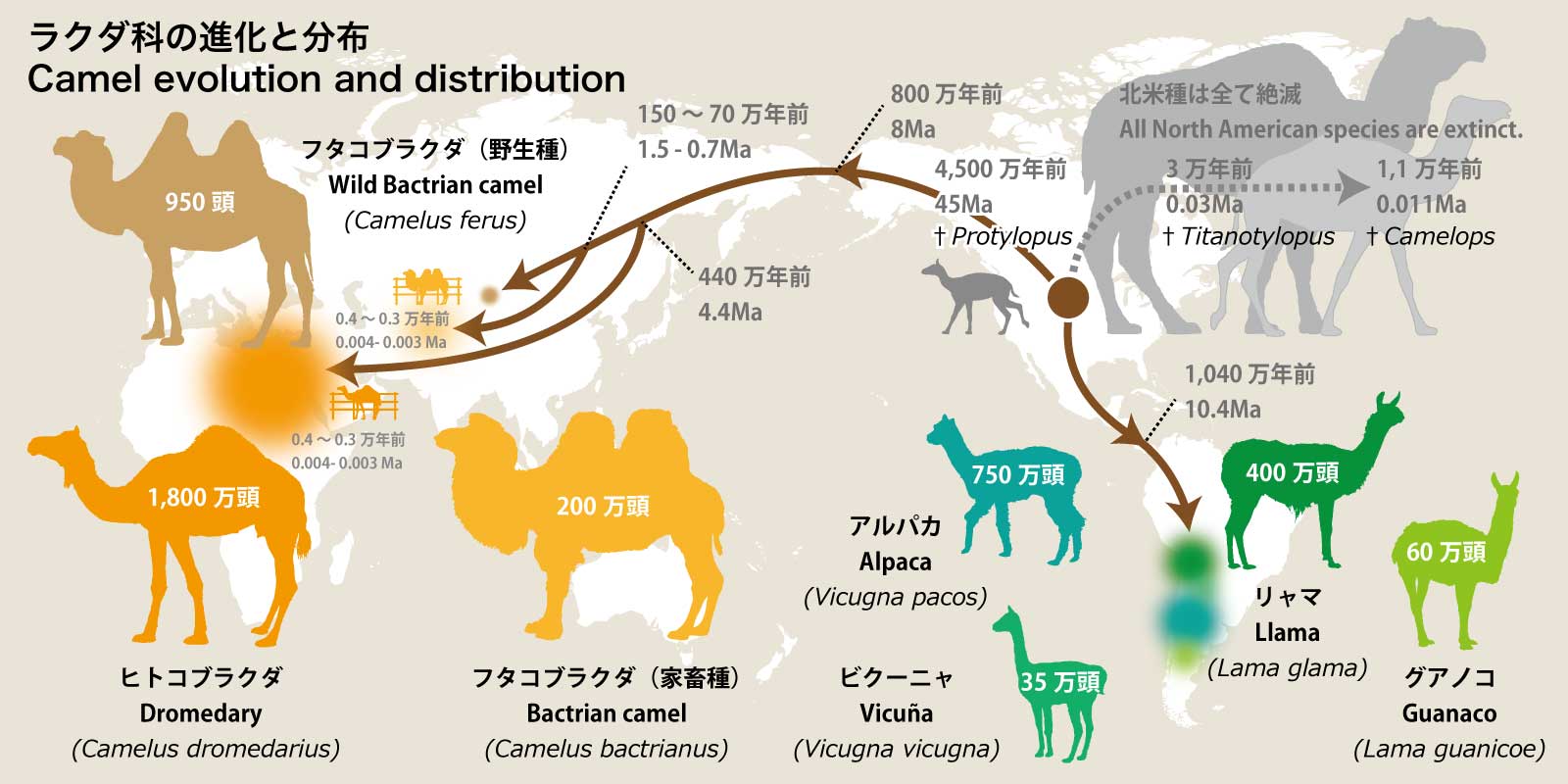
体長(頭胴長)約2m、肩高約0.9~1.0m、体重は約50~55kg。南米アンデス山脈の高地に生息するラクダ科の家畜で、現在では世界で約750万頭が飼育されています。寒暖差の大きい環境に適応し、密で保温性に優れた体毛をもつことが特徴です。約6000年前にペルー周辺で家畜化され、食料や燃料など多様な目的で人と深く関わってきました。祖先はビクーニャまたはグアナコと考えられ、毛は刈り取らない限り伸び続け、個体によっては2年ほどで地面に達することもあります。
消化器官は反芻動物に似た構造をもち、3つの胃を備えています。摂取した草は第1胃と第2胃で微生物により分解された後、口に戻されて再び咀嚼されます。十分に細かくされた食物は第3胃へ送られ、消化・吸収されます。このため、アルパカが絶えず口を動かしているように見えるのは反芻行動によるものです。また、威嚇や順位関係を示す際には唾液を吐きかける習性があり、これは胃内容物を含むため強い臭気を伴い、相手を遠ざける効果があります。
近縁種のリャマとは外見や用途に違いが見られます。リャマは体が大きく耳が長く湾曲し、古くから荷物の運搬などに利用されてきました。一方アルパカはやや小型で耳が短く直線的で、より密で細い体毛をもつ点が特徴です。性質も比較的温和で群れでの管理に適しており、人との関係の中で独自の役割を担ってきました。
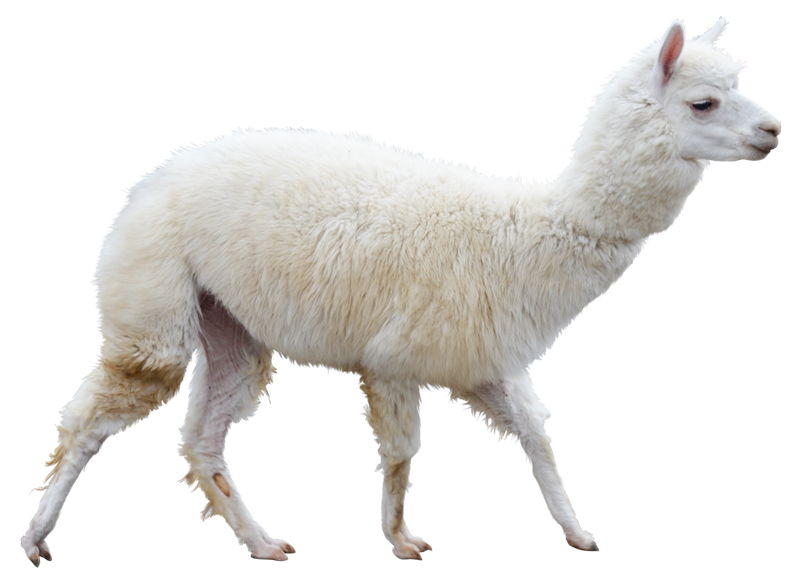

The alpaca has a head–body length of approximately 2 meters, a shoulder height of 0.9–1.0 meters, and a body weight of about 50–55 kg. It is a domesticated member of the camelid family native to the highlands of the Andes Mountains in South America, with a global population estimated at around 7.5 million individuals. Adapted to environments with large temperature fluctuations, it is characterized by its dense, highly insulating fleece. Alpacas were domesticated around 6,000 years ago in the region of present-day Peru and have long maintained a close relationship with humans, serving various purposes such as fiber, food, and fuel. Their wild ancestor is considered to be the vicuña. Their fleece continues to grow unless shorn, and in some individuals it may reach the ground within about two years.
The digestive system of the alpaca resembles that of ruminants and consists of three compartments. Ingested plant material is first broken down by microorganisms in the first and second compartments, then regurgitated and chewed again. Once sufficiently processed, the food passes into the third compartment, where digestion and absorption occur. This is why alpacas often appear to be constantly chewing, as they engage in rumination. They also exhibit a behavior of spitting when threatened or establishing social hierarchy; this expelled material may contain stomach contents, producing a strong odor that helps deter opponents.
Alpacas differ from their close relative, the llama, in both appearance and use. Llamas are larger, with long, curved ears, and have traditionally been used as pack animals. In contrast, alpacas are smaller, with shorter, straighter ears, and are distinguished by their finer and denser fleece. They are generally more docile and well suited to herd management, having developed a unique role in close association with humans.
参考文献
ナショナルジオグラフィック | 動物大図鑑 | アルパカ | (2022年8月7日) 2024年9月16日閲覧
国際連合食糧農業機関(FAO)駐日連絡事務所 | ラクダ科の国際年2024 | (2024年3月29日) 2024年7月28日閲覧
毎日新聞 | 毎日小学生新聞 | 疑問氷解 | アルパカのツバはなぜくさいの? | (2021年4月13日) 2024年9月16日閲覧
アルパカタウン | アルパカの魅力はコチラ:アルパカが私たちに優しい秘密 2024年9月16日閲覧