
Bison bison (Linnaeus, 1758)
北米を象徴する野生の力
The Wild Power of North America
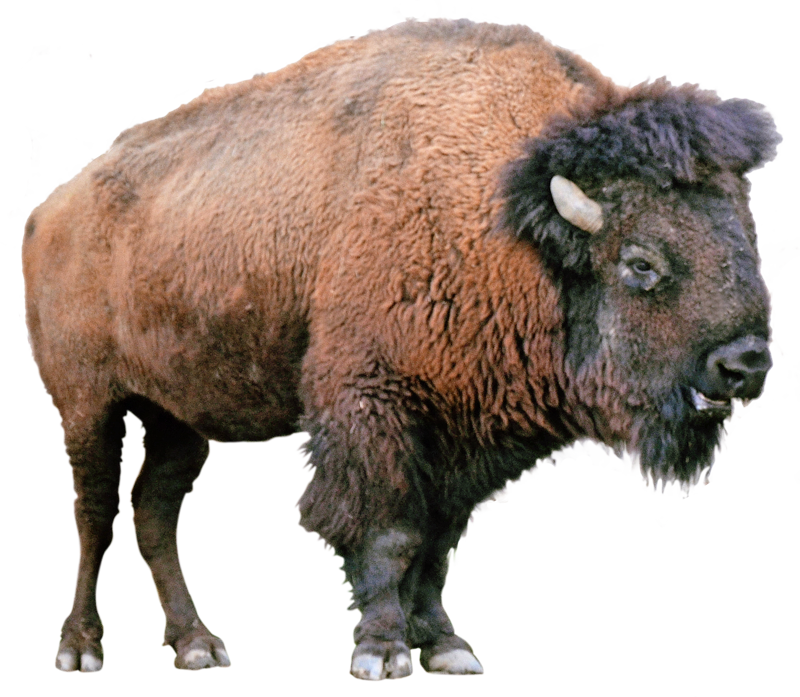
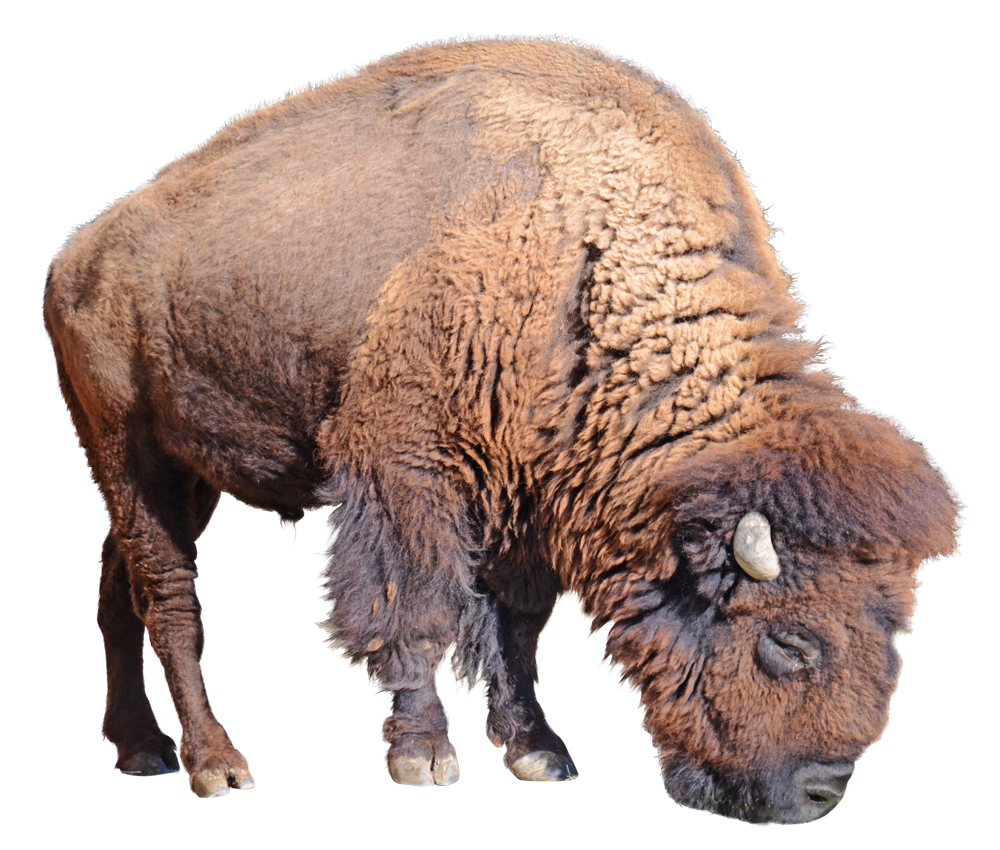
北アメリカに広く分布する大型のウシ科動物で、雄は体長2.0〜3.5m、肩高は最大約2m、体重は1トンを超えることもあります。寒冷な草原や森林に適応し、頭部から前半身にかけて長く密な体毛が発達しています。これは吹雪の際に風に向かって立つ習性と関係し、強い寒風や雪から体を守るためと考えられています。さらに巨大で低く構えた頭部は、深い雪を左右にかき分けながら採食するのに役立ち、その重さを支えるため肩から背にかけて筋肉が発達し、特徴的な盛り上がりを形成しています。
バイソン属はアジアに起源をもち、更新世に北アメリカへ進出したと考えられています。現生種はアメリカバイソンとヨーロッパバイソン(Bison bonasus)に大別され、本種はさらに平原に生息するヘイゲンバイソンと森林性のシンリンバイソンの2亜種に分けられます。一般にシンリンバイソンはより大型で、原始的な形質を残すとされます。かつては数千万頭規模で大陸を移動していたと推定されていますが、環境変化と人為的影響によりその分布は大きく縮小しました。
19世紀末には乱獲により絶滅寸前まで減少しましたが、その後の保護活動によって個体数は回復しました。一方で回復過程では家畜ウシとの交雑も行われ、多くの個体にわずかなウシ由来の遺伝子が含まれることが知られています。現在では保護とともに家畜化も進められ、食肉資源としての利用も行われています。2016年にはアメリカ合衆国において国を象徴する哺乳類に指定され、文化的・生態的に重要な存在として保全が続けられています。
The American bison is a large member of the family Bovidae widely distributed across North America. Males reach a body length of 2.0–3.5 m, a shoulder height of up to about 2 m, and can exceed 1,000 kg in weight. It is well adapted to cold grasslands and forests, with long, dense hair developed from the head to the forequarters. This thick coat is thought to be associated with its behavior of facing into blizzards, helping protect the body from severe wind and snow. Its massive, low-held head is also adapted for sweeping aside deep snow while foraging, and the heavy musculature of the shoulders and back supports this weight, creating the species’ distinctive hump.
The genus Bison is believed to have originated in Asia and later spread into North America during the Pleistocene. Living species are broadly divided into the American bison and the European bison (Bison bonasus) , with the former further classified into two subspecies: the plains bison and the wood bison. The wood bison is generally larger and considered to retain more primitive characteristics. Once numbering in the tens of millions and roaming across the continent, their populations declined drastically due to environmental changes and human impact.
By the late 19th century, overhunting brought the species to the brink of extinction. Although conservation efforts have since enabled a recovery, hybridization with domestic cattle during this period resulted in many individuals carrying small amounts of cattle DNA. Today, both conservation and domestication are ongoing, with the species also utilized as a source of meat. In 2016, the bison was designated the national mammal of the United States, reflecting its cultural and ecological significance.
参考文献
エレファントーク | No.177 アメリカバイソン – おもしろ哺乳動物大百科 121 偶蹄目(クジラ偶蹄目)ウシ科 | (2016年3月1日) 2024年9月21日閲覧
GoUSA.jp | アメリカで今なおバイソンが歩き回る場所 2024年9月21日閲覧
ナショナルジオグラフィック | ニュース | バイソンを「国の哺乳類」に指定、米国 | (2016年5月12日) 2024年9月21日閲覧
ナショナルジオグラフィック | ニュース | ”純粋なアメリカバイソン”はいなかった、「純血種保護」に衝撃 | (2022年10月17日) 2024年9月21日閲覧
Henry, Alison “How bison survive winter in the Northern Great Plains” World Wildlife Fund. WWF. 2024年9月21日閲覧
KURU KURA | 「アメリカバイソン」|第19回アニマル”しっかり”みるみる | (2021年1月15日) 2024年9月21日閲覧
農畜産業振興機構 | 月報「畜産の情報」(海外編)1999年7月 | 増加するバイソンの食肉利用(米国) 2024年9月21日閲覧