
Chilomycterus reticulatus (Linnaeus, 1758)
針控えめなハリセンボン
A Modestly Spined Burrfish
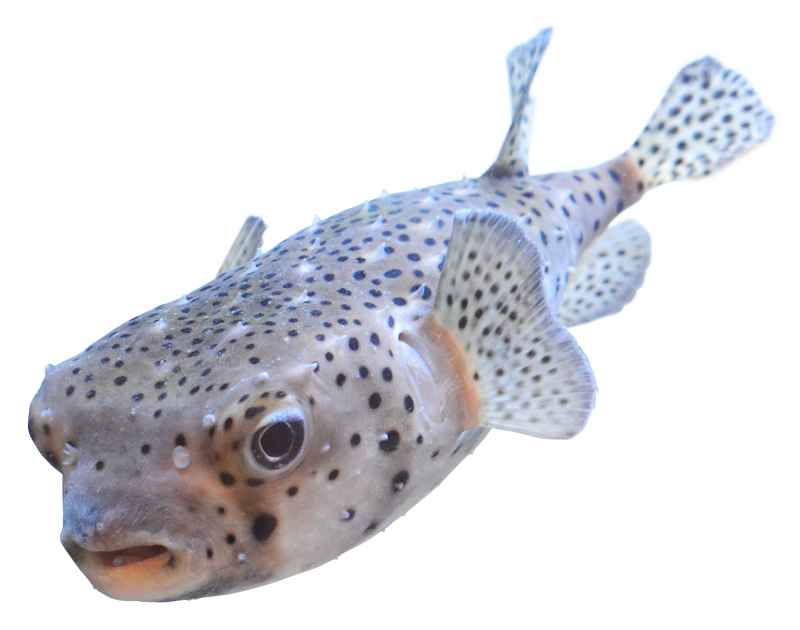
インド太平洋の温暖域に広く分布するハリセンボン科の魚で、最大で全長70cmほどに達する大型種です。日本近海に生息するハリセンボン類の中では最大級で、体表の棘が比較的短いことが特徴です。体色は褐色から灰色を基調とし、網目状の模様が入るほか、各ヒレに細かな斑点が見られます。
よく似た種にネズミフグがいますが、本種はヒレに斑点が現れる点で識別されます。また、遊泳時の棘の状態にも違いが見られることがあり、ネズミフグでは棘が寝ているのに対し、本種ではやや立ち気味になる傾向がありますが、これらは状況によって変化するため補助的な識別点といえます。
沿岸の岩礁域やサンゴ礁周辺に生息し、夜行性で、日中は岩陰などに潜んでいることが多い魚です。主に甲殻類や貝類などの硬い殻をもつ底生動物を捕食し、発達した歯でこれらを砕いて食べます。危険を感じると体内に水を取り込んで体を膨らませ、棘を立てることで外敵に対して威嚇します。
本種はフグ科の多くの種のような強い毒はもたないとされ、沖縄では「トーアバサー」と呼ばれて食用に利用されることがあります。なお、「イシガキフグ」という和名は石垣島に由来するものではなく、神奈川県三崎地方での呼称に由来し、体表に多数の棘をもつことにちなむといわれています。棘を倒した通常時の体表は凹凸に富み、積み重なった岩のような外観を呈する点も、本種の印象的な特徴のひとつです。
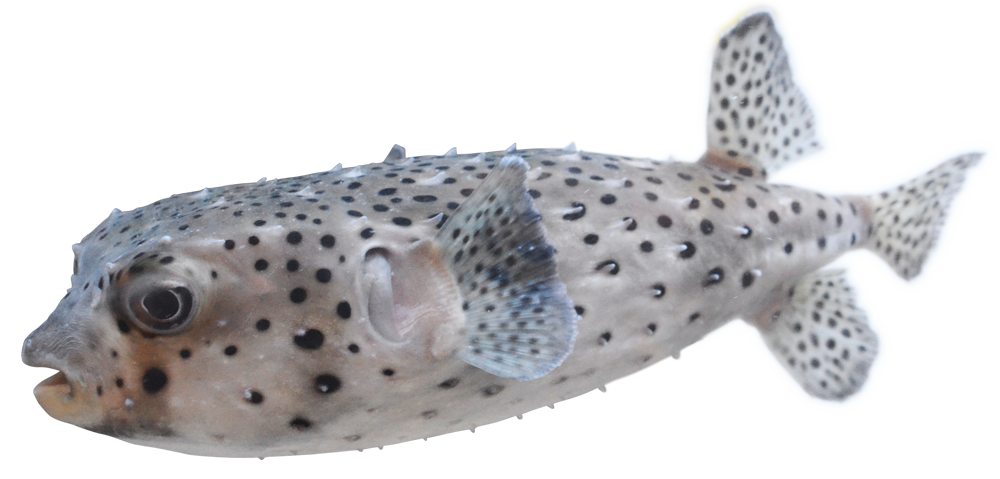
This species, a member of the family Diodontidae, is widely distributed throughout the warm waters of the Indo-Pacific and grows to a maximum total length of about 70 cm. It is among the largest burrfishes found in Japanese waters and is characterized by its relatively short body spines. The body coloration ranges from brown to gray, featuring a reticulated pattern, and the fins are marked with numerous small spots.
It closely resembles the porcupinefish (Diodon holocanthus), but can be distinguished by the presence of spots on its fins. Differences in spine posture during swimming have also been observed: in D. holocanthus the spines tend to lie flat, whereas in this species they are often slightly erect. However, as these traits may vary depending on circumstances, they should be regarded as supplementary identification features.
This species inhabits coastal rocky reefs and coral reef areas. It is primarily nocturnal, often hiding in crevices or under rocks during the day. It feeds mainly on benthic organisms with hard shells, such as crustaceans and mollusks, crushing them with its well-developed teeth. When threatened, it takes in water to inflate its body and erects its spines to deter predators.
Unlike many members of the family Tetraodontidae, this species is considered to lack strong toxicity, and in Okinawa it is locally known as “Tō-abasā” and is sometimes consumed as food. The Japanese name “Ishigaki-fugu” does not originate from Ishigaki Island; rather, it derives from a local name used in the Misaki area of Kanagawa Prefecture, referring to its numerous spines. When the spines are laid flat, the body surface appears rough and uneven, resembling piled stones—one of the species’ most distinctive visual features.
参考文献
動物園&水族館に行こう!! | 水族館魚図鑑-ネズミフグ(Diodon hystrix) | (2024年3月2日) 2024年12月1日閲覧
TSURIHACK | イシガキフグ(トーアバサー)の美味しい食べ方と毒について | (2024年1月16日) 2024年12月1日閲覧
美ら海水族館 | 美ら海生き物図鑑 | イシガキフグ 2024年12月1日閲覧
酒井商店 | ふぐマガ | 人工孵化に成功したことも? ハリセンボンの仲間「イシガキフグ」| (2024年7月31日) 2024年12月1日閲覧
ぼうずコンニャクの市場魚貝類図鑑 | イシガキフグ 2024年12月1日閲覧