
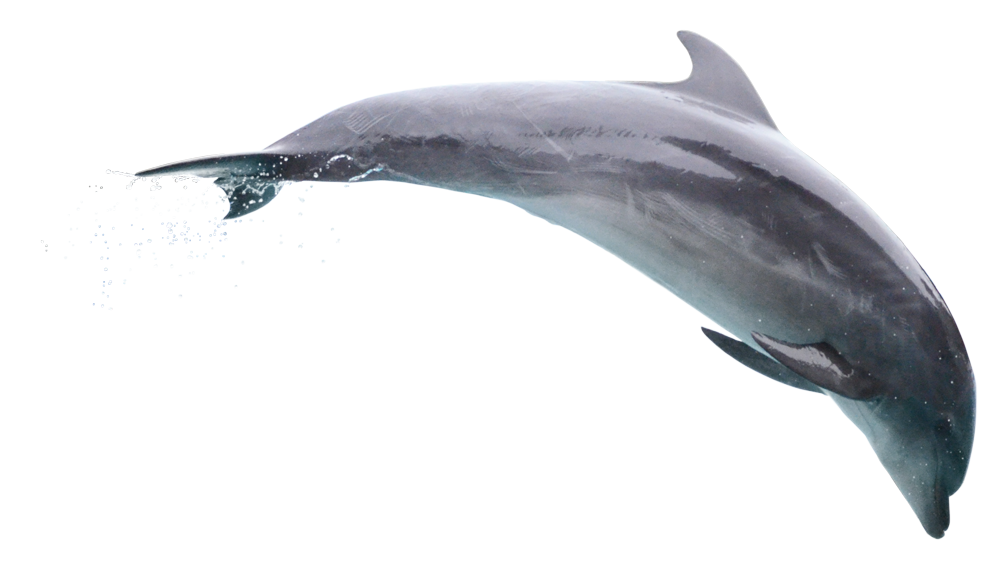
Tursiops truncatus (Montagu, 1821)
海の世界を音で捉える
Perceiving the Ocean Through Sound
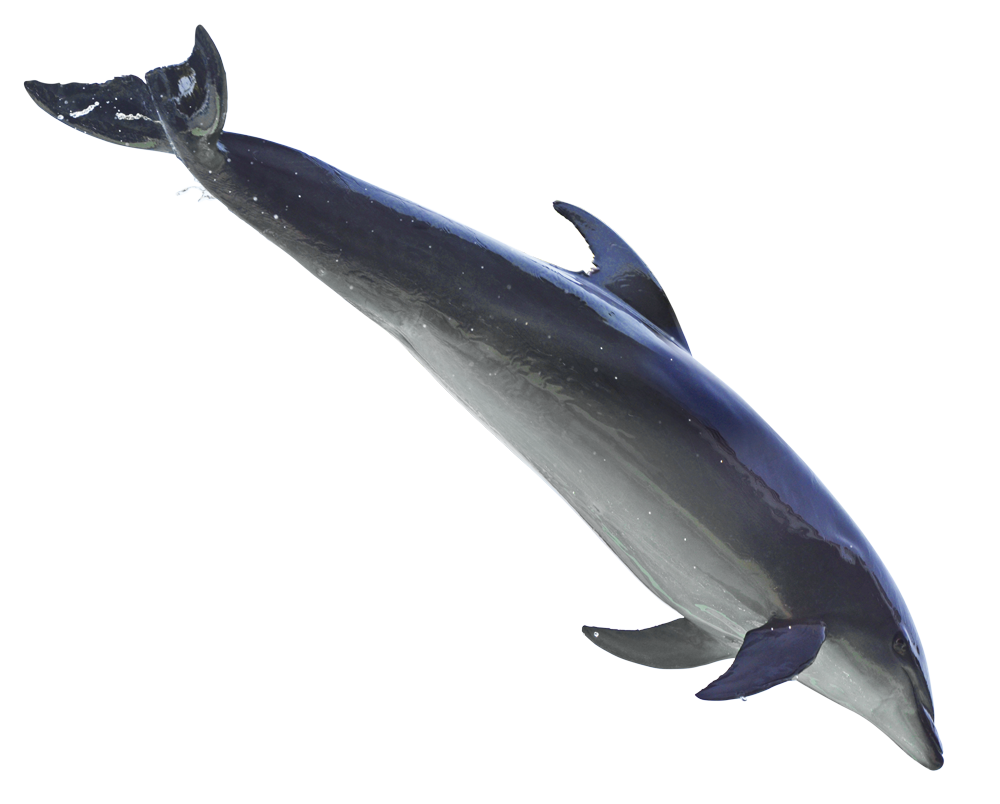
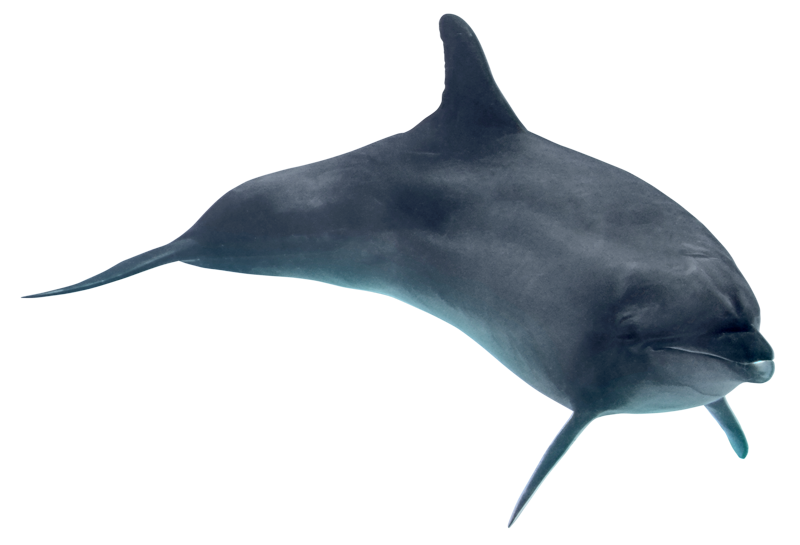
熱帯から温帯にかけて、世界各地の沿岸域や湾、河口周辺などに生息する、代表的なハクジラ類です。ハンドウイルカ属には複数の種が知られますが、一般に「ハンドウイルカ」と呼ばれる本種は主にバンドウイルカ(Tursiops truncatus)を指します。成体の体長はおよそ2~4m、体重は150~650kgほどで、地域や性別によって大きく異なります。寒冷な海域の個体ほど大型になる傾向があり、体温を維持するための皮下脂肪など、環境への適応もみられます。
沿岸域では魚類やイカなどを捕食し、海底や水中の獲物を探しながら生活します。単独で行動することもありますが、複数個体が集まった群れを形成し、個体間の関係が長期間にわたって維持されることも知られています。群れの構成や行動は、餌の分布や繁殖、社会関係などによって変化します。
運動能力にも優れ、通常の移動速度は時速30km前後、短時間ではさらに高速で泳ぐことができます。潜水能力も高く、沿岸性の個体では比較的浅い場所を利用する一方、500mを超える深度まで潜水することもあります。こうした幅広い潜水能力によって、異なる深さに生息する獲物を利用できます。
ハンドウイルカの社会生活を支える重要な手段が音によるコミュニケーションです。ホイッスル、クリック、バーストパルスなど複数の種類の音を使い分け、仲間との接触や社会的なやり取りに利用します。特に個体ごとに特徴的な「シグネチャーホイッスル」と呼ばれるホイッスルが知られており、個体の識別や群れの結びつきを維持する役割が示されています。ただし、その機能を単純に人間の「名前」と同一視することには議論もあります。
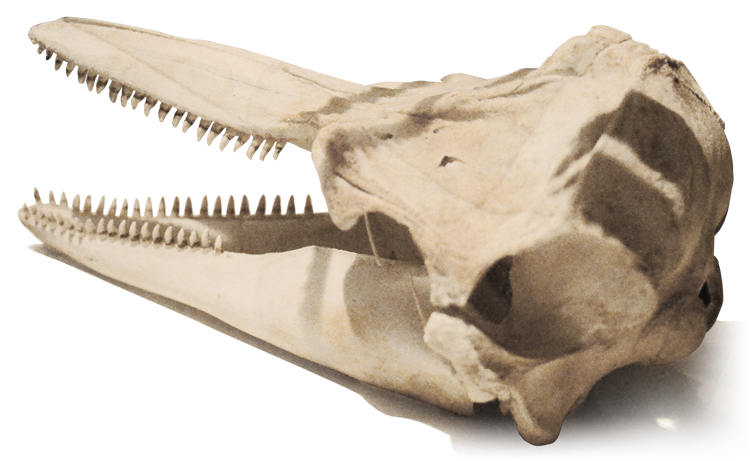
もう一つの重要な音の利用が、エコーロケーション(反響定位)です。高速なクリック音を発し、その反響を聴き取ることで、周囲の物体までの距離や方向、獲物の特徴などを把握します。視界の届きにくい海中でも獲物を探索し、障害物を避けて移動できるこの能力は、ハンドウイルカの採餌や空間認識を支える高度な感覚システムです。
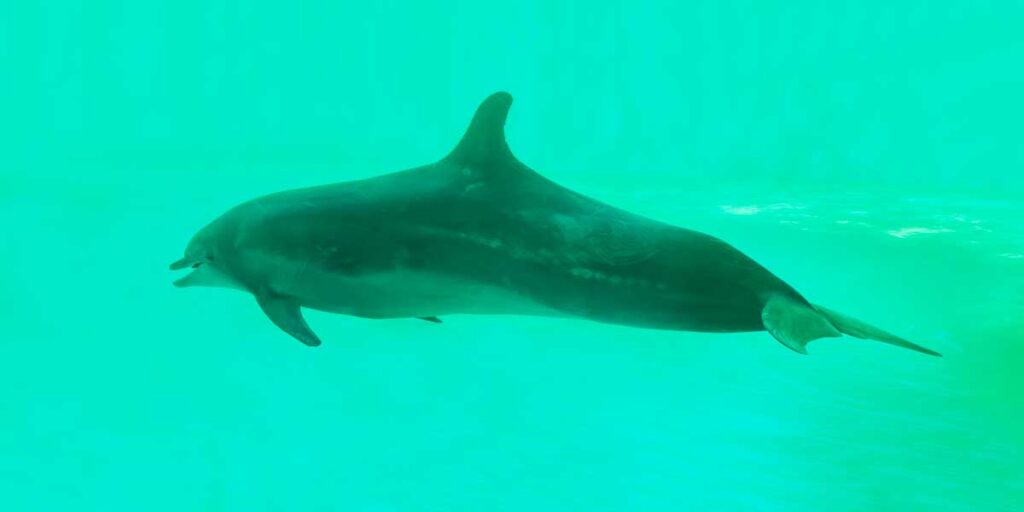
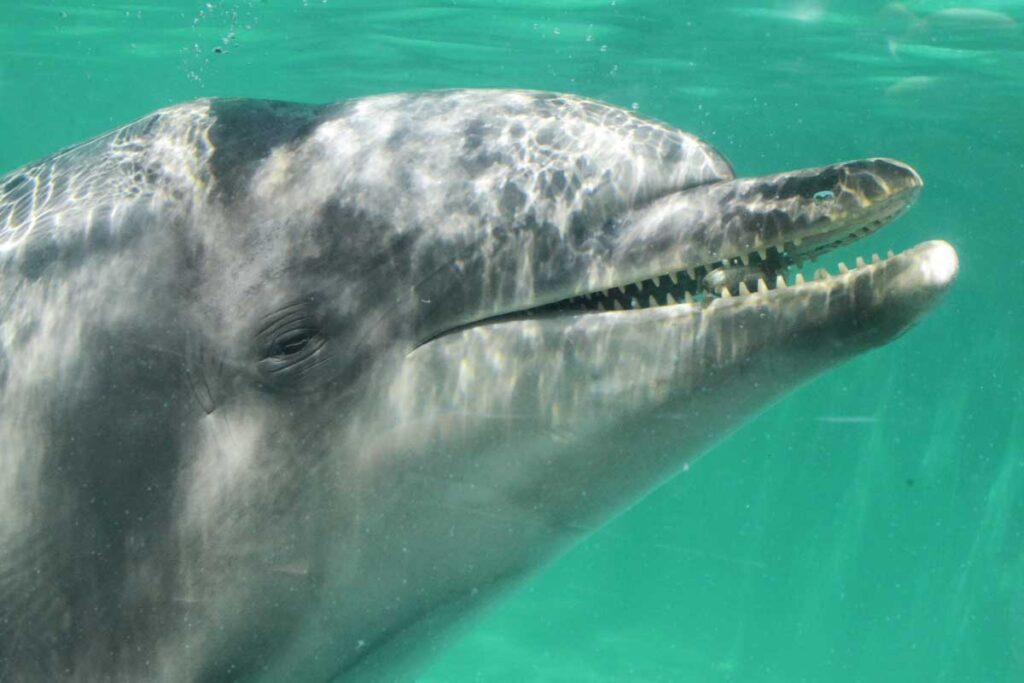
The bottlenose dolphin is a representative member of the toothed whales and inhabits coastal waters, bays, and estuaries throughout the world, from tropical to temperate regions. Several species are recognized within the genus Tursiops, but the species generally referred to as the bottlenose dolphin is primarily Tursiops truncatus. Adults are approximately 2–4 m long and weigh around 150–650 kg, with considerable variation depending on region and sex. Individuals from colder waters tend to be larger, and adaptations to their environment, including a layer of insulating blubber, can be observed.
In coastal waters, bottlenose dolphins feed mainly on fish and squid, searching for prey both in the water column and near the seafloor. They may travel alone, but they also form groups in which individual relationships can persist for long periods. Group composition and behavior vary according to factors such as prey distribution, reproduction, and social relationships.
They are also highly capable swimmers. Their normal traveling speed is around 30 km/h, although they can swim considerably faster for short periods. They are capable divers as well, and although coastal populations often use relatively shallow waters, individuals have been recorded diving to depths exceeding 500 m. This broad diving ability allows them to exploit prey living at different depths.
Sound is an important means of communication in their social lives. Bottlenose dolphins use several types of sounds, including whistles, clicks, and burst-pulsed sounds, for maintaining contact and engaging in social interactions. In particular, individuals produce characteristic whistles known as “signature whistles,” which are thought to play a role in individual recognition and maintaining social bonds. However, equating their function directly with human names remains a matter of scientific debate.
Another important use of sound is echolocation. Bottlenose dolphins emit rapid sequences of clicks and listen to the returning echoes to determine the distance and direction of objects and gather information about their prey. This ability enables them to search for prey and navigate even when visibility is limited underwater, making echolocation a highly specialized sensory system that supports their feeding and perception of their surroundings.
参考文献
新潟市水族館マリンピア日本海 | イルカQ&A 2024年7月15日閲覧
森阪 匡通『イルカの音声コミュニケーションと その制約要因』日本哺乳類学会2009 2024年7月15日閲覧
LAB to CLASS | イルカ・クジラⅣ FACT SHEET | 音で見える?世界 2024年7月15日閲覧