
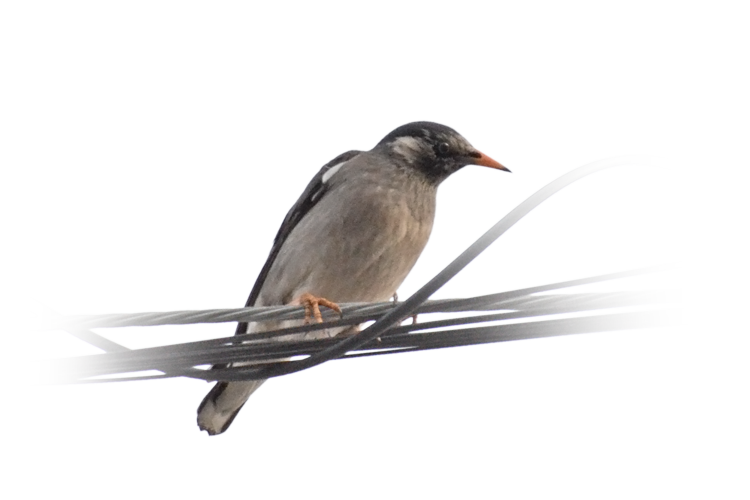
Spodiopsar cineraceus (Temminck, 1835)
駅前のケヤキに集う大群
Mass Roosts in the Zelkova Trees of Station Plazas
全長約24cm。頭部は白く、翼・首・胸は暗色から茶褐色で、頬の白斑と鮮やかな橙色の嘴と足が特徴の鳥です。東アジアに広く分布し、日本では農耕地や河原などに生息します。古くから水田や畑の害虫を食べる益鳥として人々に親しまれてきました。
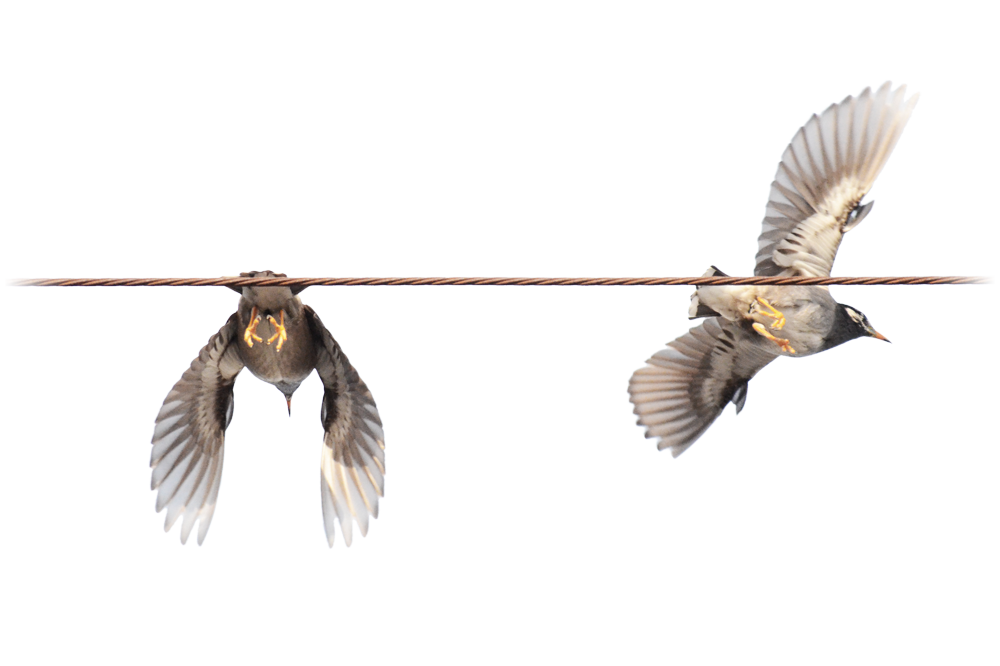
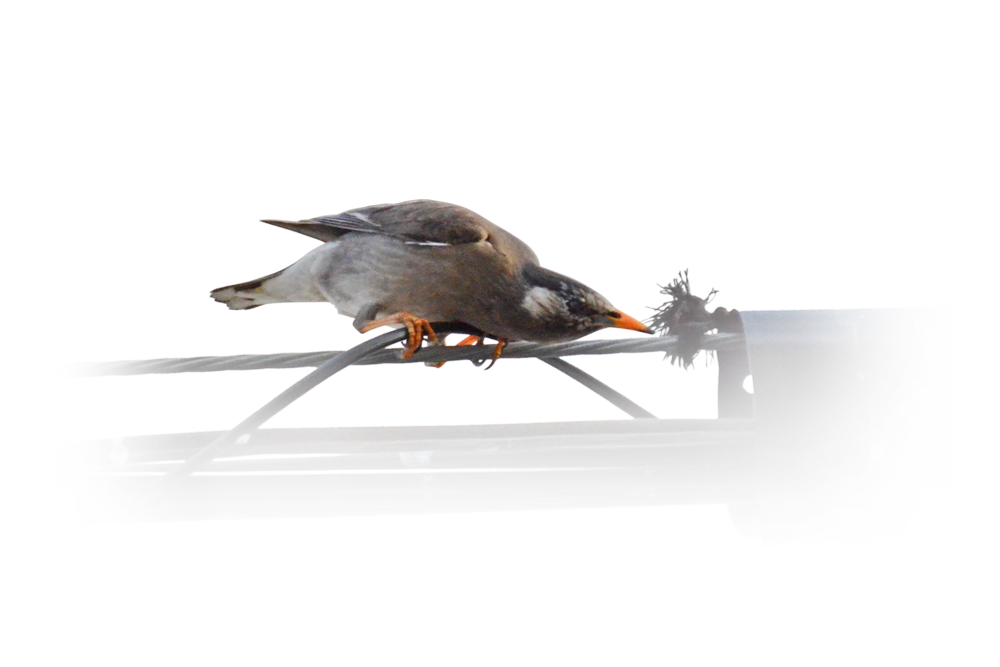
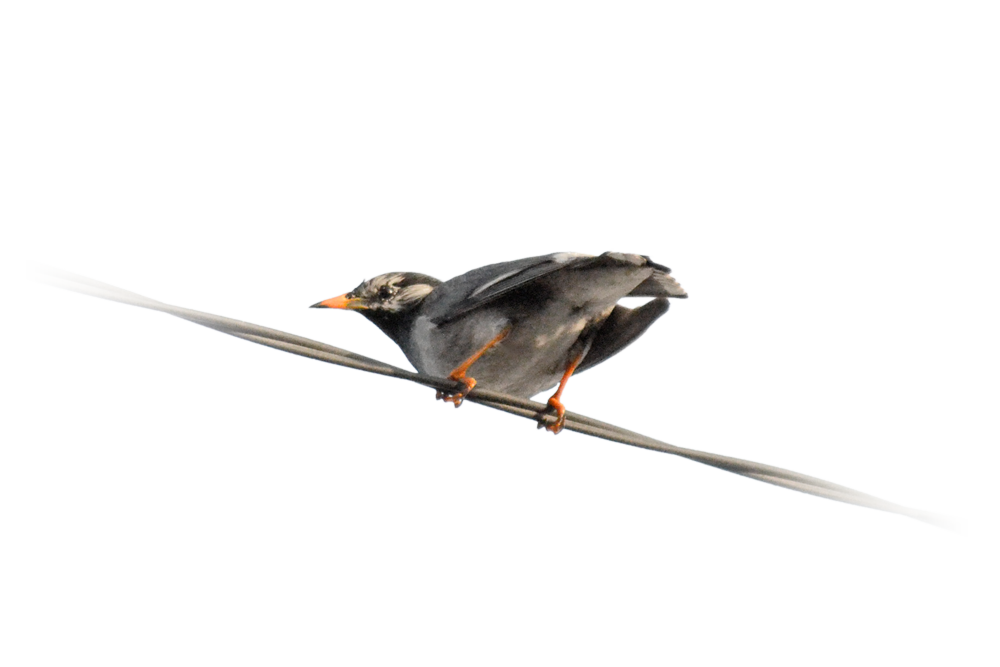
しかし1990年代以降、農村部では個体数が減少する一方で都市部での繁殖が増え、駅前の街路樹や電線に大群が集まるようになりました。夕方になると塒(ねぐら)に集まり、時には数千羽から数万羽にもなる大規模な集団ねぐらが形成されます。その鳴き声による騒音や大量の糞による衛生問題が各地で社会問題となっています。特に1980年代に整備された駅前広場のケヤキなどの街路樹は、成長して枝葉が広がったことでムクドリにとって安全で快適な塒となり、早朝には餌場へ向かう大群が一斉に飛び立つ光景が見られます。
このように人間の作り出した環境を積極的に利用して生活する野生動物は「シナントロープ」と呼ばれます。鳥類ではハシブトガラス、スズメ、ドバト、ツバメ、カモメ類などが古くから知られ、近年はハクセキレイやヒヨドリなども都市部で増加しています。これらの鳥は学習能力が高く、街路樹や建造物を巧みに利用して営巣や採食を行います。ムクドリの都市集中は、郊外の開発による塒環境の減少に加え、外敵であるカラスの減少や都市部で安全な街路樹が増えたことなどが影響していると考えられています。さらに近年は都市の大規模緑地で猛禽類のオオタカが繁殖する例も知られ、捕食者の回復が都市の鳥類群集の構成に影響を与えている可能性も指摘されています。このように都市では人間活動の変化に伴い、鳥類の分布や個体数のバランスなど、生態系が数十年以内で大きく変化していくのです。
Body length about 24 cm. The head is white, while the wings, neck, and breast are dark to brownish, with a conspicuous white cheek patch and bright orange bill and legs. The species is widely distributed across East Asia, and in Japan it inhabits farmland, riverbanks, and similar open habitats. It has long been familiar to people as a beneficial bird because it feeds on insects that damage rice paddies and crop fields.
Since the 1990s, however, populations in rural areas have declined, while breeding in urban areas has increased, and large flocks have come to gather on street trees and power lines around railway stations. In the evening they assemble at communal roosts, sometimes forming large roosts of several thousand to tens of thousands of birds. Their loud calls and the accumulation of droppings have become social problems in many places. In particular, zelkova trees planted in station plazas during urban development in the 1980s have grown large over the decades, forming broad canopies that provide safe and comfortable roosting sites for starlings. At dawn, large flocks can be seen leaving the roost simultaneously and flying toward their feeding grounds.
Wild animals that actively exploit environments created by humans in this way are known as synanthropes. Among birds, examples long associated with human settlements include the Large-billed Crow, Eurasian Tree Sparrow, Feral Pigeon, swallows, and gulls. In recent years, species such as the White Wagtail and the Brown-eared Bulbul have also increased in urban areas. These birds are highly adaptable and skillfully use street trees and artificial structures for nesting and foraging. The concentration of starlings in cities is thought to be related to several factors, including the loss of traditional roosting habitats in suburban areas due to development, a decline in crows that act as predators, and an increase in safe roosting trees within urban environments. In addition, in recent years the raptor Northern Goshawk has been recorded breeding in large urban green spaces, and the recovery of such predators may also influence the composition of urban bird communities. In cities, changes in human activities can alter the distribution and population balance of birds, and urban ecosystems may change considerably within only a few decades.
参考文献
「全国で増える都市のムクドリ塒問題を考える」2017年度大会自由集会報告, 日本鳥学会 2026年3月9日閲覧
「ムクドリの被害状況及び対策について」東京都環境局 2026年3月9日閲覧
朝日新聞 | Reライフ.net | 文豪・神童に愛された「厄介もの」 実は人なつこい益鳥、共存を探りたい | (2024年10月21日) 2026年3月9日閲覧
いきもののわ | 大江戸八百野鳥 ~変化した? していない? 江戸・東京の鳥たち~【第4回】ムクドリ | (2025年3月21日) 2026年3月9日閲覧
一般社団法人 環境共生まちづくり協会 | kkj 特集~鳥と共に暮らす | 街にすむ鳥たち 2026年3月9日閲覧