
Sciurus lis (Temminck, 1844)
寒い季節に備えるリスの冬支度
Winter Preparations of a Squirrel for the Cold Season
体長16〜22cm。日本固有種で、本州と四国の平地から亜高山帯にかけての森林に生息しています。落葉広葉樹林や針広混交林を好み、富士山麓では生息数も多く、標高約2300mでも確認されています。
一方、九州では過去100年以上にわたり確実な野生個体の記録がなく、現在では地域個体群として絶滅したと考えられています。また、中国地方でも生息地の分断や減少により個体数は著しく減っています。
分布域外である北海道には、近縁種のキタリス(Sciurus vulgaris)が生息しています。両種は遺伝的に非常に近く、交雑の可能性が高いとされます。本州では1980年代以降、外来由来とみられるキタリスの目撃例が報告されており、分布拡大による競合や遺伝的攪乱が懸念されています。
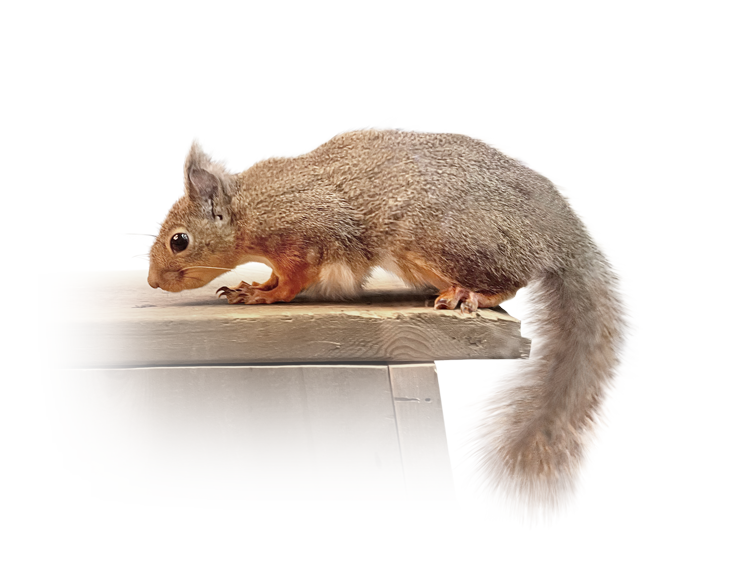
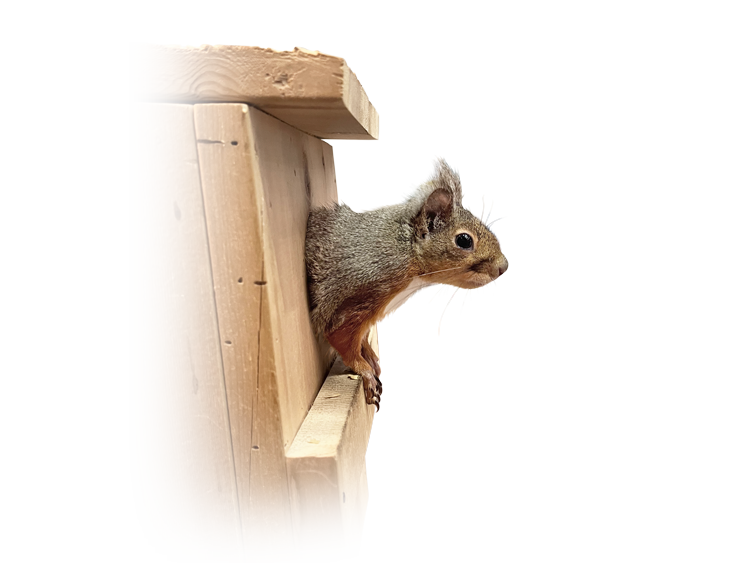
他のリス類と同様に季節による換毛が見られ、夏毛は全体に赤褐色で手足の先がやや濃くなり、冬毛は灰色がかって毛量が増し、耳の先端には長いふさ毛が発達します。シマリスのように冬眠はせず、餌が乏しくなる冬に備えて秋の間に木の実などを集め、地面に埋めたり木の又に挟んだりして貯蔵します。さらに巣穴には乾草や裂いた樹皮を敷き詰めて保温し、寒さをしのぎます。冬は巣で過ごす時間が長くなりますが、暖かい日には日光浴や採食のために活動します。
The Japanese squirrel measures 16–22 cm in body length and is a species endemic to Japan. It inhabits forests ranging from lowlands to the subalpine zone on Honshu and Shikoku, preferring deciduous broadleaf and mixed conifer–broadleaf forests. Around the foothills of Mount Fuji, the species is relatively common and has been recorded at elevations of up to approximately 2,300 m.
In contrast, no reliable records of wild individuals have been reported from Kyushu for more than a century, and the species is considered regionally extinct there. Populations in the Chugoku region have also declined sharply due to habitat loss and fragmentation.
Outside its natural range, the closely related Eurasian red squirrel (Sciurus vulgaris) occurs in Hokkaido. The two species are genetically very similar and are considered capable of hybridization. Since the 1980s, sightings of S. vulgaris have been reported on Honshu, raising concerns about range expansion, interspecific competition, and potential genetic disturbance of native Japanese squirrel populations.
Like other squirrels, the Japanese squirrel undergoes seasonal molting. The summer coat is generally reddish-brown, with darker coloration on the distal parts of the limbs, whereas the winter coat becomes grayish and denser, and long ear tufts develop at the tips of the ears. Unlike chipmunks, the species does not hibernate. To prepare for winter, individuals cache nuts and other food items during autumn, storing them in the ground or wedged in tree forks. They also line their nests with dry grass and shredded bark to retain warmth. During winter, they spend extended periods inside their nests but emerge on warmer days to bask in the sun and forage.
参考文献
エコチル | 【城山動物園だより】二ホンリス | (2021年12月13日) 2025年1月1日閲覧
Tamura N and Yasuda M (2023) Distribution and management of non-native squirrels in Japan. Front. Ecol. Evol. 10:1061115. 2025年1月1日閲覧
公益財団法人 えどがわ環境財団 | 自然動物園ぶろぐ | ニホンリスの寒さ対策 | (2018年2月23日) 2025年1月1日閲覧
エレファントーク | おもしろ哺乳動物大百科 | No.184 ニホンリス – おもしろ哺乳動物大百科 128 げっ歯目(ネズミ目)| (2016年12月1日) 2025年1月1日閲覧