
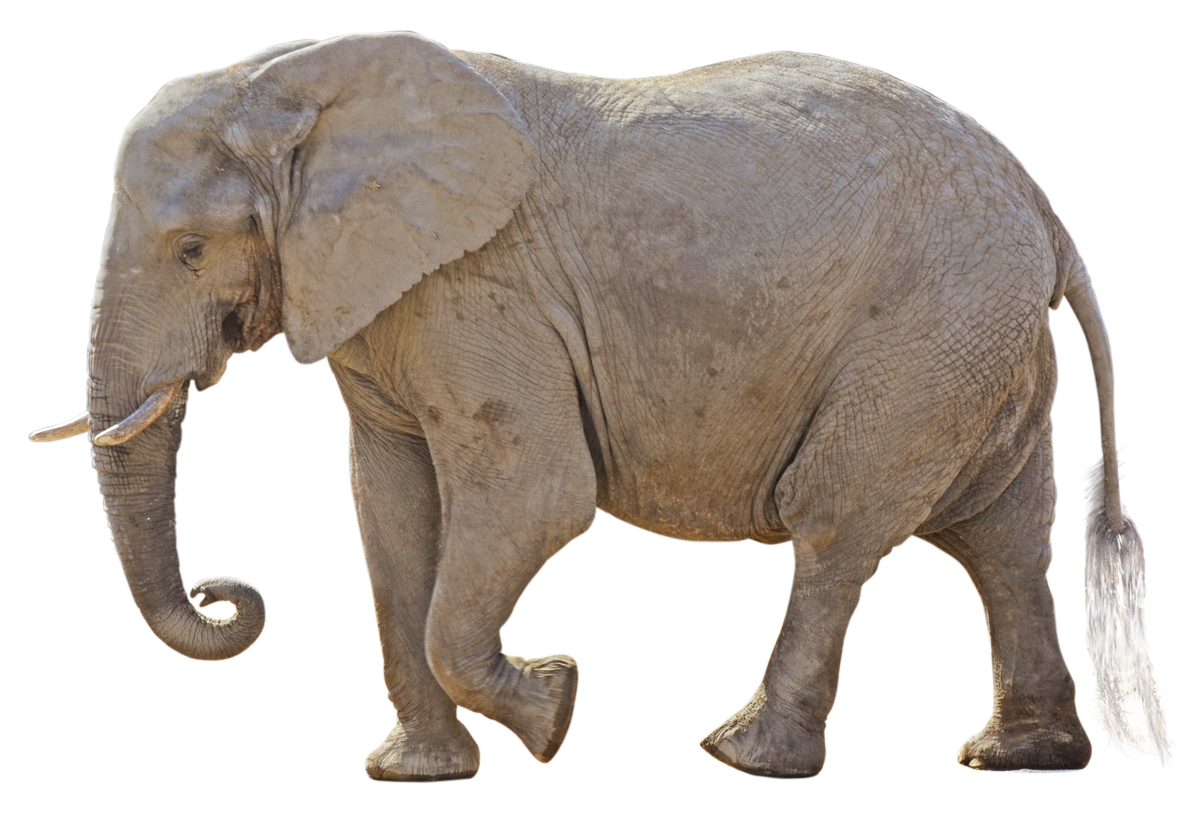

Loxodonta africana (Blumenbach, 1797)
優れた知覚で世界を捉えるゾウ
Elephants Perceiving the World Through Remarkable Senses
アフリカゾウは、頭胴長6〜7.5m、肩高3〜3.9m、最大体重は10tにも達する、現生の陸生動物で最大の種です。アジアゾウに比べて非常に大きな耳を持つことが特徴ですが、これは音を聞くためというより、体内の熱を放出して体温を調節する役割を担っていると考えられています。
一方で、ゾウの聴覚が優れていることも確かです。ゾウは人間には聞こえない20Hz以下の超低周波音を発し、仲間同士でコミュニケーションを行います。この低い音は空気中を遠くまで伝わり、約10kmも離れた場所にいる個体と情報をやり取りすることができます。
さらにゾウは、地面を伝わる振動を足の裏で感知し、その振動を骨を通して耳で感じ取る能力を持っています。この仕組みにより、足踏みなどの振動を使って数km以上離れた仲間と意思疎通をしたり、30〜40km先で発生した雨や雷の兆候を察知したりすることが知られています。
近年の研究では、アフリカゾウが個体ごとに異なる固有の呼びかけ、いわば「名前」を用いて互いを呼び合っていることも明らかになってきました。低周波のゴロゴロとした鳴き声の中に、特定の相手に向けた音の特徴が含まれているとされ、名前で呼び合う行動は動物界でも極めて稀な例です。
長い鼻の先端には指のような突起があり、小さな物でも器用につかむことができます。また嗅覚も非常に発達しており、嗅覚受容体遺伝子の数はイヌの約2倍、人間の約5倍に達します。こうした鋭い感覚を組み合わせることで、ゾウは広大な環境の中で仲間とつながり、危険や食物、水場の情報を共有しながら生きているのです。
The African elephant is the largest living land animal, with a head–body length of 6–7.5 meters, a shoulder height of 3–3.9 meters, and a maximum weight of up to 10 metric tons. One of its most distinctive features is its extremely large ears compared to those of the Asian elephant. These ears are thought to function primarily in heat dissipation and thermoregulation rather than simply improving hearing.
Nevertheless, elephants do possess highly developed auditory abilities. They communicate using infrasonic sounds below 20 Hz—frequencies too low for humans to hear. These low-frequency calls can travel long distances through the air, allowing elephants to exchange information with others up to about 10 kilometers away.
In addition, elephants can detect vibrations transmitted through the ground. They sense these vibrations with the soles of their feet and perceive them through their bones and ears. This ability enables them to communicate with distant individuals through foot stamping and to detect environmental events such as rain or thunderstorms occurring 30–40 kilometers away.
Recent studies have also revealed that African elephants address one another using individualized vocalizations that function much like names. Their low, rumbling calls contain acoustic features directed at specific recipients. The use of “names” is extremely rare in the animal kingdom; even parrots and dolphins typically rely on mimicking the sounds produced by the called individual, making elephants’ communication system particularly unique.
At the tip of the long trunk are finger-like projections that allow elephants to grasp even small objects with great dexterity. Their sense of smell is also exceptionally well developed: elephants possess about twice as many olfactory receptor genes as dogs and roughly five times as many as humans. By integrating these advanced sensory abilities, elephants remain connected with their herd and share vital information about dangers, food sources, and water across vast landscapes.
参考文献
京都市動物園 | 飼育員ブログ | 宿題やらねば(ゾウの違い)| (2020年5月31日) 2024年9月23日閲覧
土肥 哲也 (2018年7月) “ゾウと低周波音” 小林理研ニュース 2024年9月23日閲覧
“African Bush Elephant” BBC Animals Wiki 2024年9月23日閲覧
新村 芳人 (2014)「アフリカゾウはイヌの2倍、ヒトの5倍もの嗅覚受容体遺伝子を持つ~ゲノムの比較が明らかにした哺乳類の嗅覚受容体遺伝子の多様性~」東京大学JST 2024年9月23日閲覧
Easy Travel Tanzania | 象は知能があるのでしょうか? | (2024年8月21日) 2024年9月23日閲覧
日本経済新聞 | 「ゾウは「名前」を呼び合う? 研究報告、イルカとの違いも」ナショナル ジオグラフィック | (2024年7月17日) 2024年9月23日閲覧