
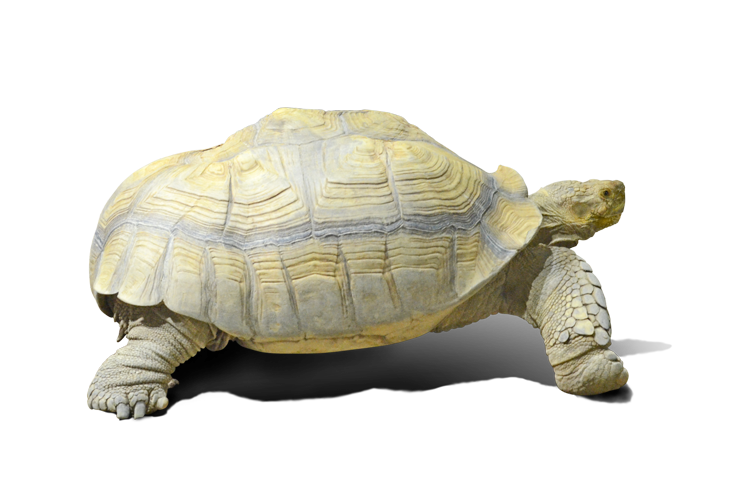
Centrochelys sulcata (Miller, 1779)
穴掘りで進化したカメの甲羅
How Burrowing Behavior Sculpted the Turtle Shell
甲長は最大80cm、体重は60kgに達し、世界で3番目に大きいリクガメです。サハラ砂漠の南縁に沿って東西に延びる半乾燥地帯サヘルに生息します。後肢の付け根から突出する大きな鱗が特徴で、鳥類の蹴爪に似ていることが和名の由来です。
強力な前肢で数メートルに及ぶ巣穴を掘り、最も暑い時間帯や乾季をその内部で過ごして体温と水分を守ります。背甲はガラパゴスゾウガメやアルダブラゾウガメほど高くなく、乾燥草原での移動や掘削に適した形状です。
2016年の研究では、カメの甲羅の起源は外敵防御より、むしろ地中を掘る行動に関係した可能性が示されました。原始的なカメは南アフリカの過酷な環境から逃れるために穴を掘り、その過程で甲羅が発達したと考えられています。ケヅメリクガメの背の低い甲羅は、この原始的特徴を今に残すものといえます。
繁殖期は雨季が終わる9〜11月で、雄は体当たりや喉甲板を使って相手の転倒させたり、唸り声を伴う激しい争いを見せます。交尾時にも特有の声を出します。雌は交尾後2〜3か月で産卵期に入り、巣穴とは別に深さ10〜20cmの産卵穴を複数掘ってから一つを選んで産卵します。1回の産卵数は15〜30個で、卵は80〜120日かけて孵化しますが、多くは捕食者に狙われ、生き残るのはわずかです。
The African spurred tortoise reaches a carapace length of up to 80 cm and a body weight of about 60 kg, making it the third-largest tortoise species in the world. It inhabits the Sahel, a semi-arid belt stretching east to west along the southern edge of the Sahara Desert. A notable feature is the large, protruding scales at the base of the hind limbs, which resemble the spurs of birds and give the species its Japanese name.
With its powerful forelimbs, it digs burrows that can extend several meters underground, where it spends the hottest hours of the day and the dry season to conserve body temperature and moisture. Its carapace is not as tall as those of the Galápagos or Aldabra giant tortoises and is shaped to facilitate movement across dry grasslands and effective digging.
A 2016 study suggested that the origin of the turtle shell may be linked not to protection from predators but to early burrowing behavior. Primitive turtles are thought to have developed shells as they dug to escape the harsh environments of ancient South Africa. The relatively low shell of the African spurred tortoise is considered a trait that reflects this ancestral condition.
The breeding season lasts from September to November, after the rainy period. Males are highly territorial and engage in vigorous contests involving ramming, attempts to overturn rivals using the gular scute on the plastron, and deep vocalizations. They also vocalize during mating. Females begin nesting two to three months after mating, digging several nest pits about 10–20 cm deep before selecting one for egg laying. A clutch contains 15 to 30 eggs, which incubate underground for 80 to 120 days. Many eggs and hatchlings fall prey to predators, and only a few survive.
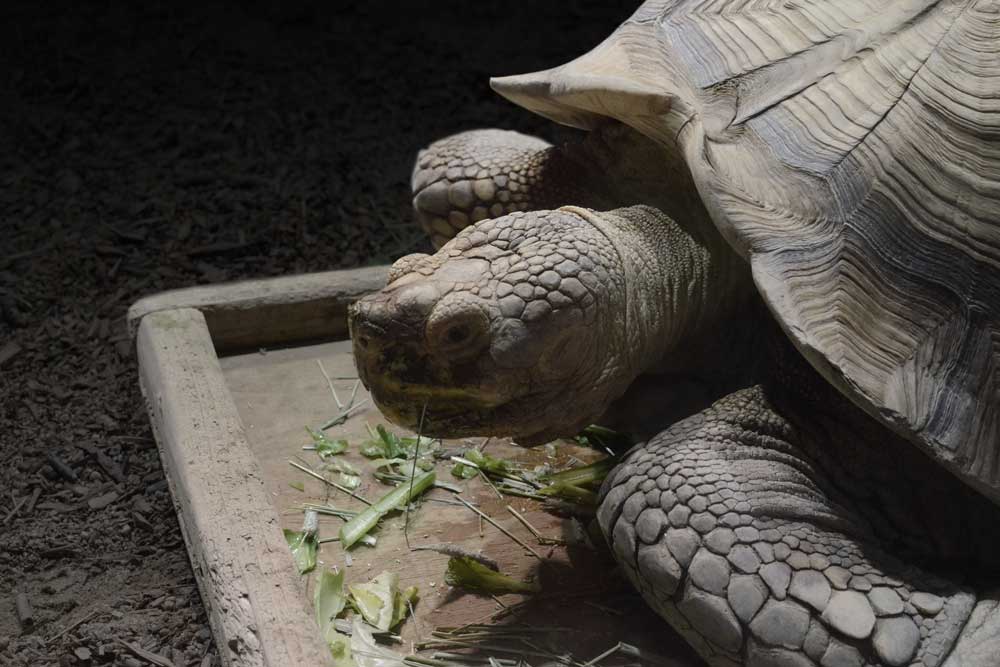
They grow quickly, reaching over 30cm in length within five years of hatching.
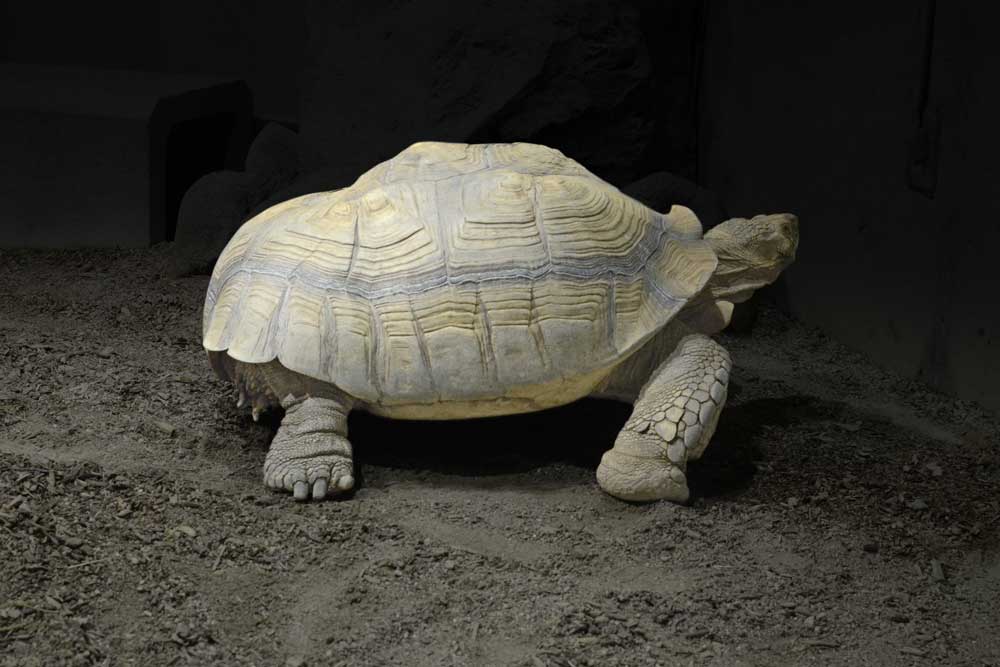
The spurred claws visible at the base of the feet act as stoppers to prevent slipping when digging holes.
参考文献
群馬サファリパーク | 動物紹介 | ケヅメリクガメ 2025年12月13日閲覧
足立区生物園 | 展示生物 | ケヅメリクガメ 2025年12月13日閲覧
“African Spurred Tortoise” San Diego Zoo Wildlife Alliance. 2025年12月13日閲覧
Harrold, Andria “Geochelone sulcata” Animal Diversity Web. 2025年12月13日閲覧